Niyang River Visitor Centre
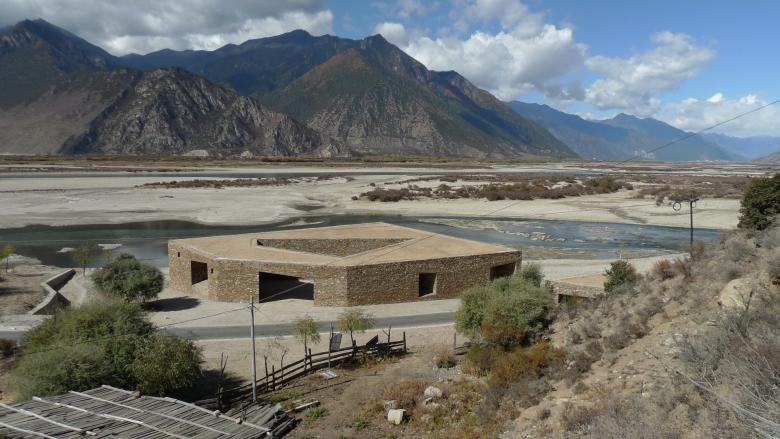
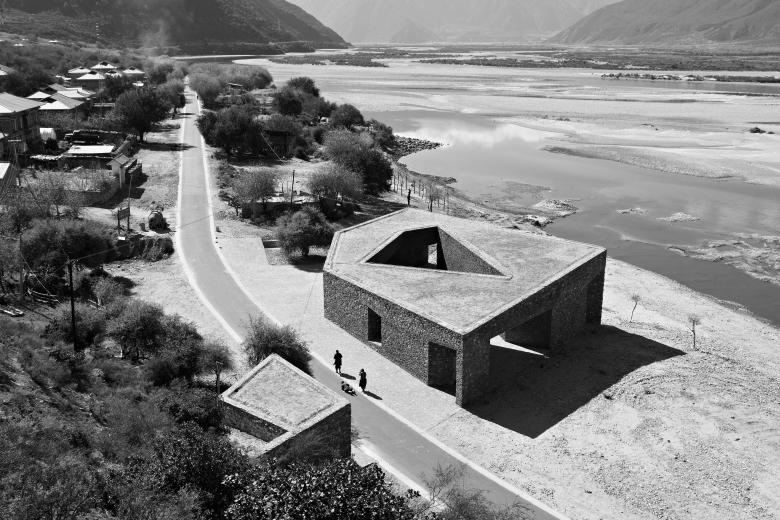
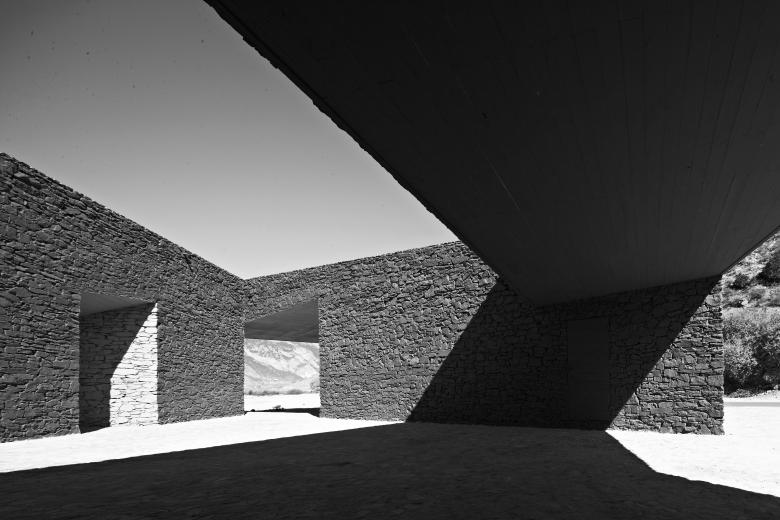
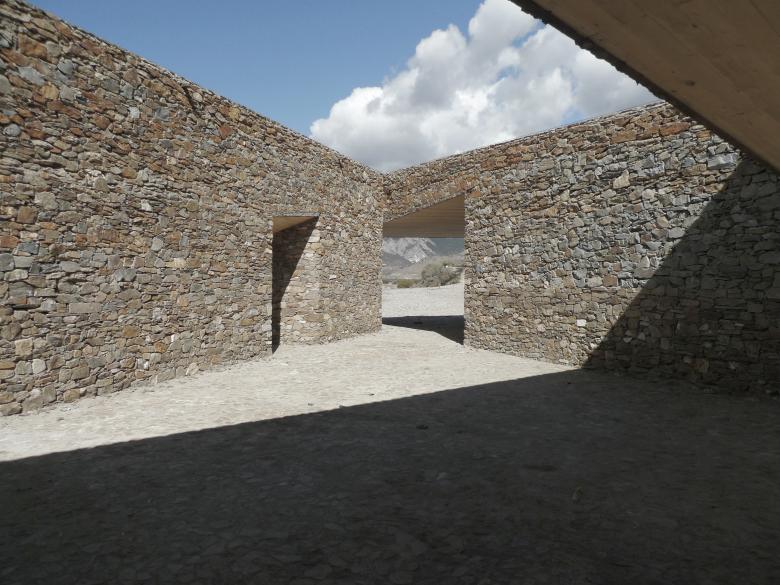
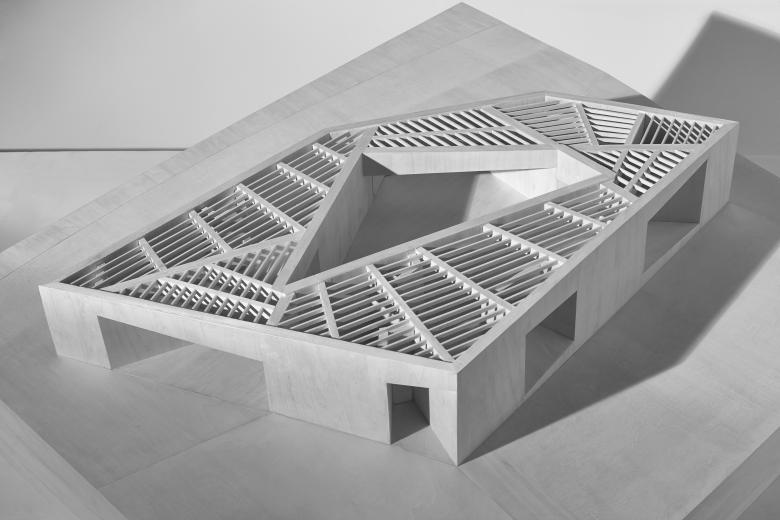
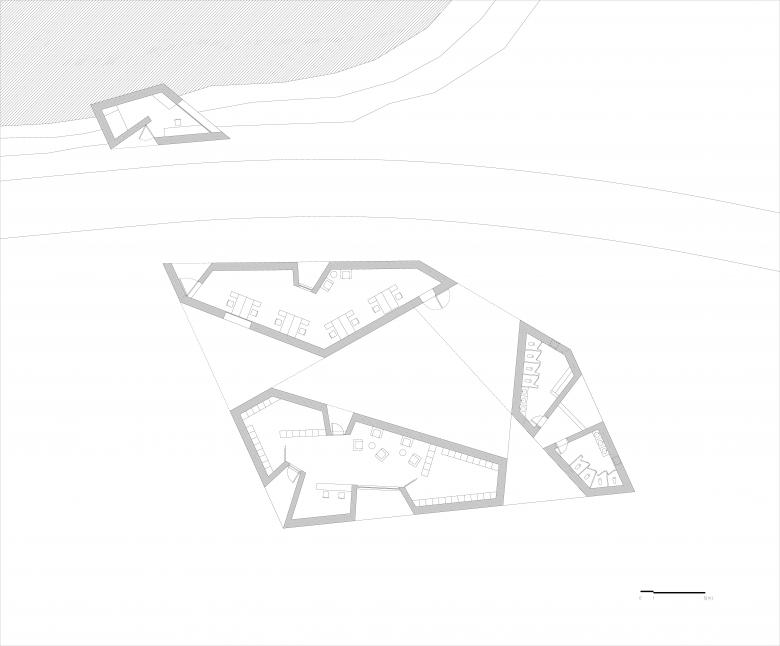
Mirui Road is a tourist route that meets Highway 318 connecting Tibet and Sichuan Province. This road meanders southwards along the Niyang River and separates the riverbank from the nearby mountains. Within twenty kilometres of the Yarlung Tsangpo Grand Canyon, the landscape of the Niyang River can be enjoyed from the road. Daze Village was chosen to be the entrance point for this tourist attraction. Since there is little land left for further development in the village, the riverbank along the road was the only site remaining for a tourist centre. The building’s external form is a response to the site conditions. The inner public space is “carved” out of the irregular-shaped volume. The central court-yard connects four openings, which respond to the orientation and circulation. The remaining volume after “carving” accommodates three major interior functions: a ticket office, a changing room for rafting, and toilets.
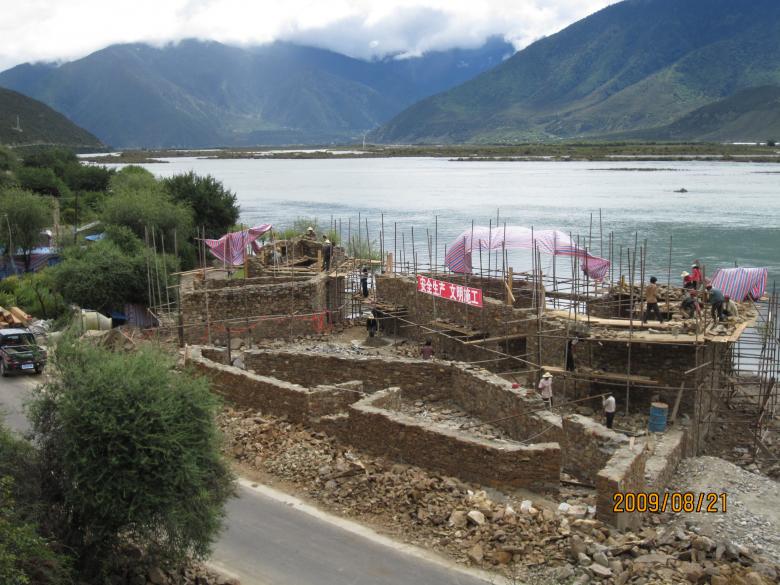
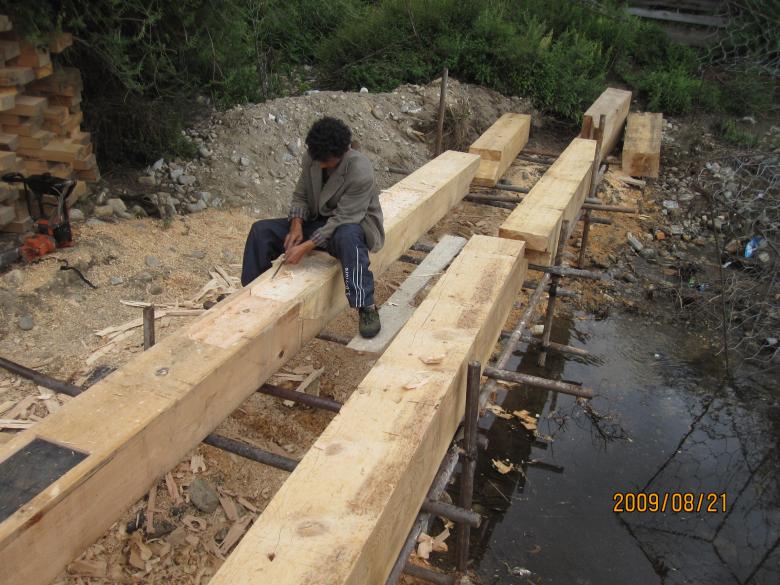
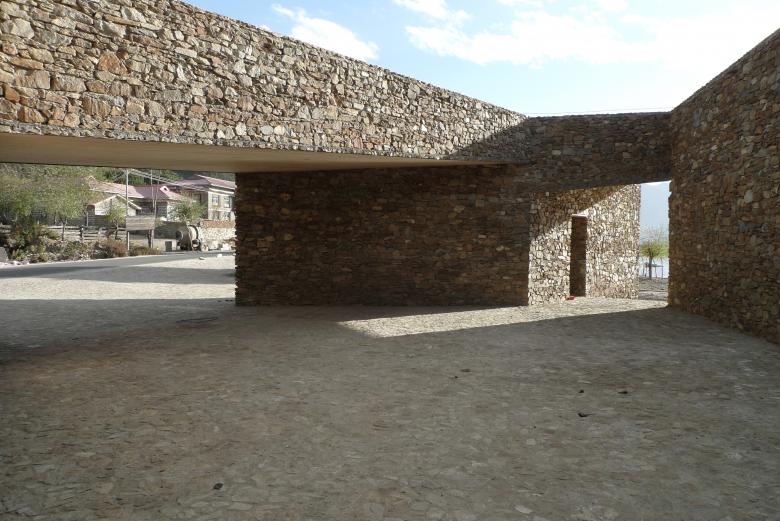
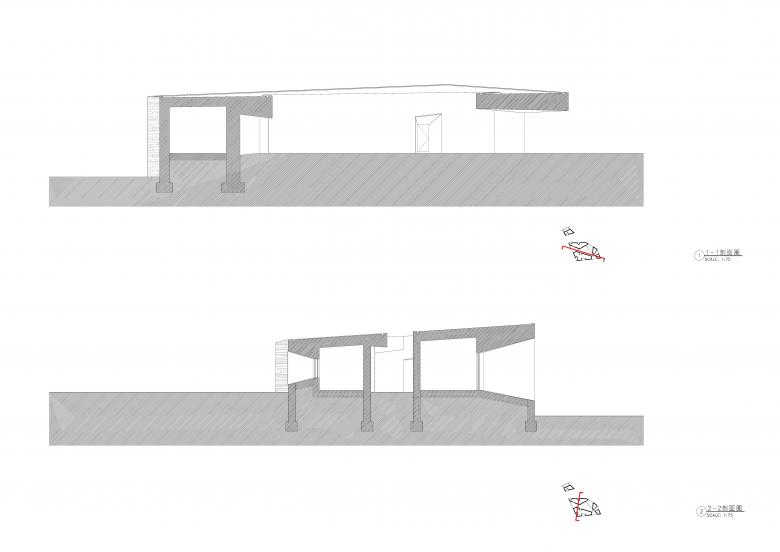
The construction of the building adopted and developed the techniques of the local vernacular. On top of the concrete foundation stands a 60 cm-thick load-bearing stone wall. Most openings have deep recesses. The 40 cm-thick walls on both sides of the openings work as buttresses, increasing the overall structural stability and reducing the interior span. Beams for bigger spans are made from several small logs bonded together. A 15 cm-thick layer of Aga clay forms the waterproof membrane of the roof. Aga clay is a vernacular waterproofing material that also provides heat insulation.
Colour is a crucial element of Tibetan visual culture. After experiments with strong traditional colours – which caused issues for religious local people –the stone walls were painted neutral white, which enhances the geometric spatial composition.

- Rok
- 2010
- Project Status
- Built