Holleric Urban Development
Luxemburg, Luxemburg
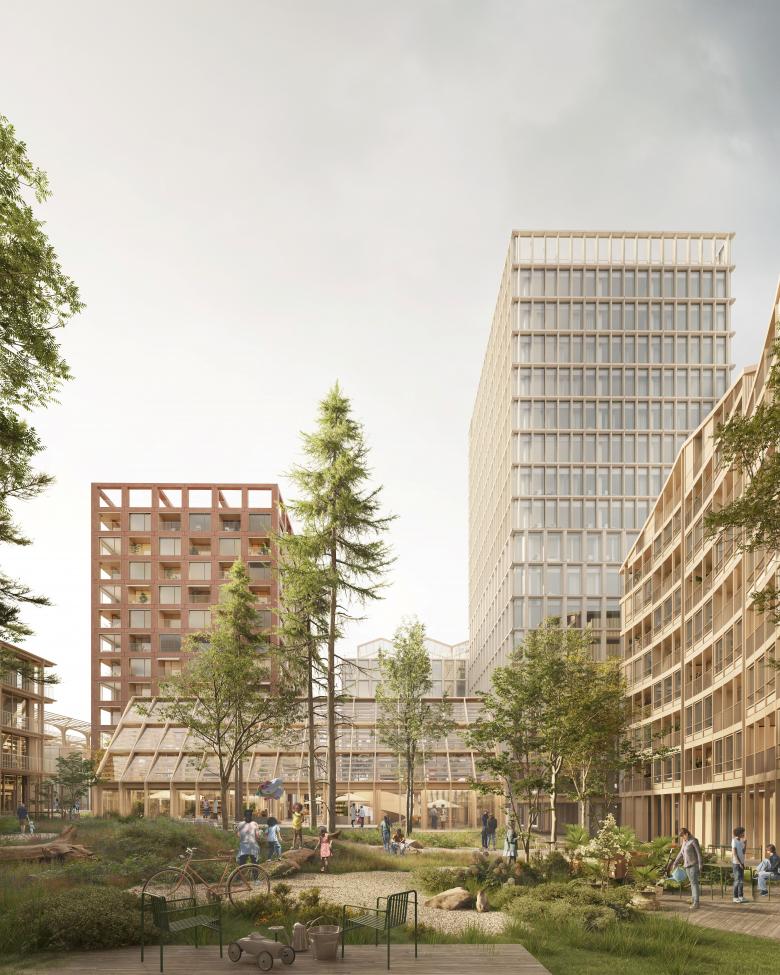
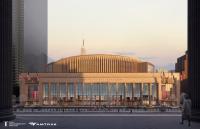
Situated in the heart of the Hollerich District in Luxembourg, a new urban neighbourhood, shaped by the city’s unique topography and distinctive location, is being developed. Merging multiple functions, the area will offer a rich and welcoming environment, facilitating living, working, and accessing basic needs within a 15-minute walk or bike ride from home.
The vision for the neighbourhood involves transforming it into a distinctive district with a strong sense of identity, emphasising community, cultural richness, social cohesion, and well-being. A new urban focal point and infrastructural node in the cityscape catering to a wide range of future users.
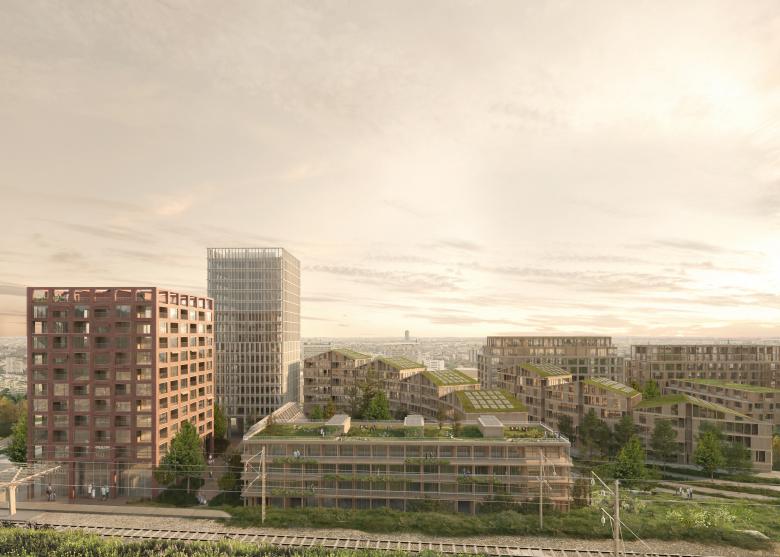
Luxembourg's identity is deeply rooted in its distinctive topography. Over centuries, the Alzette and Pétrusse rivers have carved deep, rocky valleys, creating a cityscape where urban formation is concentrated on elevated plateaus, encircled by lush green valleys. The result is a unique cityscape that seamlessly blends green corridors with urban infrastructure, forming a dynamic mosaic of natural and built environments. The development site is placed on the edge between the urban and nature, creating an opportunity to merge the cityscape and the landscape. Here, natural elements from the surrounding area will be incorporated into the new neighbourhood to strengthen biodiversity by connecting existing corridors, fostering a resilient neighbourhood.
At the scale of the city, the site situates itself at an urban node connecting the topographically upper neighbourhoods of the modern Kirchberg in the north-east, passing through the historical centre, and the southwest district of the Cloche d’Or.
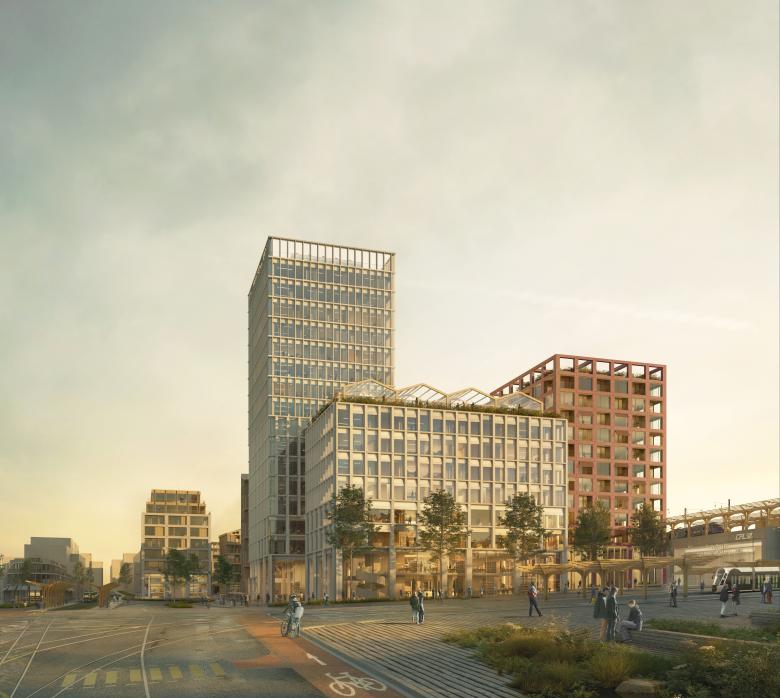
The development benefits from its location at the convergence of various transportation routes and movements. Consequently, the site will serve as both a gateway to the city and a vital connector, linking neighbourhoods within its vicinity as well as the city at large.
A new station will serve as a gateway to the city, easing the pressure on the central train station. Thus, the area will both serve as a buzzing urban destination and transit point, boasting a distinctly urban character while bordering a major green corridor.
The neighbourhood prioritises public transport and soft mobility. Movement within the site, as well as connections to and from public transport, occur within a pleasant and safe environment, enhancing the journey as a joyful experience.
The pedestrian avenue will become the primary urban link to the station area, connecting Avenue De Liberté and the historic city beyond, while Place D’Esch and the boulevard, in turn, will emerge as the new urban connectors to the city. The boulevard alongside the rail tracks delineates the city's edge, adjacent to a significant green corridor linking Drosbech in the east and Zéisséngerbaach in the west.
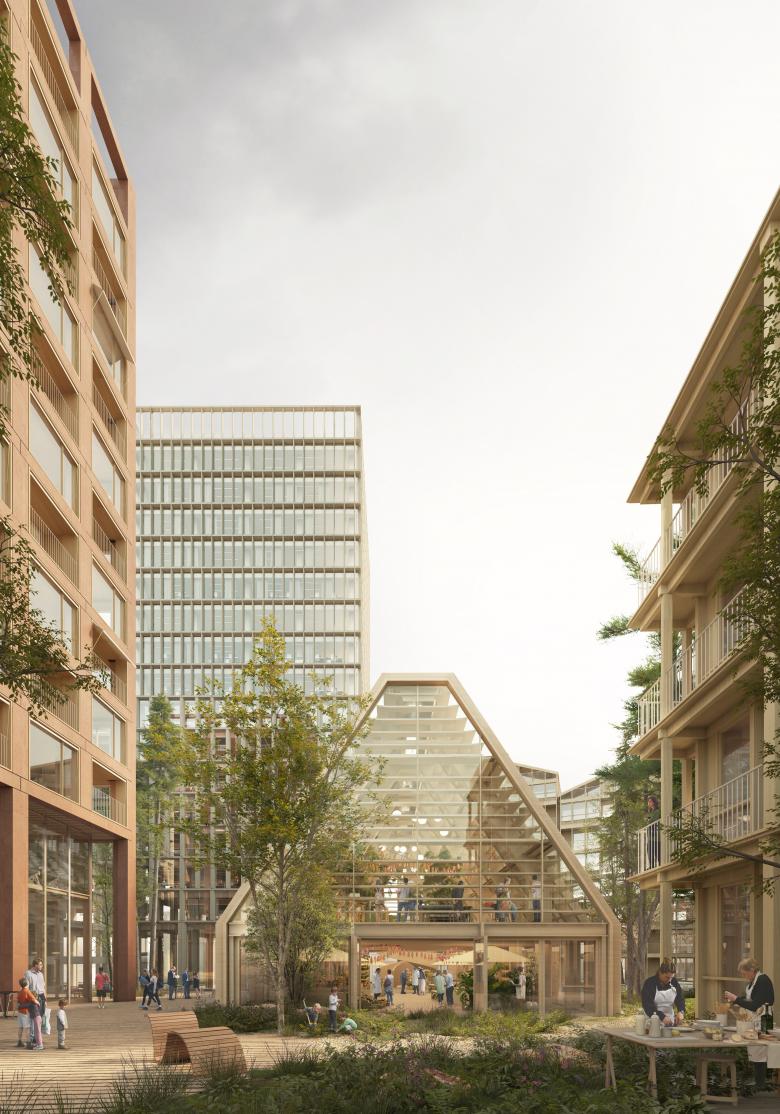
The district fosters cultural and social cohesion, extending its influence on nearby neighbourhoods while also nurturing its own distinct identity. Each neighbourhood serves as a space built upon human interaction and resident experiences, rooted in existing memories, the development of a sense of place, and the emergence of new values - a social ecotope.
- Architecten
- Schmidt Hammer Lassen
- Projectstatus
- Under Construction
- Klant
- Fonds de Compensation
- Local Architect
- Assar Architects
- Landscape Architects
- 1:1 Landscape Architects