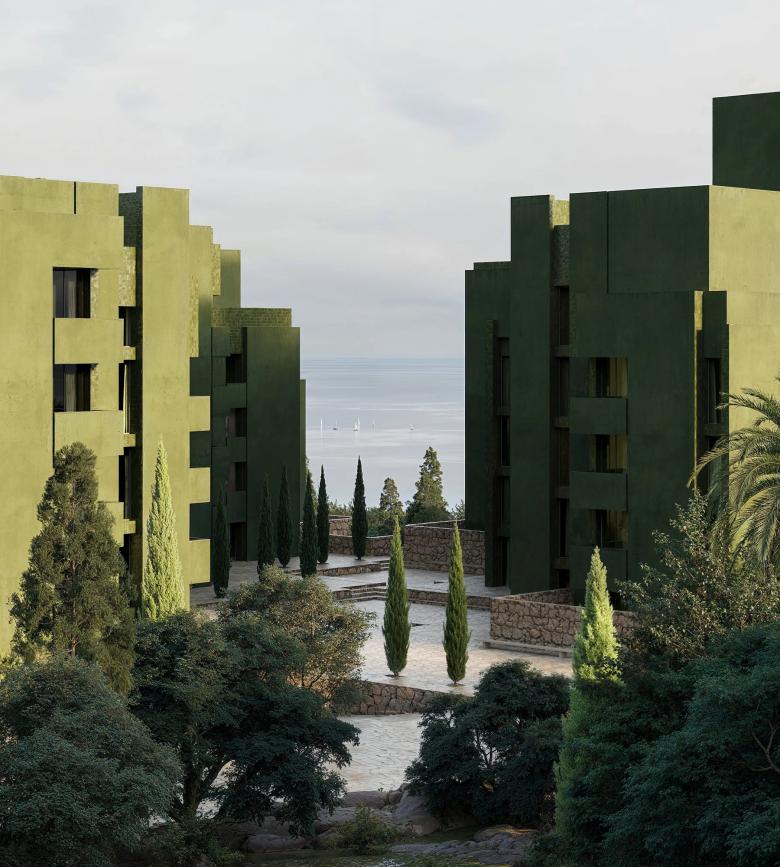
A Veil Draped Over an Albanian Forest
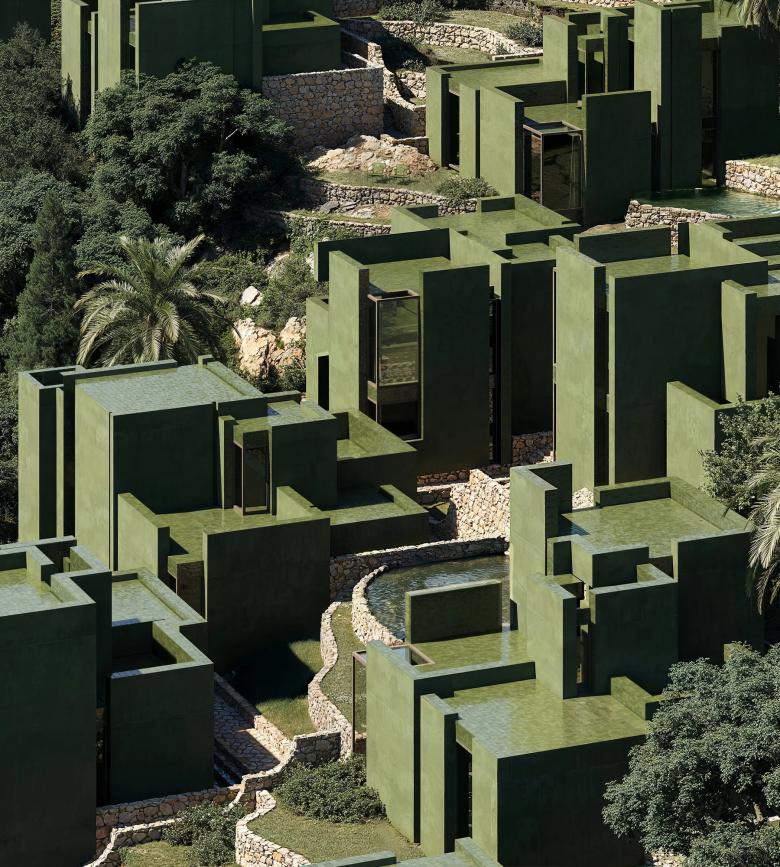
Bofill Taller de Arquitectura is designing a resort in Dhërmi, Albania, that comprises 443 residential units settling onto the landscape like a lightweight fabric. Faced with an almost untouched coastal forest landscape, the firm has opted for restraint: the architecture does not dominate the terrain, but rather seeks to adapt to it.
In southern Albania, just a short distance from the Adriatic Sea, the deciduous forests surrounding Dhërmi cover a significant portion of the coastline. The uniqueness of this coastal strip lies in its mountainous terrain. Precisely for this reason, it has remained virtually undeveloped, preserving an ecological sensitivity that any built intervention could easily compromise. This is the ethical and design starting point for The Veil, the residential complex conceived by Bofill Taller de Arquitectura in 2024 and currently under construction.
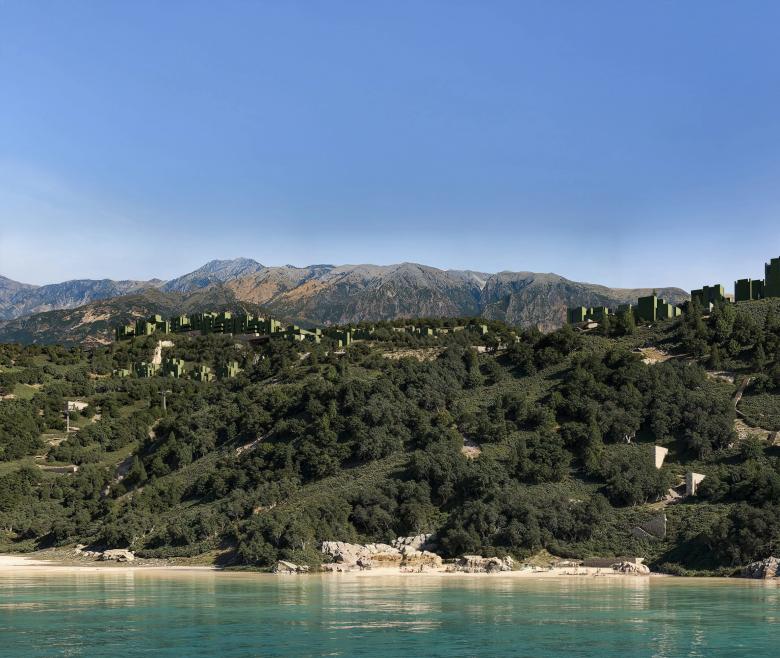
The project occupies two plots of different sizes, comprising 366 apartments and 77 villas, organized into sixteen different types that vary in both size and layout. What is remarkable is not the scale of the project—which is considerable for a setting of this nature—but rather the logic governing its implementation. Instead of resorting to earthworks as a means of leveling the site, the buildings are situated on platforms that faithfully follow the terrain’s contour lines, resting on the topography without forcing it.
The project’s name encapsulates this philosophy: the complex aims to behave like a lightweight veil gently draped over the land, present yet barely perceptible in the landscape that surrounds it.
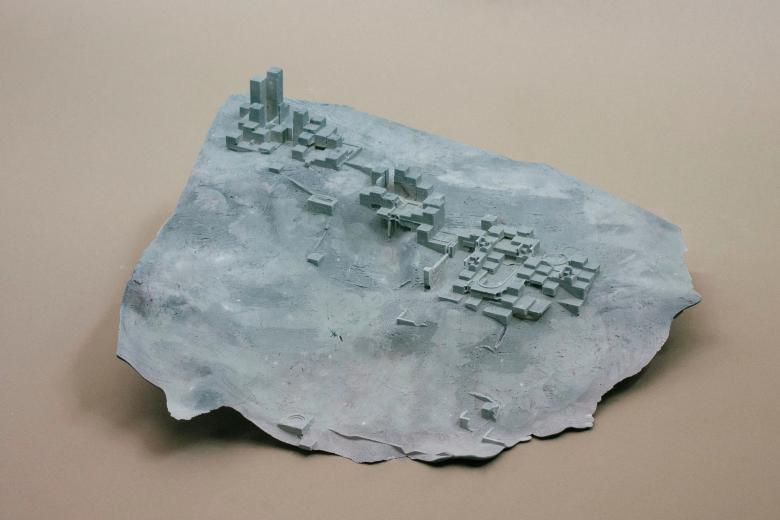
The floor is the first element to establish a dialogue with the surroundings. Running through the complex is a network of paths and stairways built of locally quarried stone, their tonal variations based on samples taken directly from the natural landscape. The result was a palette of four colors that ensures visual continuity between the built environment and the existing landscape.
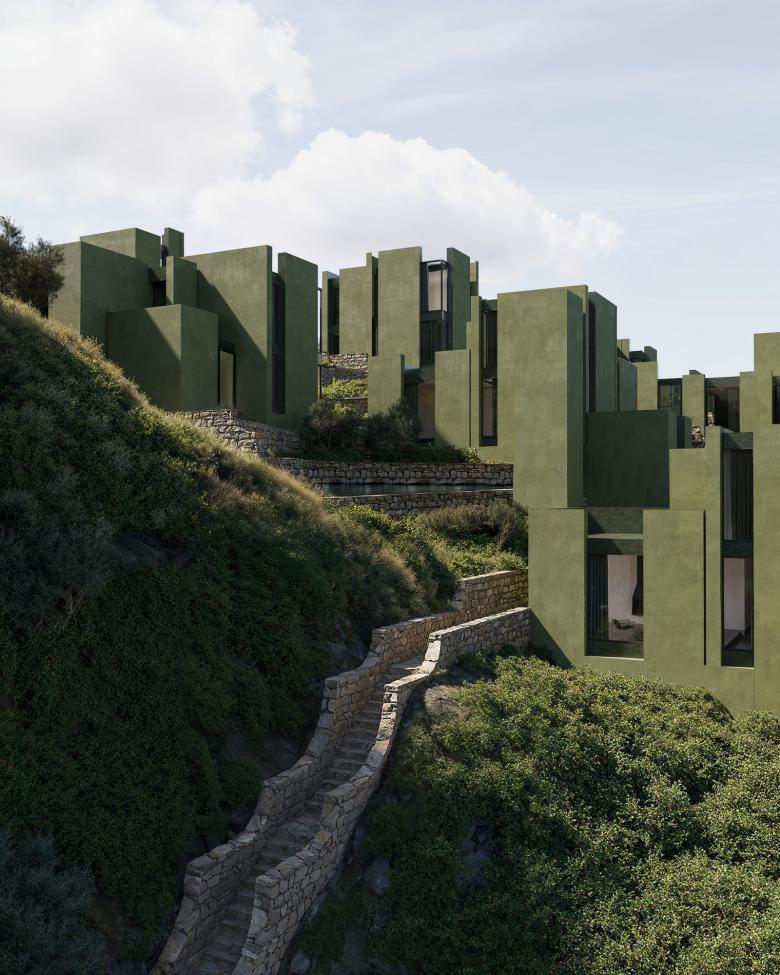
The larger trees remain untouched, while the rest of the vegetation is preserved as much as possible. The compositional structure is clear: horizontal lines on the platforms, vertical lines in the buildings, which rise above the treetops to frame views of the Adriatic. Large windows, balconies, terraces, and swimming pools give the complex a sense of visual and physical openness that avoids the feeling of being enclosed, as is otherwise common in resort developments.
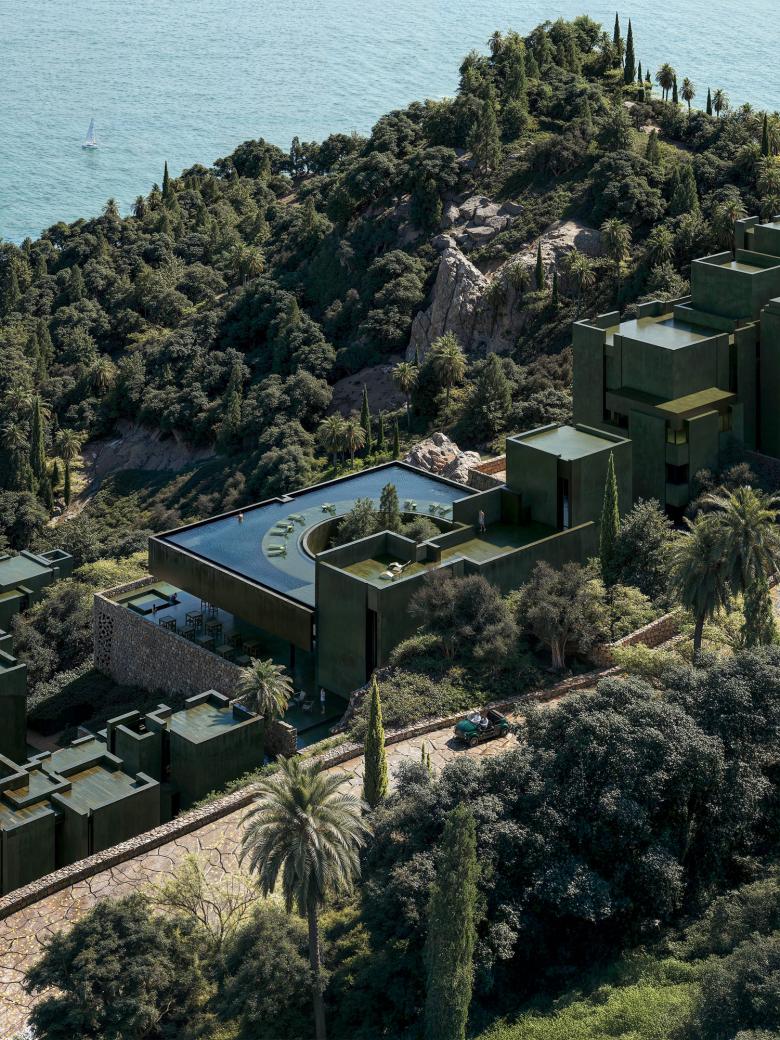
Despite their typological diversity, the volumes maintain a formal coherence derived from the treatment of the facade: concrete and glazed ceramic tiles form an envelope that varies in configuration but remains recognizable. The studio’s stated intention is for this architecture to blend into the landscape and even reflect its light and shadow, integrating itself into the natural cycles of the forest setting.
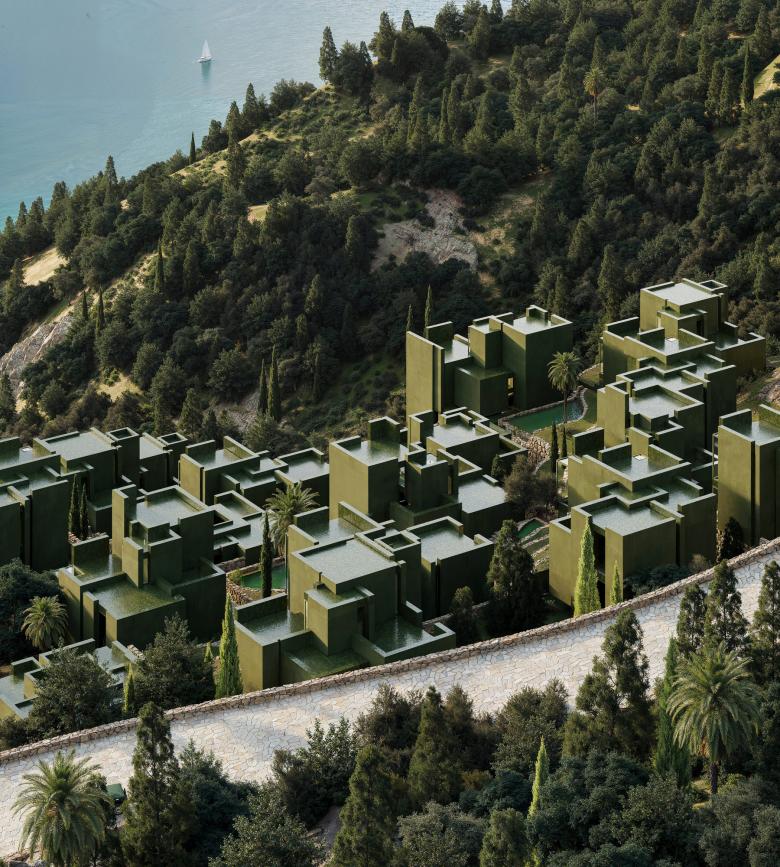
Standing out among the residential buildings is a central communal structure that houses the social club, restaurant, gym, and a series of swimming pools. It is precisely here that the design reaches its most compelling moment: the inner courtyard departs from the linear language dominant throughout the rest of the project to trace a curve that encircles a group of century-old trees. This is not a picturesque gesture, but rather the most honest expression of the hierarchy of values that governs the entire project, of architecture yielding to the landscape, allowing it to take center stage.