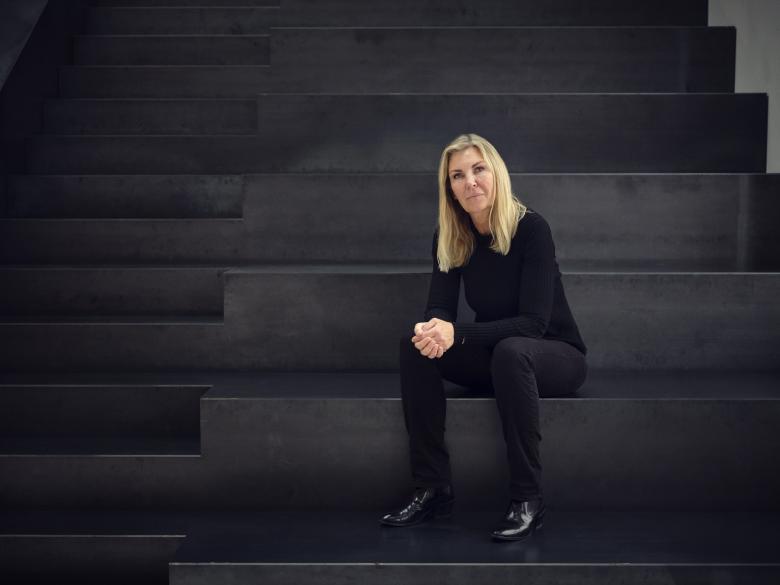
Conversation with Dorte Mandrup
'You have to be a problem-solver to be motivated to practice architecture'
For Danish architect Dorte Mandrup, the “irreplaceable place” is central. Even if her buildings appear sculptural, architecture is not sculpture to her; rather, it must have a strong and meaningful relationship with its site. A conversation about the future viability of building in times of climate crisis.
Dorte Mandrup’s academic path is unusual. Before turning to architecture, she studied sculpture and ceramics in the United States and later, back in Denmark, even began studying medicine. These different disciplines continue to shape her understanding of tectonics today and are also reflected in the office’s humanistic approach. In conversation, Mandrup explains that at the beginning of her studies there were simply many things she wanted to do: “On the one hand, I wanted to become an artist; on the other, I found the natural sciences extremely exciting. Today, for the way we work, this means that we proceed both intuitively and with an approach that I would not describe as purely scientific, but certainly very well documented.” For every commission, the project team gathers vast amounts of data in order to understand the context and the place, including not only drawings but also climate data, information on culture and history, typical materials, and compositions.
Since Mandrup founded her office in Copenhagen in 1999, the small team has grown to become an internationally recognized practice with more than 75 employees. It has been a long journey, Mandrup says, because at first she founded the office in order to freely test her own ideas: “When I started, I wanted to create architecture that was as temporary as possible, with a very thin skin between inside and outside. Later there were phases in which we focused strongly on creating social spaces or establishing new connections and a kind of collectivity in urban environments.”
Over the past ten years, sustainability and climate change have become a central part of the firm's work. Denmark now has the strictest requirements in Europe when it comes to reducing CO₂ in the building sector. The “Reduction Roadmap” requires clients and planners to consider the entire life cycle of a building. Since 2025, the upper limit for CO₂ emissions from new buildings in the so-called life cycle assessment (LCA) has been lowered again and now stands, for almost all new building types, at an average of 7.1 kg CO₂ equivalents per square meter per year—a figure that includes the entire carbon footprint, from the manufacture of building materials and the construction process to the building’s later operation. Such precisely codified requirements for CO₂ emissions in the building sector are hardly found in other countries. “We try to work with new materials while leaving the smallest possible CO₂ footprint,” says Mandrup. “When society changes, our response changes too.”
The climate crisis, however, requires not only technical adaptations and new limits in construction, but also modesty, or even a willingness among architects to make aesthetic compromises. The radical reduction of CO₂ emissions calls for openness to innovation and a different view of materials. Sometimes, in Mandrup’s projects, this leads to greater robustness or stability; because, for example, timber beams have to be thicker in order to withstand fire. “But I don’t see that as a compromise; I see it as an architectural challenge. It is good for architecture that we once again have to understand how to build and what is in the toolbox,” she says. The years of “wow architecture,” with its “heroic acts,” the longest cantilevers and its focus on the ego, are over. “Much of what was built in the 2000s is almost incomprehensible today—people did it simply because it was possible,” says Mandrup. “Today, one has to be more sensible and be able to explain why one does things. Sustainability should not be treated in an emotional or romanticized way; it is about hard numbers and efficiency in the life cycle of a material.”
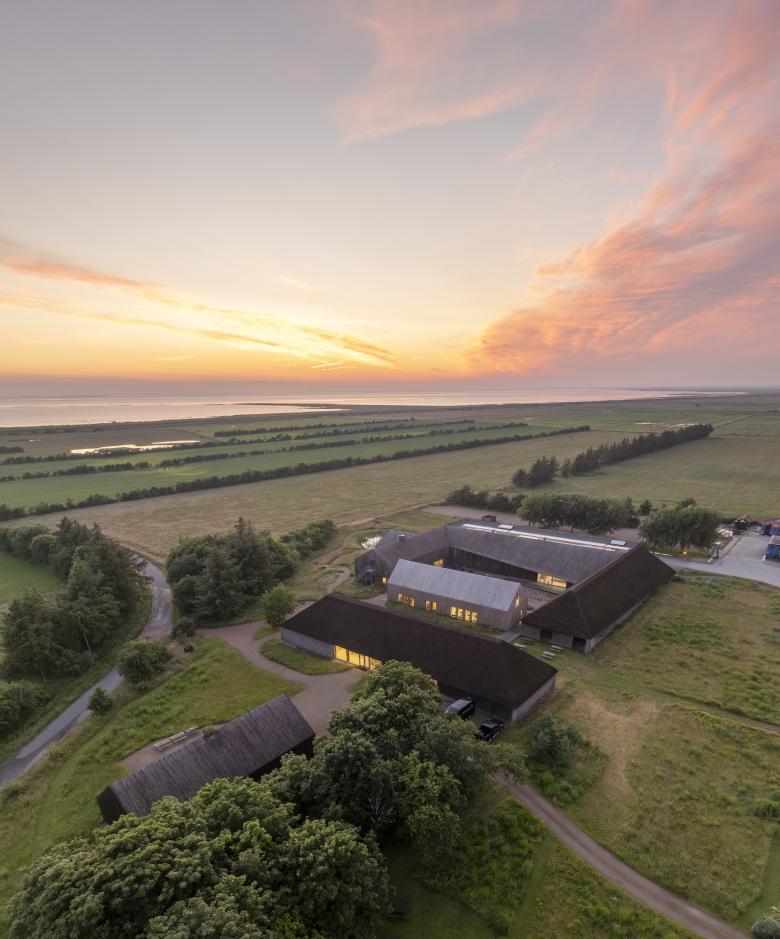
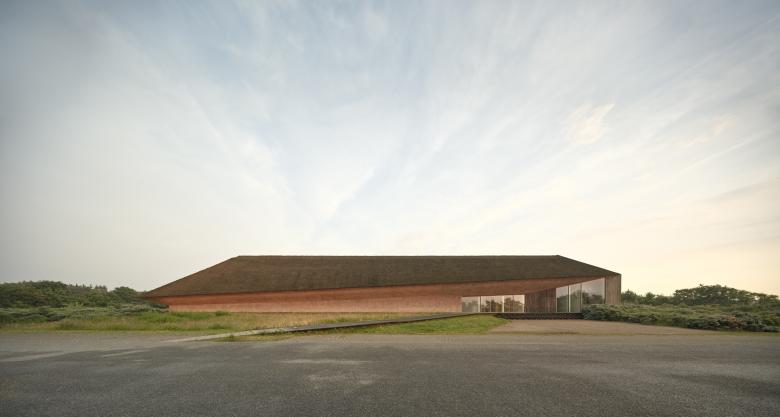
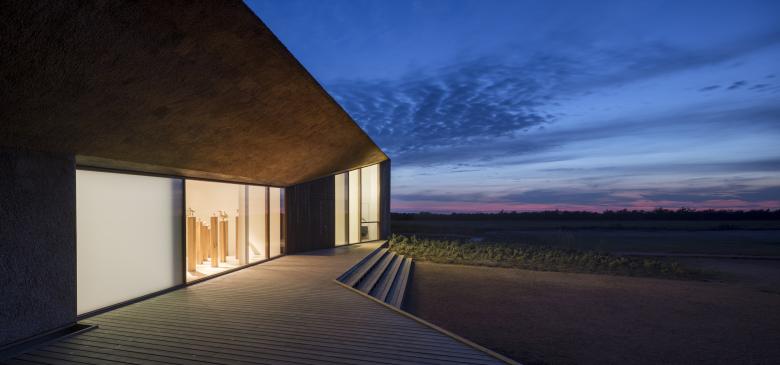
A wide range of alternative and rediscovered materials, as well as craft techniques, have therefore also found their way into the office’s projects. At the Wadden Sea Centre, traditional thatch is used as an abstract, modern material and decisively shapes the building’s expression. If one looks at authentic building traditions, there is always a reason why things look the way they do, the architect explains. But instead of merely repeating what has been seen and thereby slipping into nostalgia, materials and crafts find new uses and challenges in the projects.
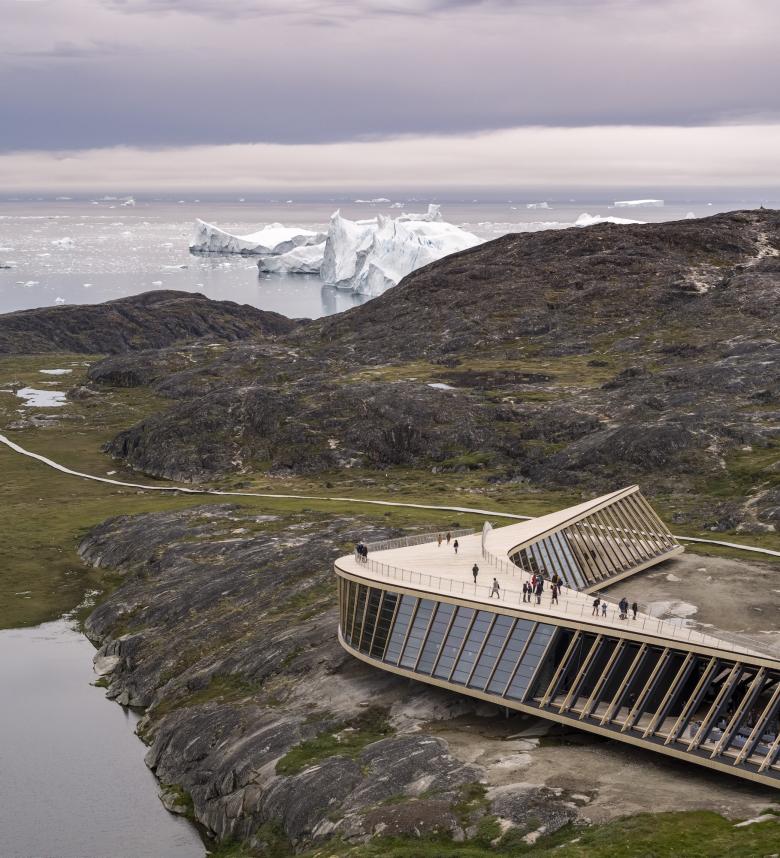
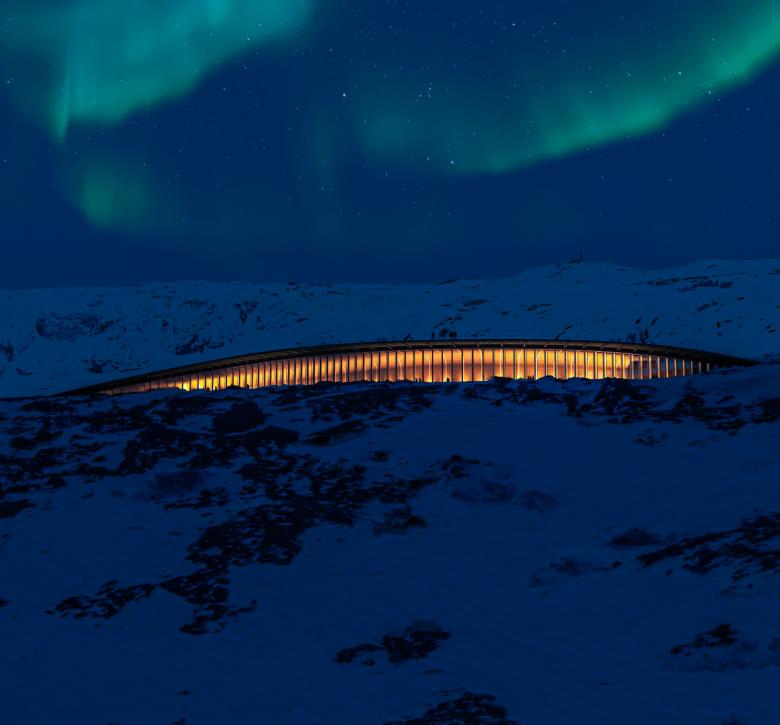
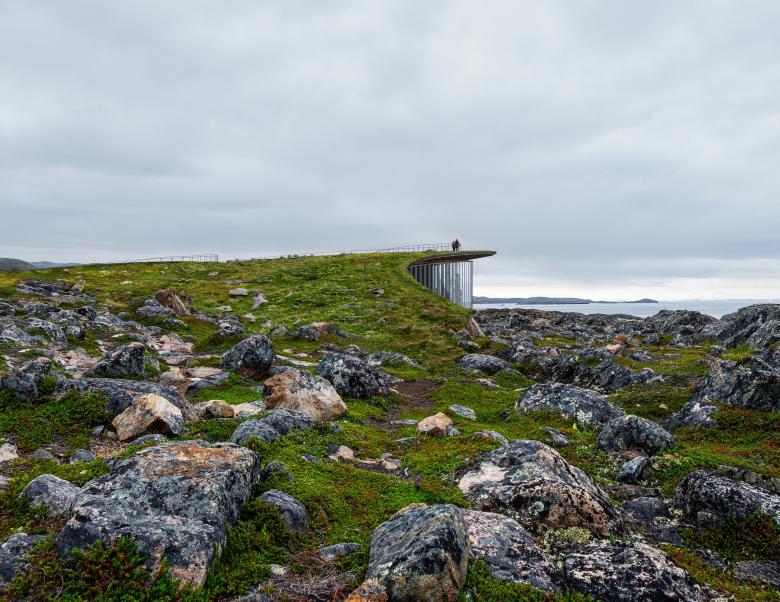
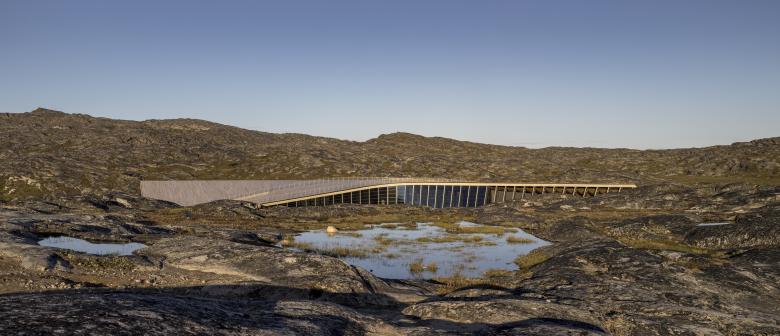
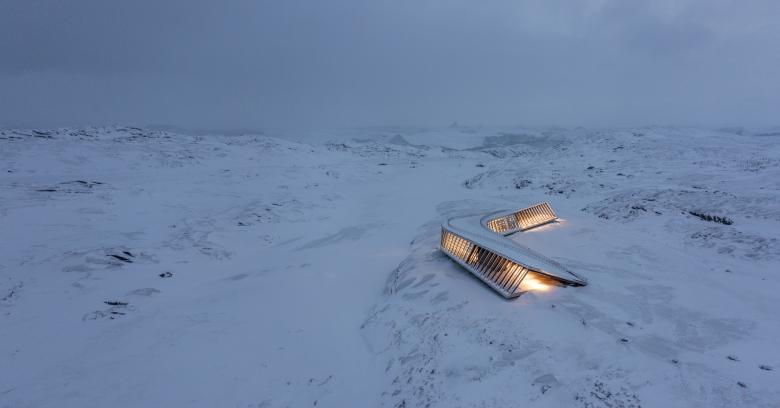
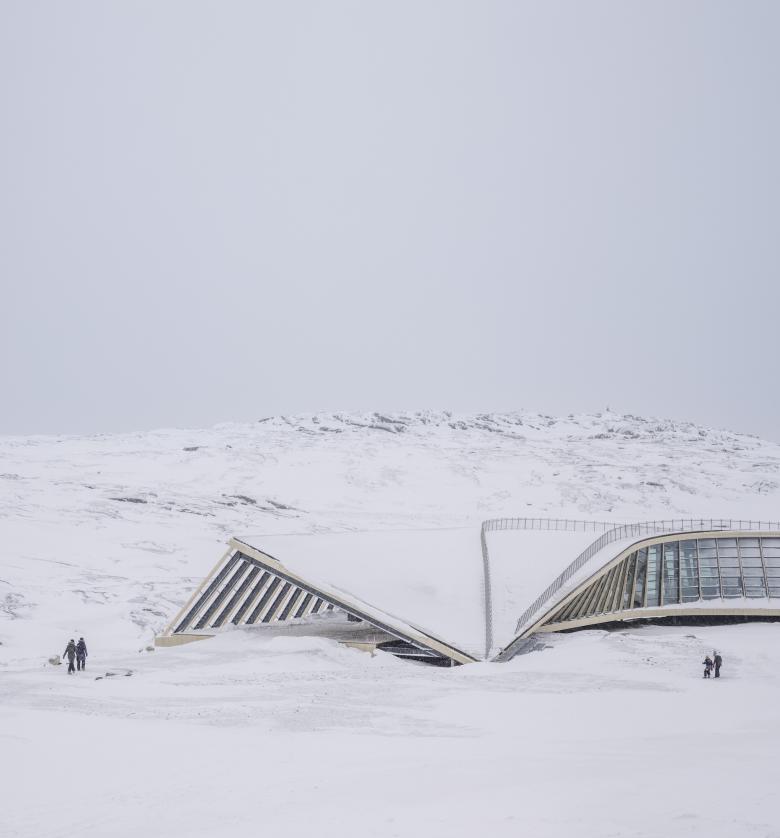
This also includes understanding natural phenomena as a basis for future-oriented building—the Icefjord Centre in Greenland, for example, responds very precisely to climatic conditions such as snowdrifts and meltwater. What is important in such projects, Mandrup says, is truly interweaving the building with the rugged landscape: “It is fun to understand how the climate in a place actually works in order to create something meaningful that goes beyond the purely functional level. The strict limits in Denmark are finally pushing clients to become innovative—in my view, they would never have started doing so on their own.”
In this respect, Dorte Mandrup is in the same position as other pioneers who have been trying for many years to bring natural building materials more strongly back into the market. Biogenic materials such as clay or thatch, despite their long history, are often unfamiliar in contemporary construction, and they also require a new attitude towards maintenance and repair. It is probably a convenience to which we have become accustomed thanks to concrete, steel, glass, and aluminum—durable materials that require little maintenance. “Our education is not prepared for this,” Mandrup says. “We grew up with the possibilities of concrete, where everything seemed possible. Now we are being thrown back onto an understanding of dimensions and the natural genetics of materials. And we also have to change the awareness of clients, who expect a wall to last a hundred years without maintenance.”