Yal Living
'Horizontal Living' in Kuwait
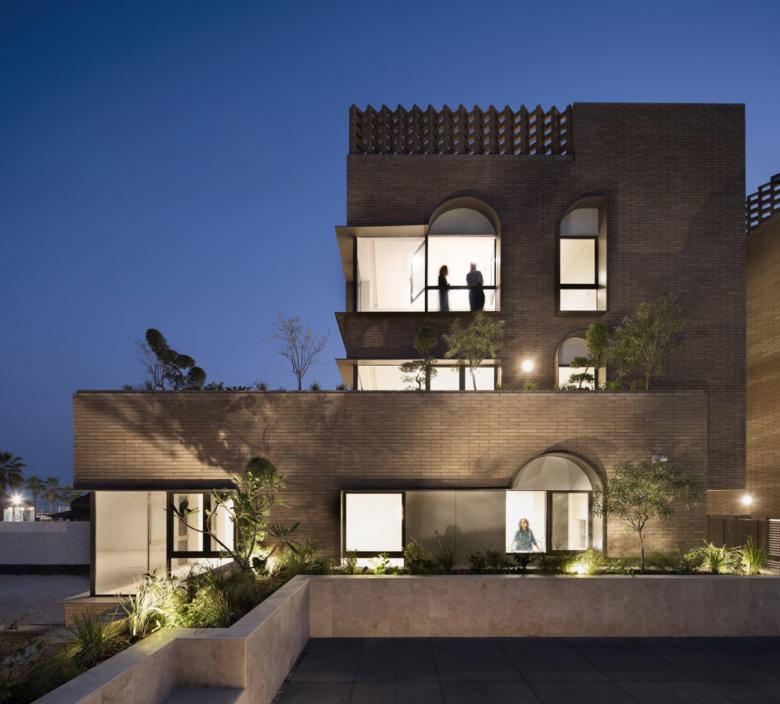
AGi architects, the firm led by partners Joaquín Pérez-Goicoechea, Nasser B. Abulhasan, and Gwenola Kergall, describes their design of the Yal Living residential development in Kuwait as one of “horizontal living.” The project, they clarify, “rethinks residential organization through a horizontal hierarchy and a fragmented, terraced layout.” Read on for other responses to our questions about Yal Living.
What were the circumstances of receiving this commission?The commission for Yal Living was awarded through a direct appointment, based on the client’s intention to develop a distinctive residential project capable of responding to a highly constrained coastal site. AGi architects was selected for its ability to approach complex spatial and environmental conditions through innovative design strategies, particularly in residential developments where quality of living, identity, and differentiation are key. Our experience with projects such as Black & White, Wind Tower, and Three Gardens had a major impact on client final decision.
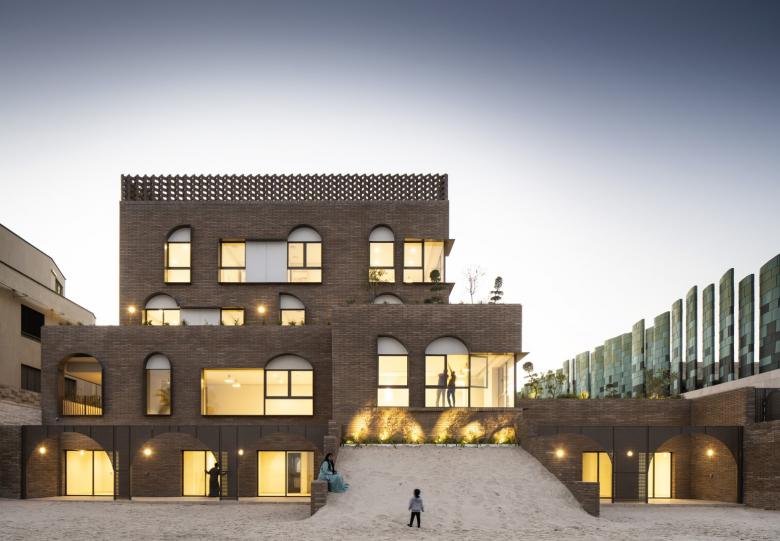
Yal Living is defined by its radical departure from conventional housing block typologies. Faced with a long and narrow plot, strict height limitations, and challenging neighboring conditions, the project rethinks residential organization through a horizontal hierarchy and a fragmented, terraced layout.
This strategy ensures that all homes benefit from sea views while enhancing privacy, natural light, and ventilation. The project also stands out for its strong material identity: a robust reddish brick outer skin that provides thermal performance and durability, contrasted with luminous interiors that amplify light in circulation spaces. Using framed arches on windows, terraces and openings act as integrated shading devices, reinforcing both environmental performance and links to traditional architecture.
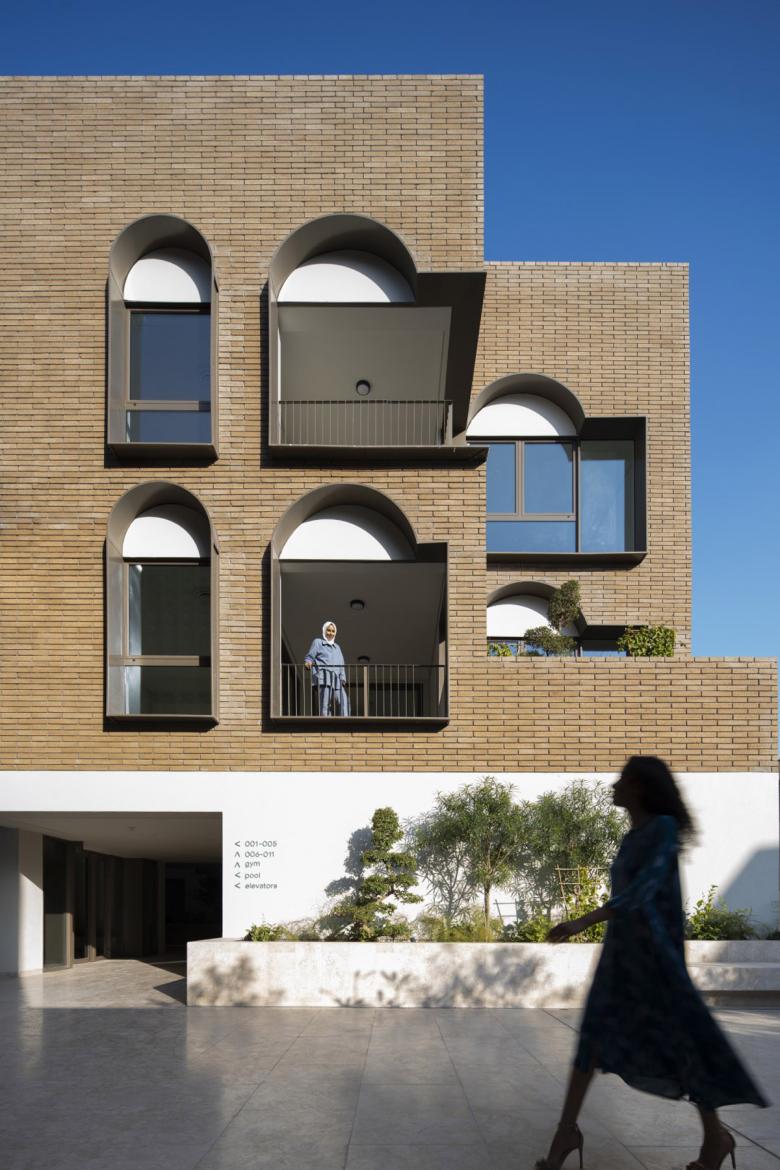
The design is driven by the ambition to maximize the relationship between housing and landscape under restrictive conditions. Inspired by the coastal setting and Kuwait’s climate, the project reinterprets traditional passive strategies—such as orientation, shading, and materiality—within a contemporary architectural language. By employing horizontal communication areas as active shading structures and incorporating a permeable brick facade, the design establishes a climatic buffer.
The idea of “horizontal living” becomes central to the concept, allowing each dwelling to engage directly with the sea while creating a layered sequence of private and communal spaces. The architecture balances protection and openness, combining solid, textured exteriors with bright, light-filled interiors.
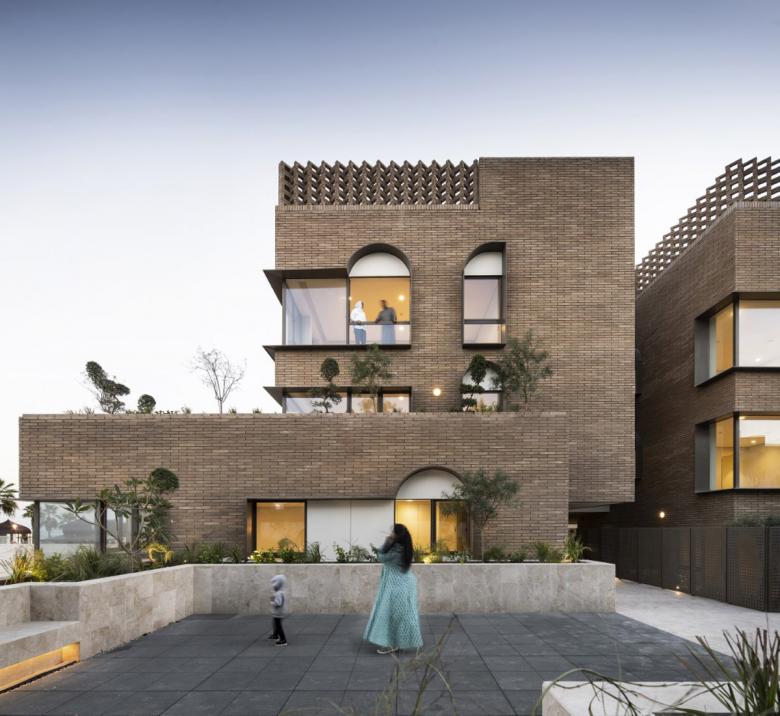
The site was the primary driver of the project. Its elongated geometry, proximity to the beach, topography, and regulatory restriction to only three floors required a complete rethinking of conventional residential layouts. Additionally, the presence of adjacent buildings on both sides limited access to light, views, and privacy.
In response, the traditional closed block model was fragmented. Circulation spaces were strategically positioned along the facade—also the most exposed to Kuwait’s harsh climate. All primary living spaces are oriented northwards and staggered, allowing corner living rooms to capture uninterrupted sea views while optimizing environmental performance.
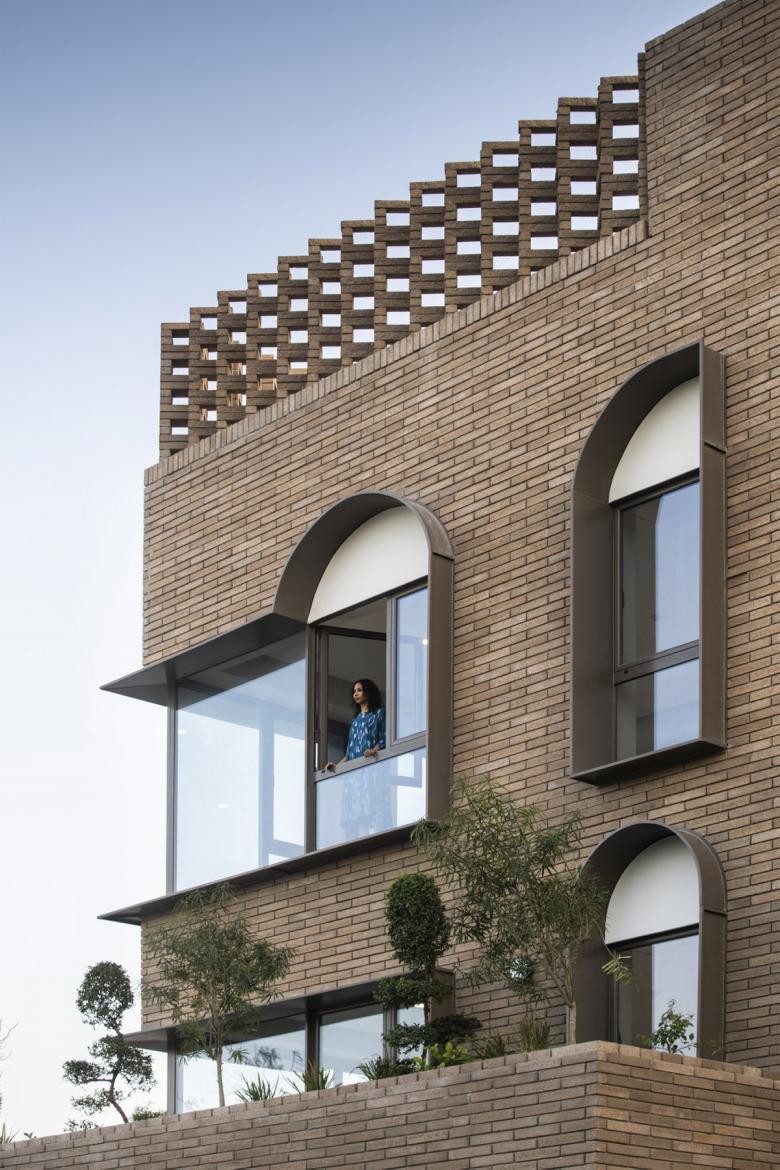
The client’s ambition to create a high-quality residential product with strong market appeal was a key driver in the design process. The requirement that most, if not all, units should enjoy sea views directly influenced the spatial strategy and ultimately defined the project’s identity.
At the same time, the design carefully considers the experience of future users by combining private outdoor spaces—such as gardens and terraces—with shared amenities including a pool, gym, and landscaped areas. This creates a balanced living environment where privacy and community coexist.
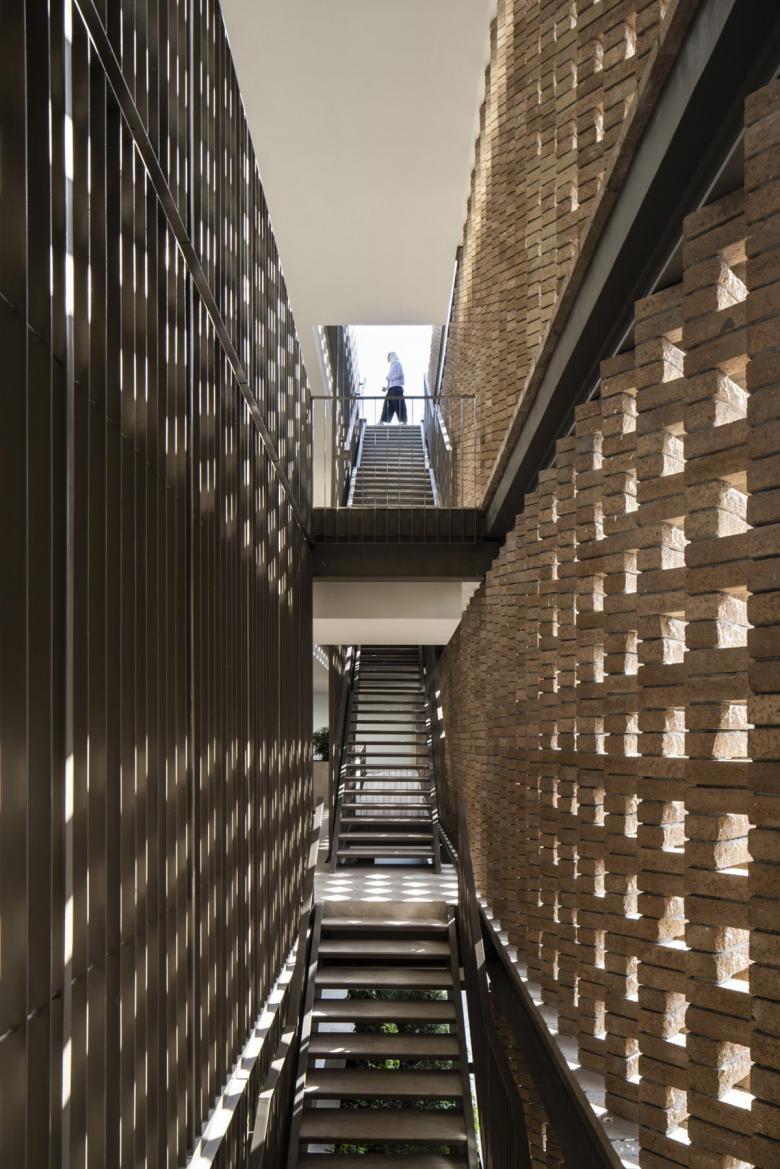
While the project underwent several design iterations, particularly in the early stages when testing different block configurations, the core principles remained consistent. The decision to move away from the closed block model and adopt a fragmented, horizontally organized system marked a key turning point in the process.
Subsequent changes focused on refining spatial relationships, improving environmental performance, and consolidating the material expression. The final design remains faithful to the original concept while achieving a higher level of precision and coherence.
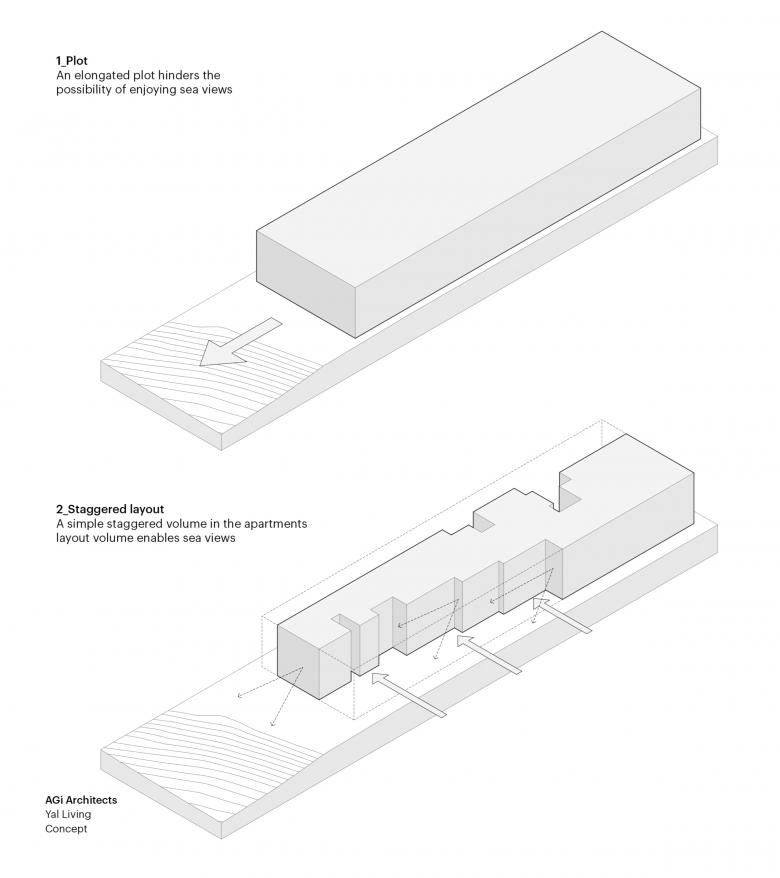
Yal Living reflects AGi architects’ ongoing exploration of alternative residential typologies that respond directly to context, climate, and user needs. The project aligns with the office’s commitment to challenging conventional models and developing site-specific solutions through spatial innovation.
It also reinforces the studio’s interest in integrating passive environmental strategies—such as orientation, shading, and material performance—into a strong architectural language. In this sense, Yal Living is both a continuation of AGi architects’ design philosophy and an evolution in its approach to collective housing. Conceptually, it draws a direct link to the Dubai Expo Pavilion, the Black & White narrative, the Wind Tower principle, and the integration of the nature as in Three Gardens project.
Email interview conducted by John Hill.
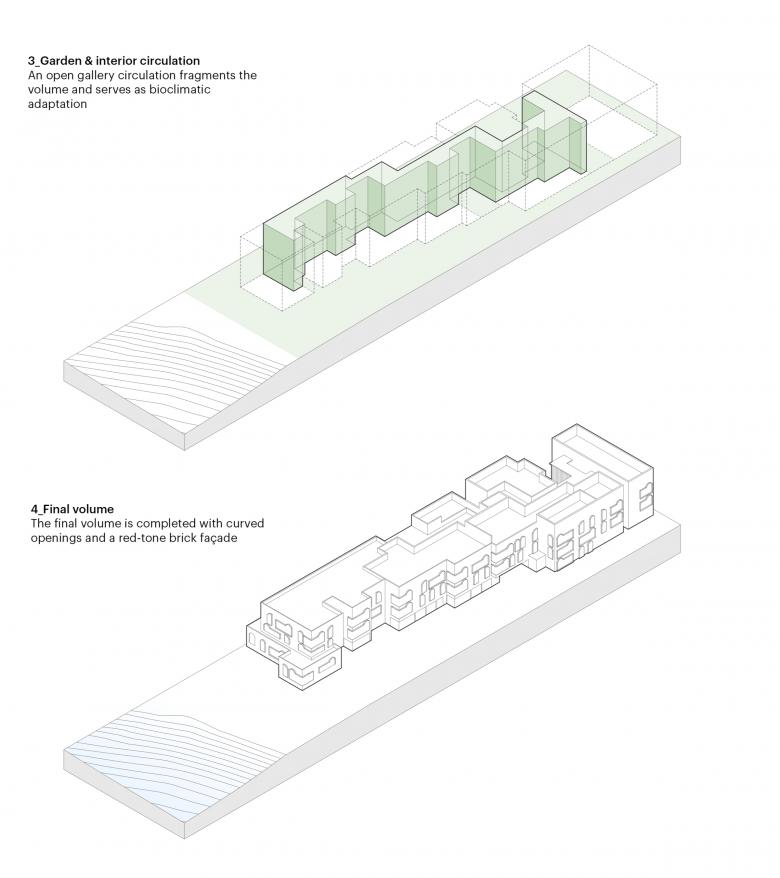
Location: Messilah, Kuwait
Client: Private
Architect: AGi architects, Kuwait
- Design Principals: Nasser Abulhasan, Joaquin Perez-Goicoechea
- Project Team: Justo Ruiz Granados, Stefania Rendinelli, Pedro Moreno, Ameenah Al Qabandi, Sara Barranco, Luis Garcia Martinez, Jean Awkar, Aisha Alsager, Sayer Alsayer, Babu Abraham, Eugene Torralba, Ibrahim Abu Fayyad, Mohammad Naga, Shaik Mohammad Rizvan, Haroon Abdulaziz, Robert Varghese, Robert Varghese, Vinil Killikat, Mohamad Trad, Abhilash C. Thilakan, Naseeba C. Shaji, Remya Nair
MEP/FP Engineer: Euring Ingenieros
Contractor: Al Ahlia Contracting Group
Site Area: 11,000 m2