Shell Book Pavilion
Origin: A Response to a Familiar Place
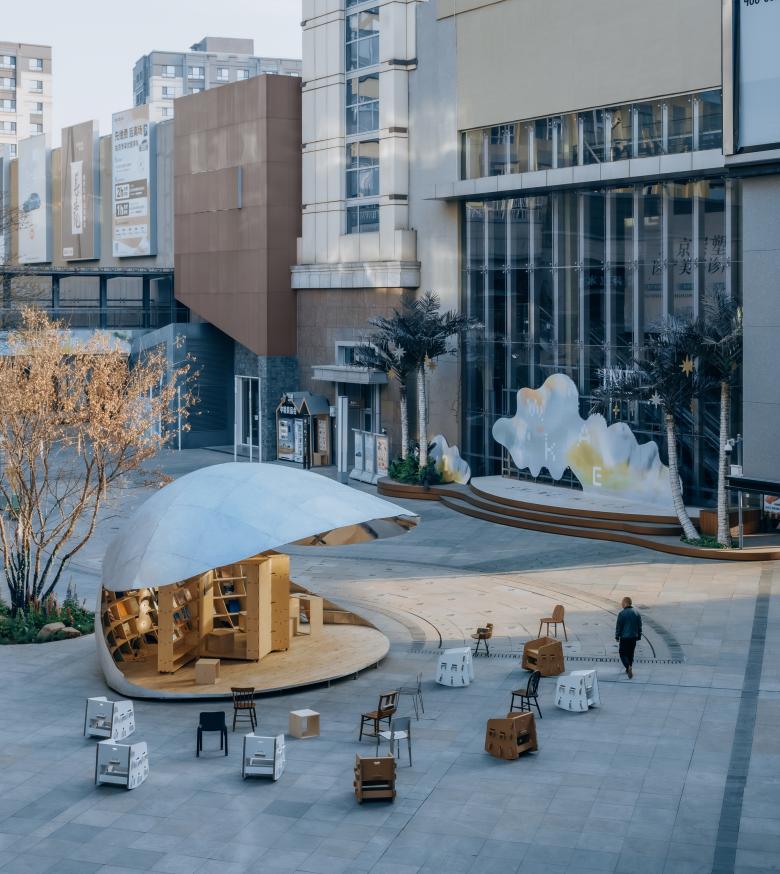
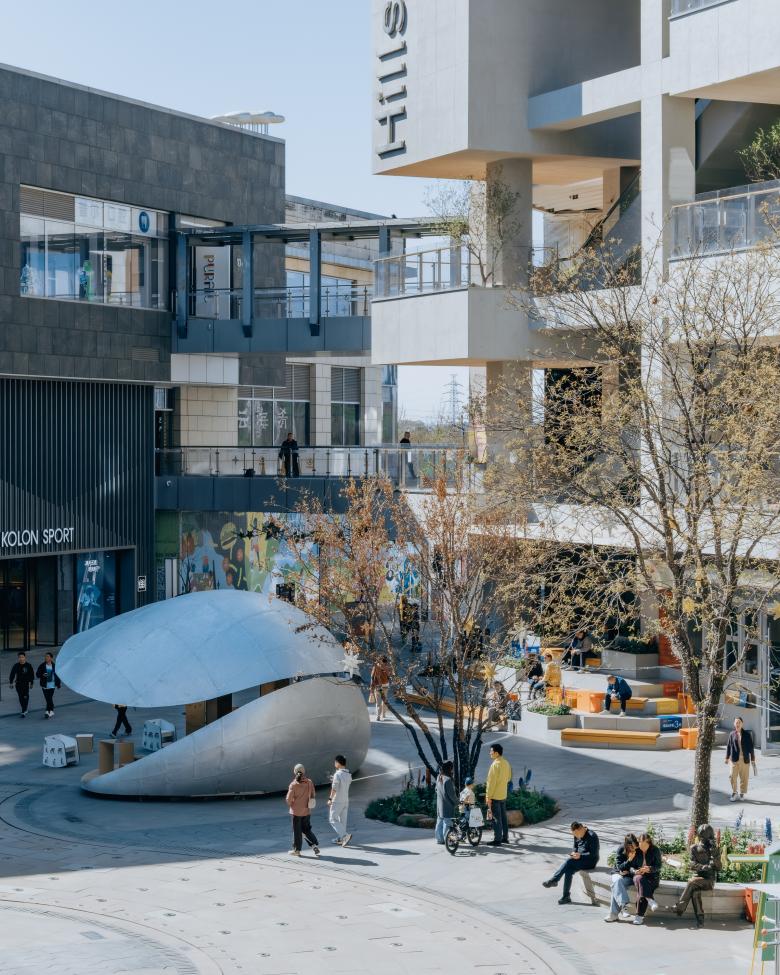
Shine Hills is not an unfamiliar place to me. Since it is close by, I used to visit it often with my child. My earliest impression was not only the many art installations scattered across the plaza, but also its openness to children and community life—a place where people could play and linger. When I was invited to design a small community book pavilion here, it felt like returning to a familiar place woven into everyday life—an opportunity to reconsider what kind of public space this site truly calls for.
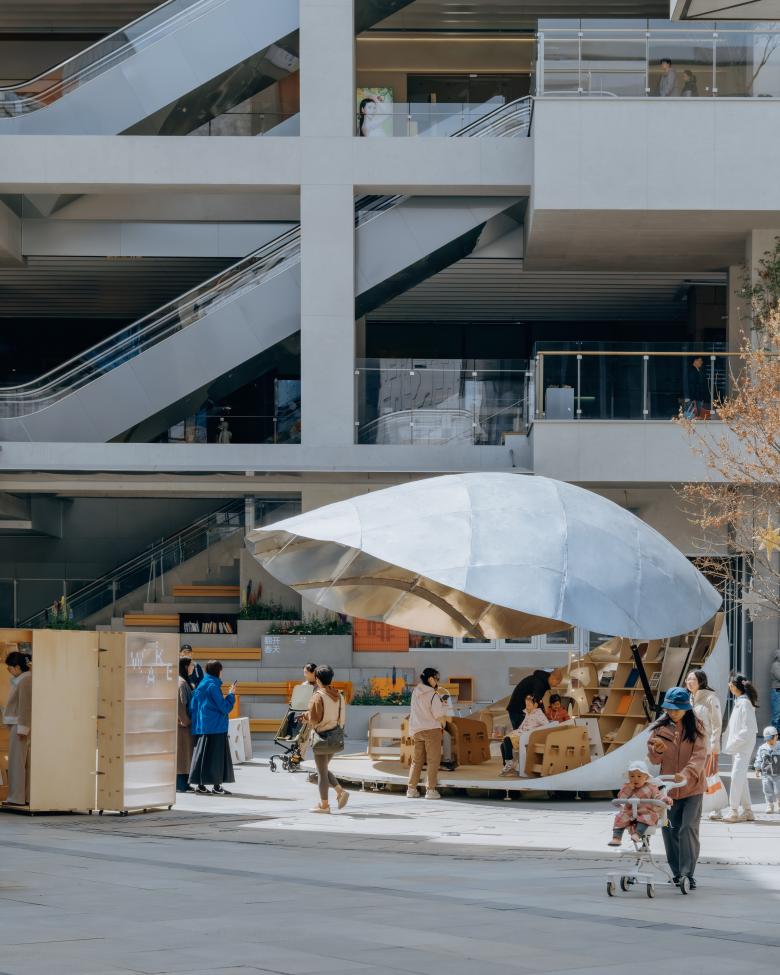
The intention was not simply to insert a small structure into the plaza, but to connect daily life in a community-oriented commercial setting with reading, lingering, and encounters.
Three Core Ideas: Playfulness, Centrality, and Openness
Based on these aspirations and in-depth analysis of the site, three core ideas gradually emerged.
First, it needed to be playful.
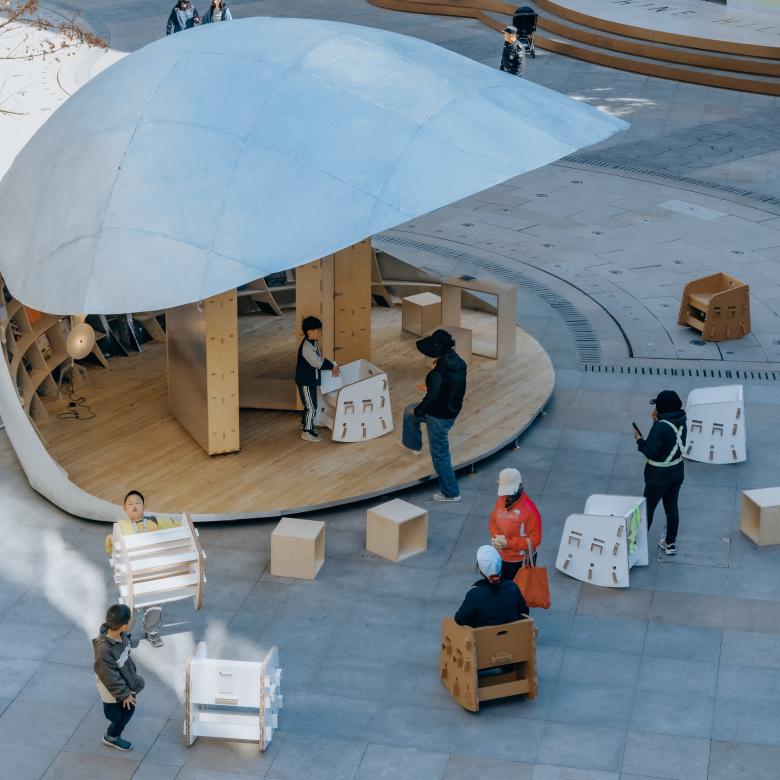
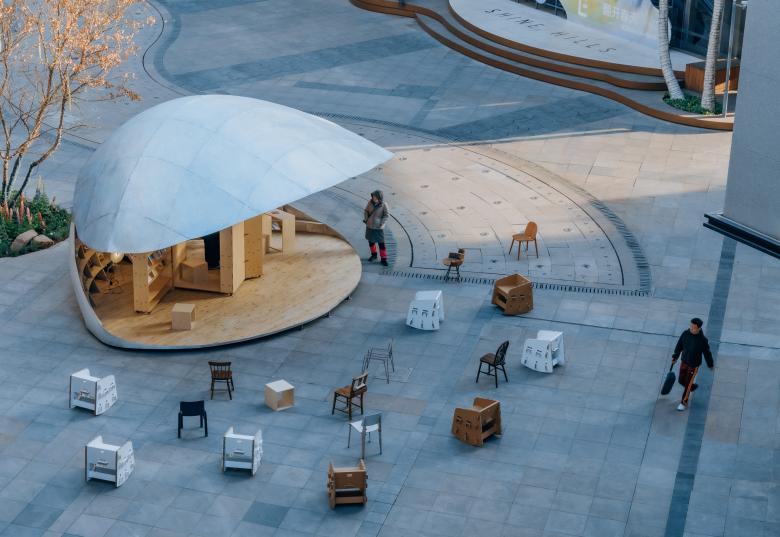
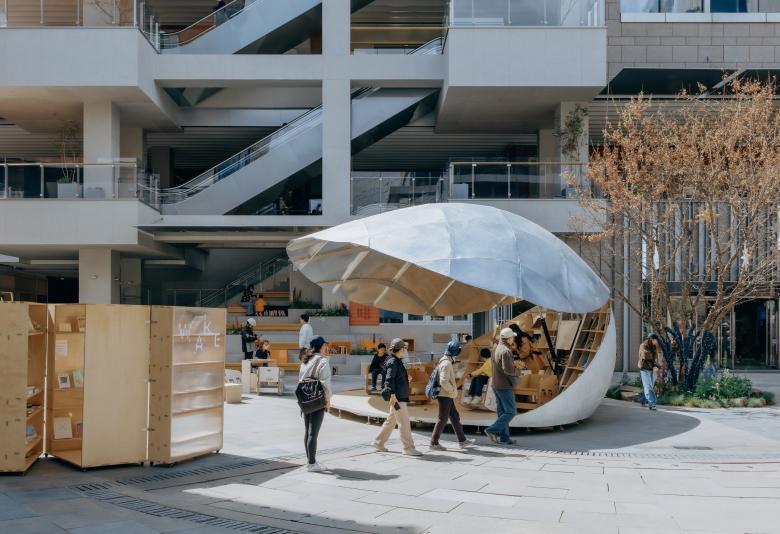
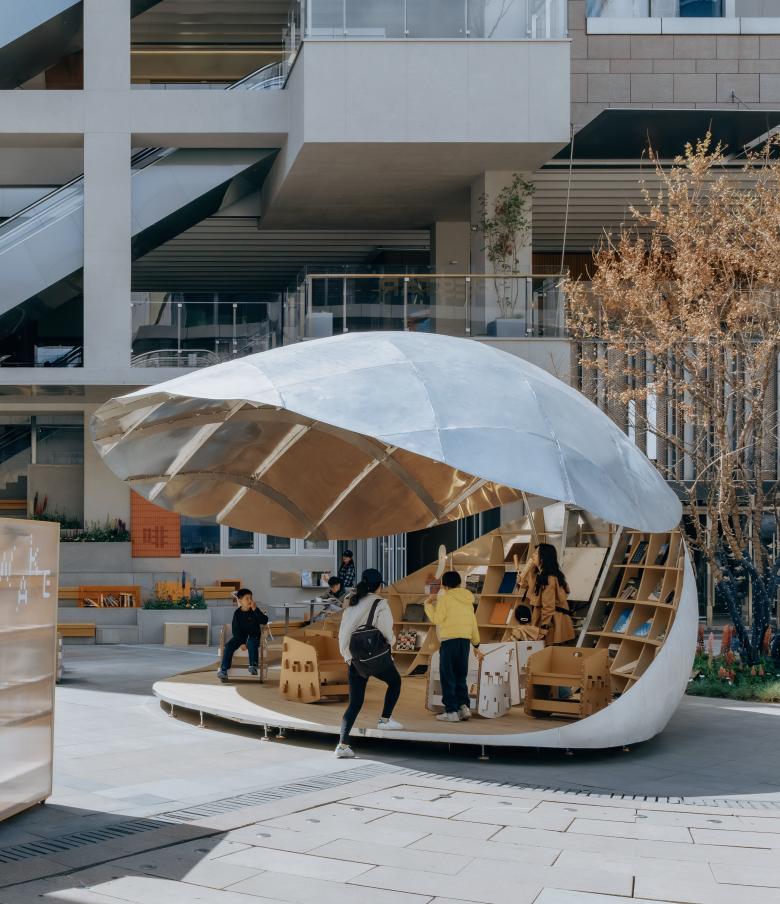
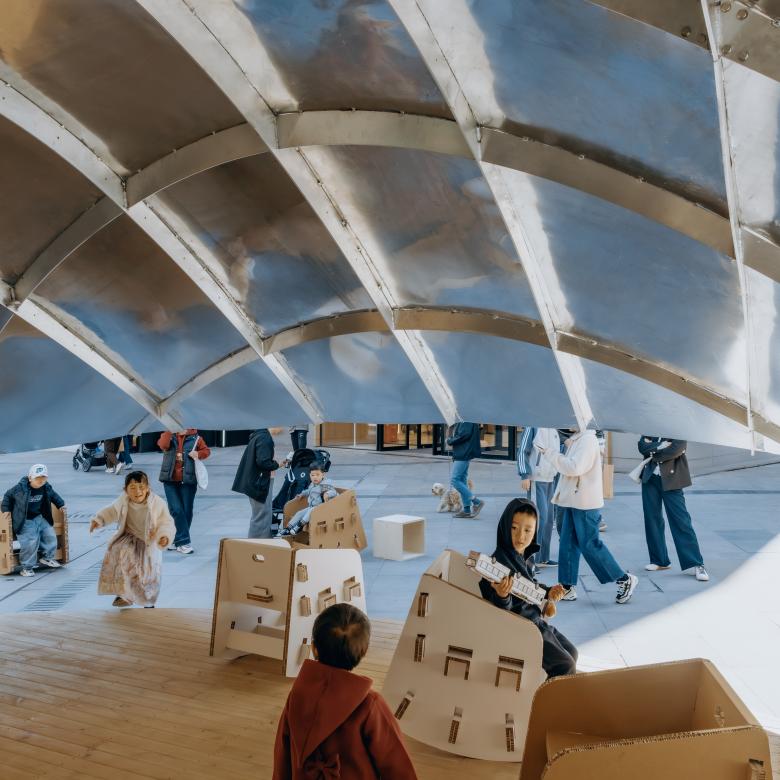
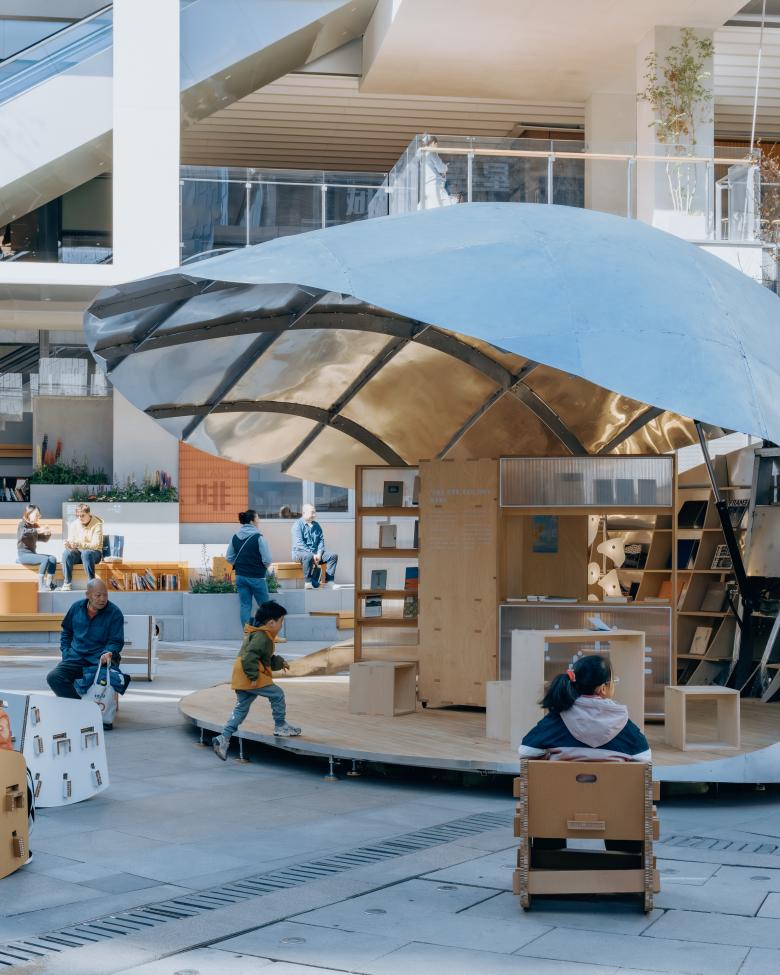
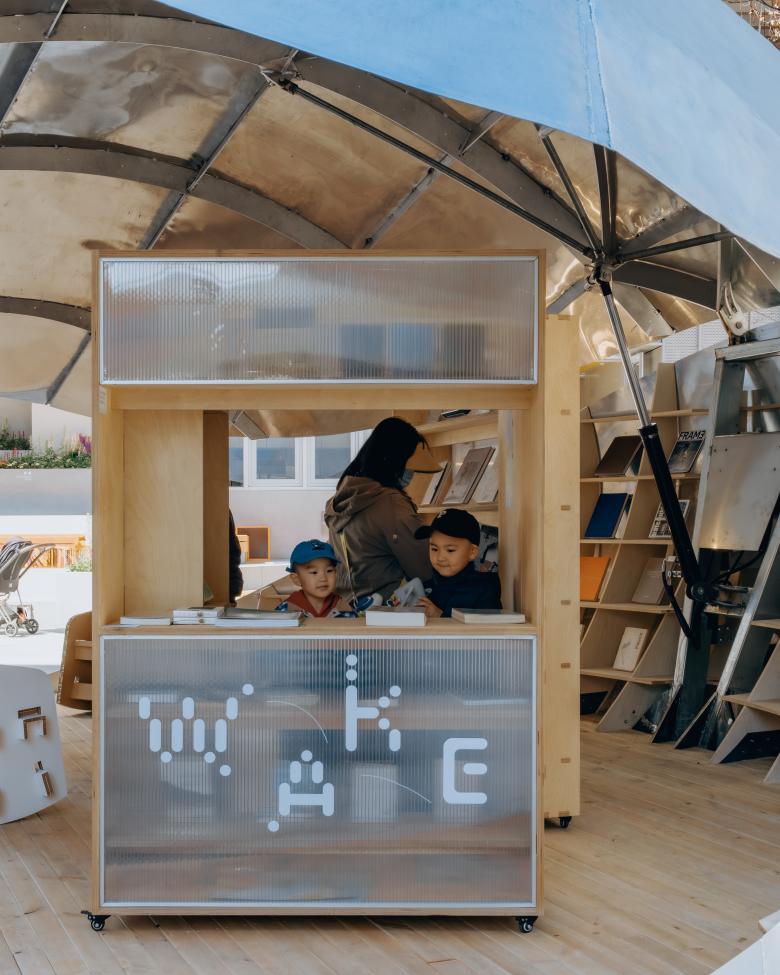
Situated at the center of the plaza, it had to be engaging enough to draw people in—inviting them to approach and linger, rather than simply walk past or avoid it.
Second, it needed a 360-degree presence.
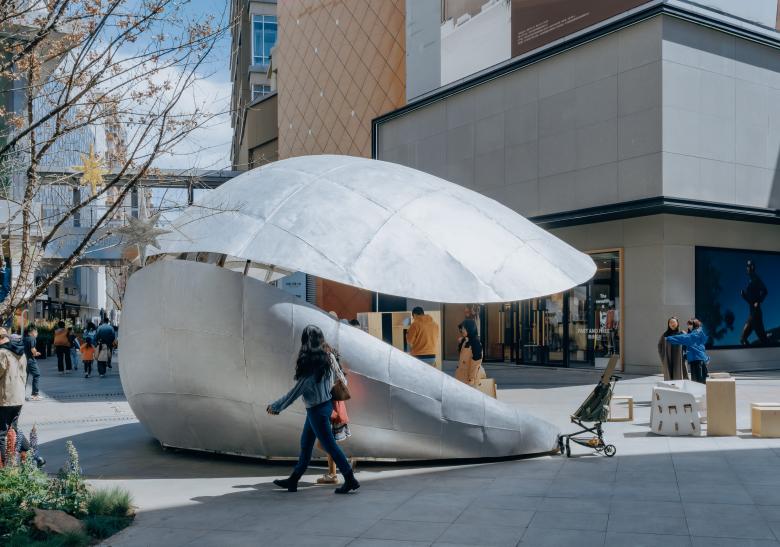
Positioned at the center of a plaza with pedestrian flows from all directions, it couldn’t be conceived as a conventional building with a defined back side. Every side needed to be equally active and engaging—visible and accessible from all directions. A conventional box was therefore never an option.
Third, it had to remain open.
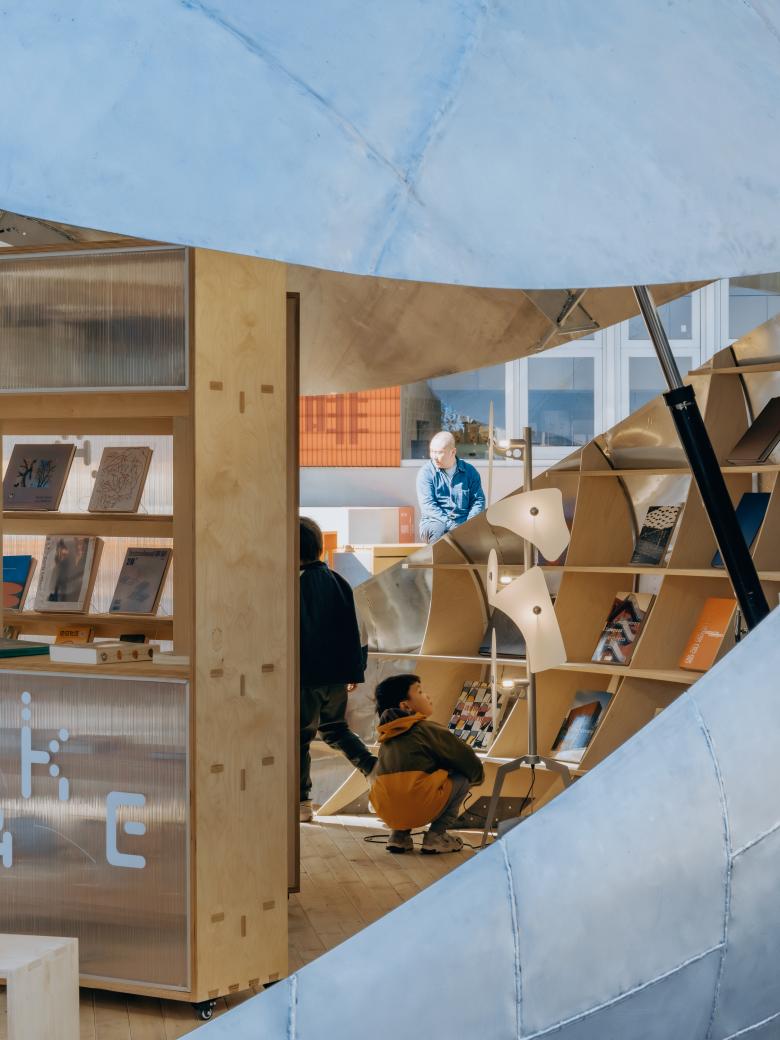
In such a highly public setting, a closed, introverted structure would be out of place. Instead, it should maintain strong connections with its surroundings—passersby, airflow, activities, and the circulation of the plaza.
A Space in Constant Transformation
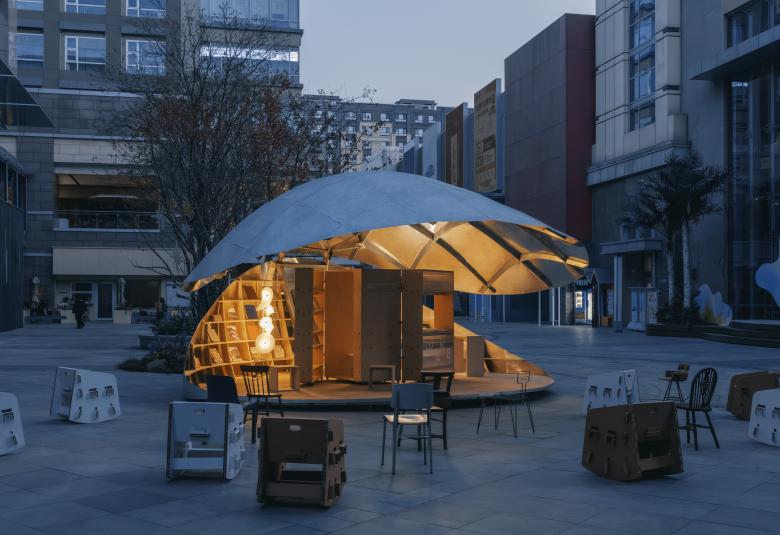
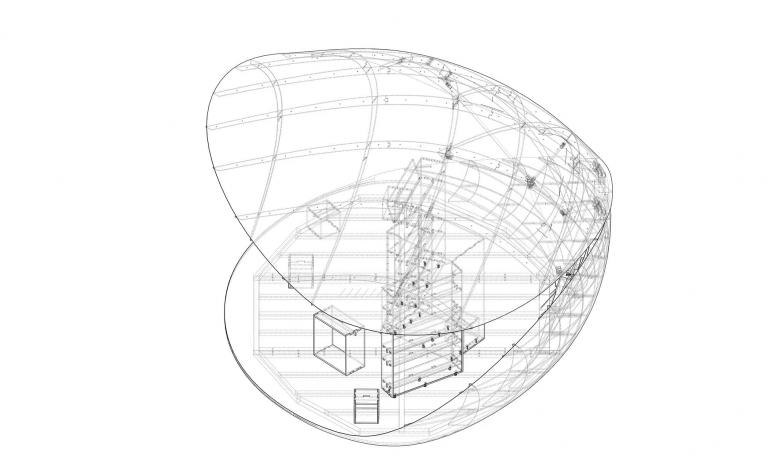
From the initial ideas, the book pavilion gradually took shape—not as a fixed, static presence, but as a space meant to shift and evolve. We initially considered enlarging the latter half of our earlier project, a movable ladybug-shaped micro-library for kids, but its side-opening mechanism would inevitably cause rainwater issues. This led us to shift toward a vertical opening system, which eventually gave rise to the “Shell Book Pavilion.”
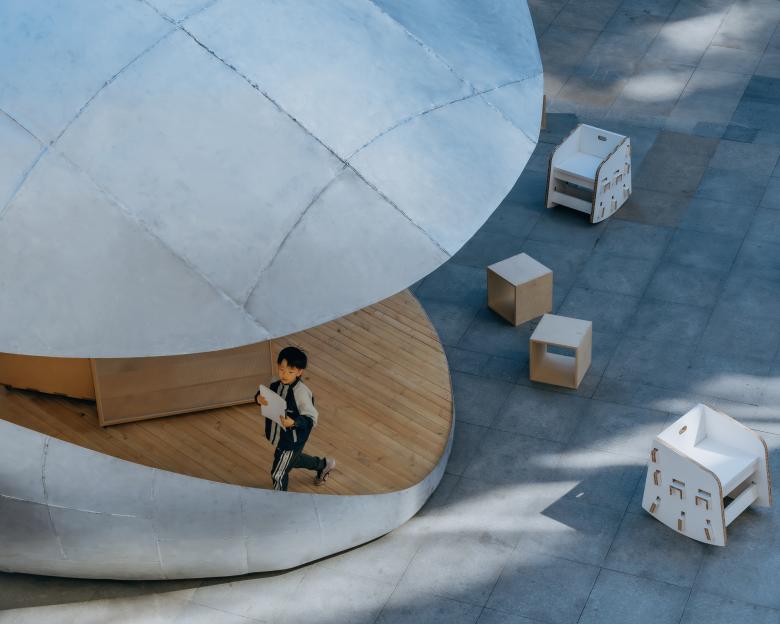
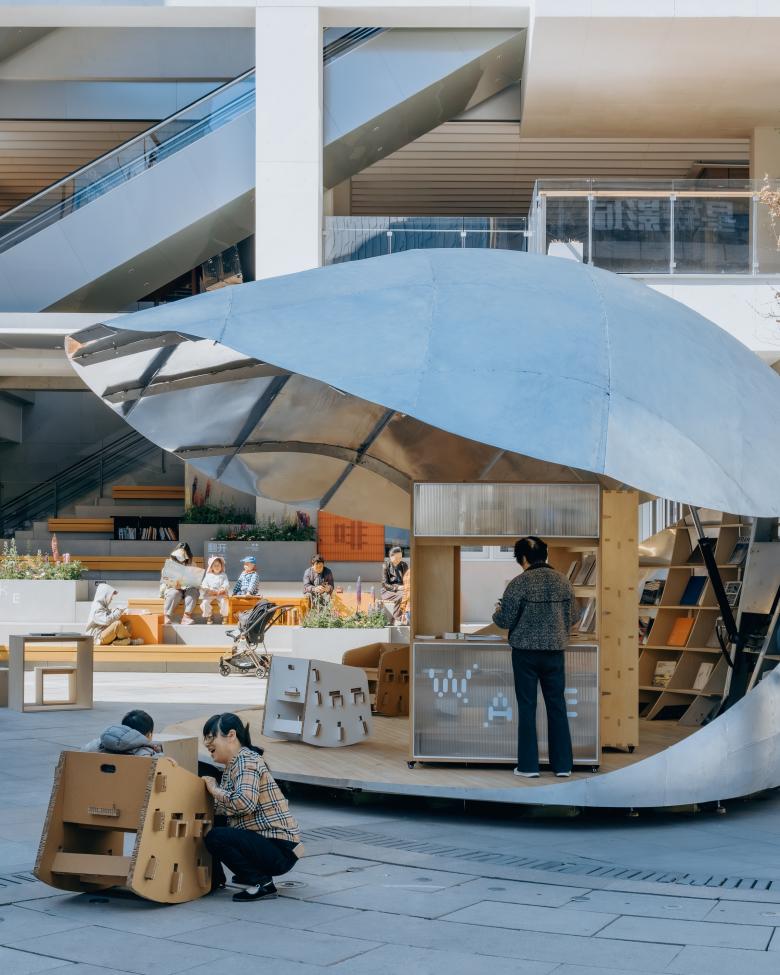
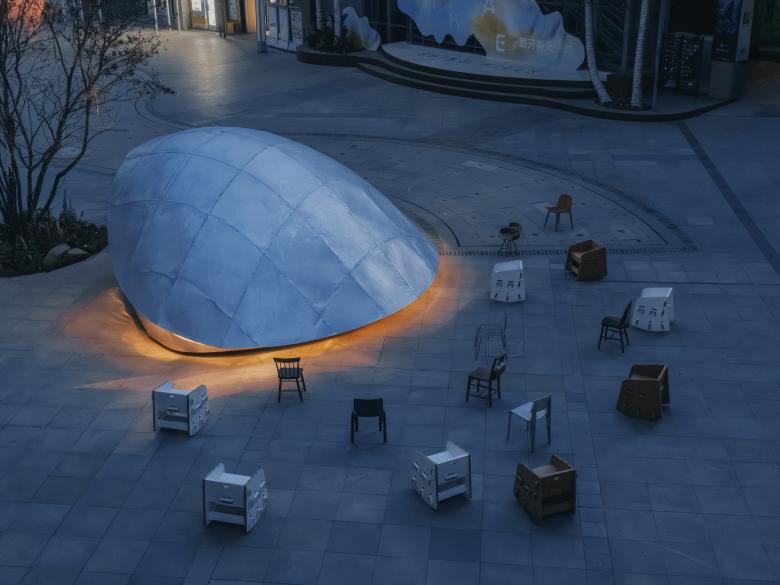
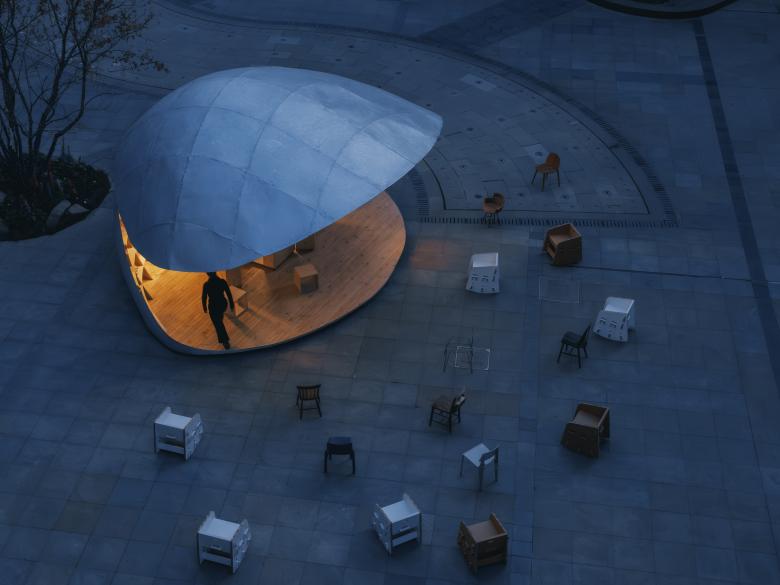
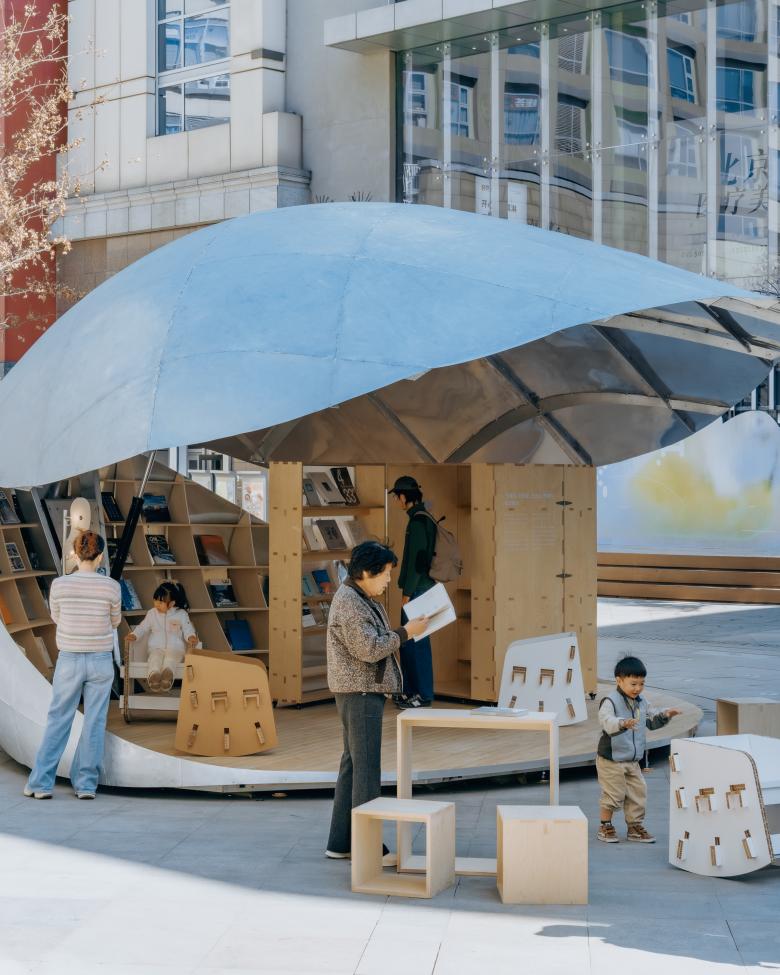
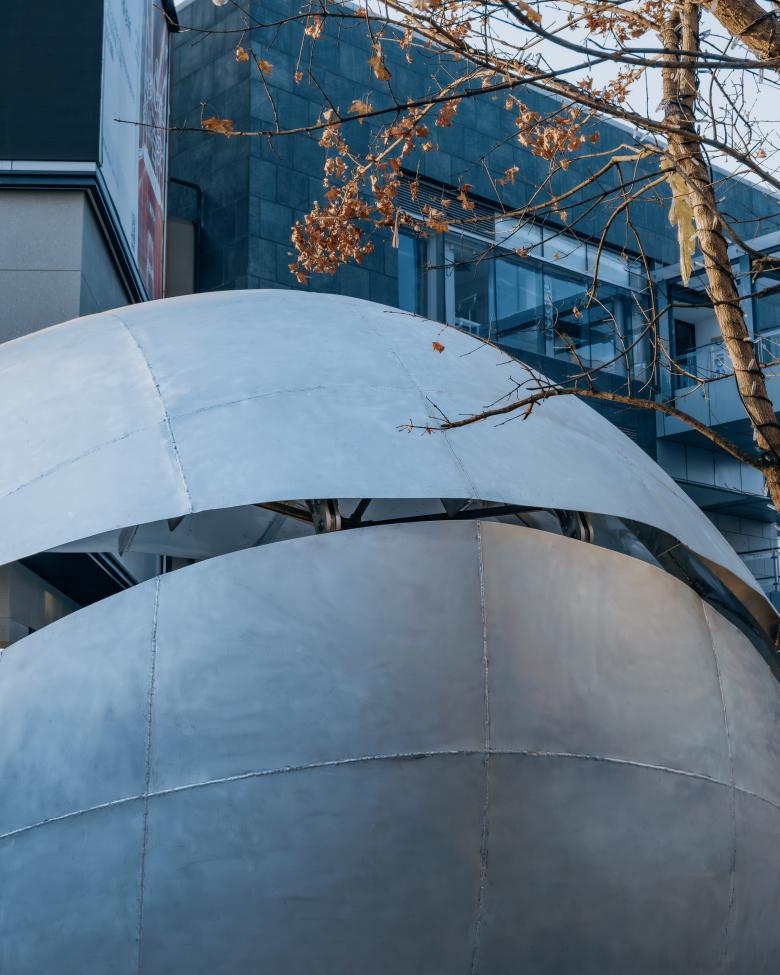
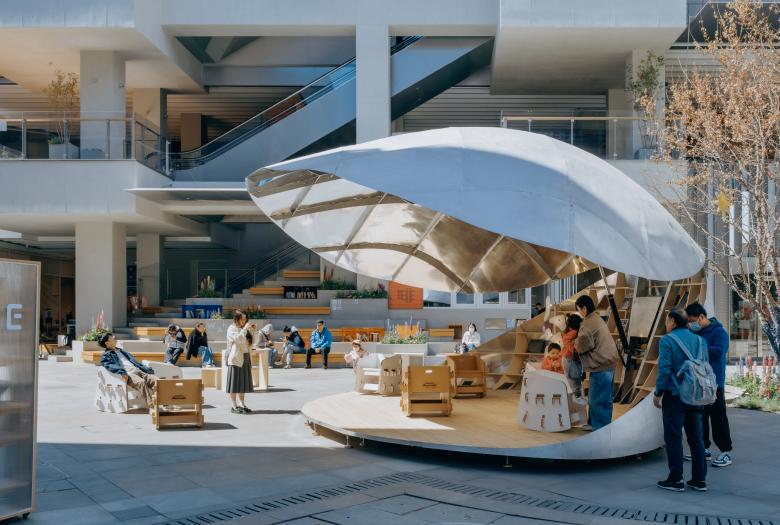
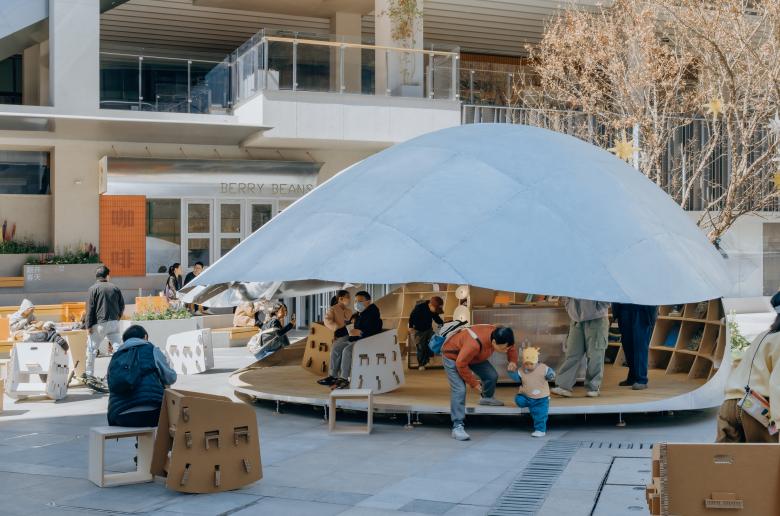
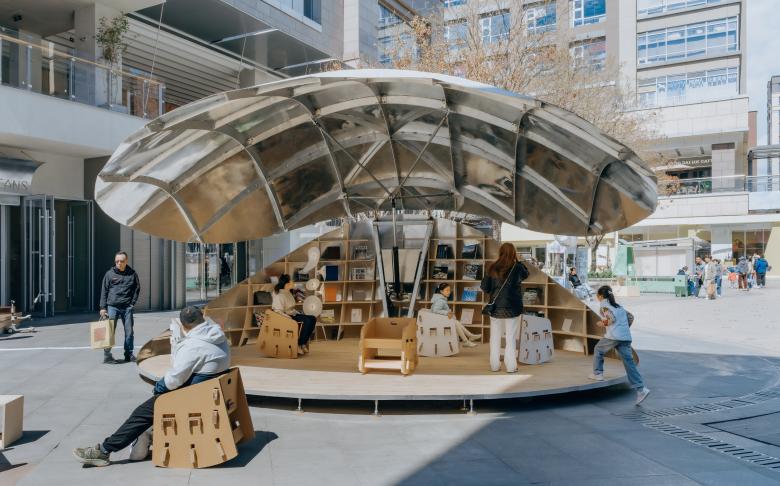
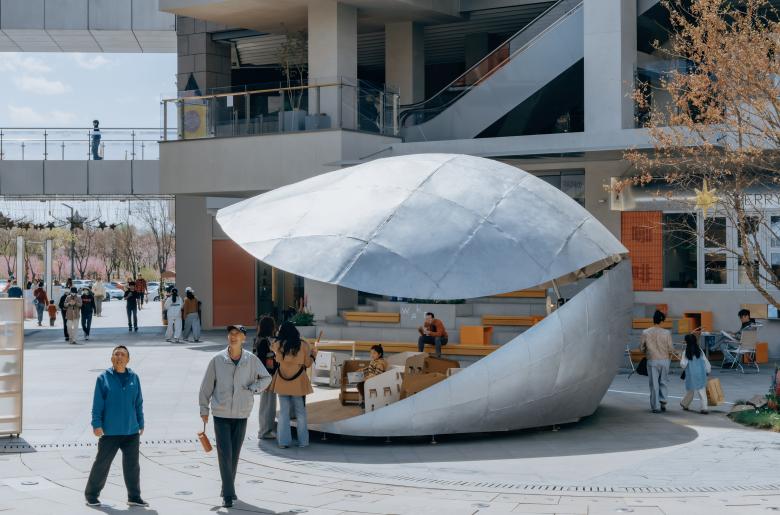
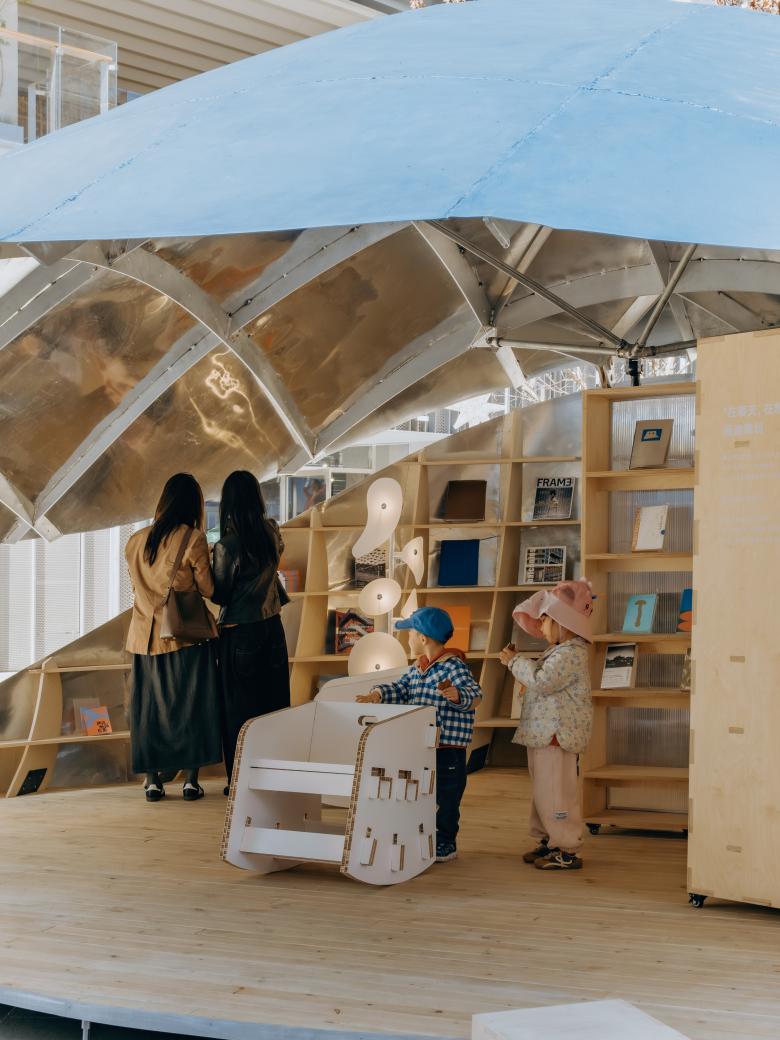
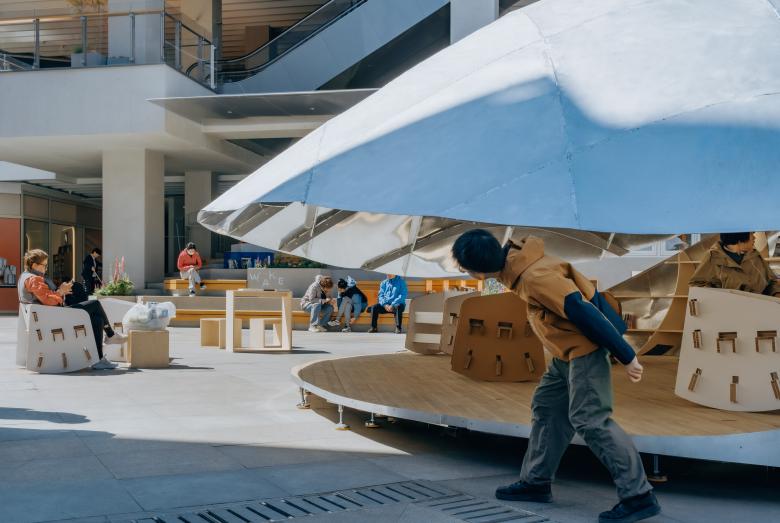
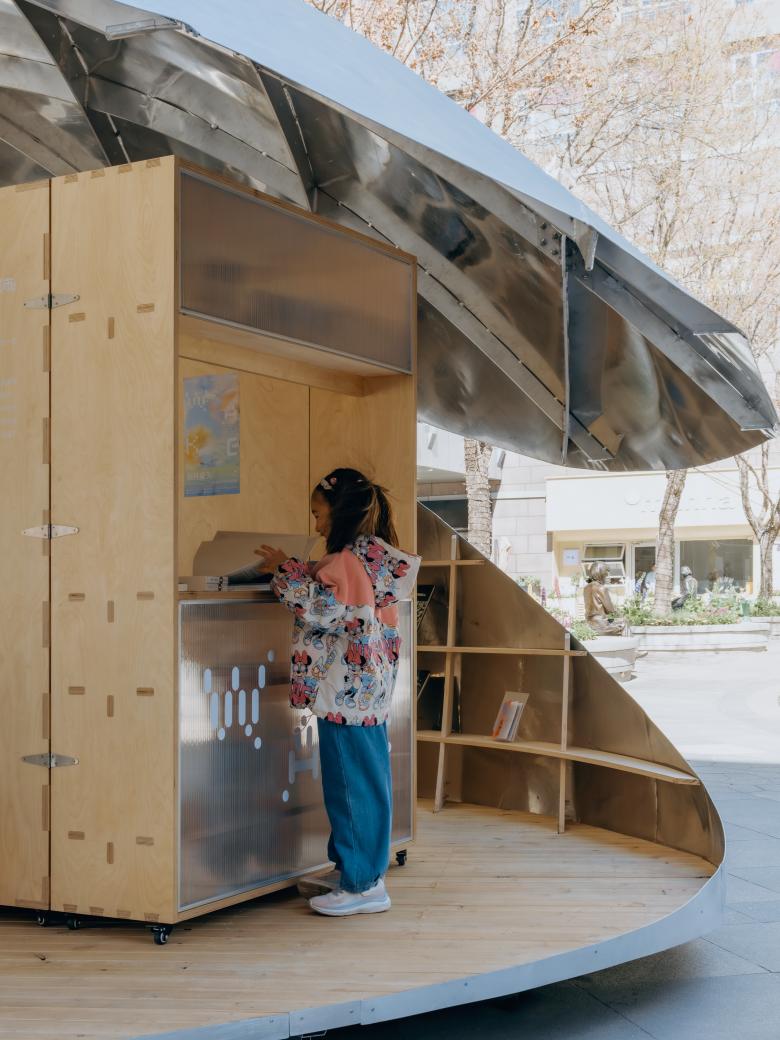
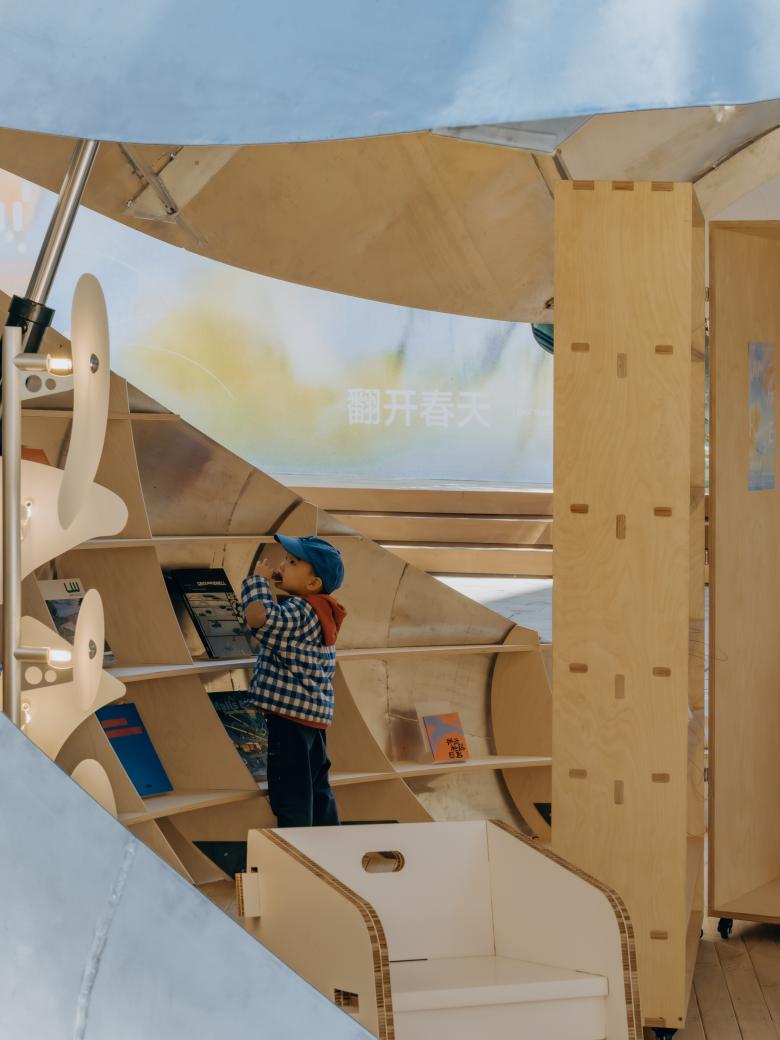
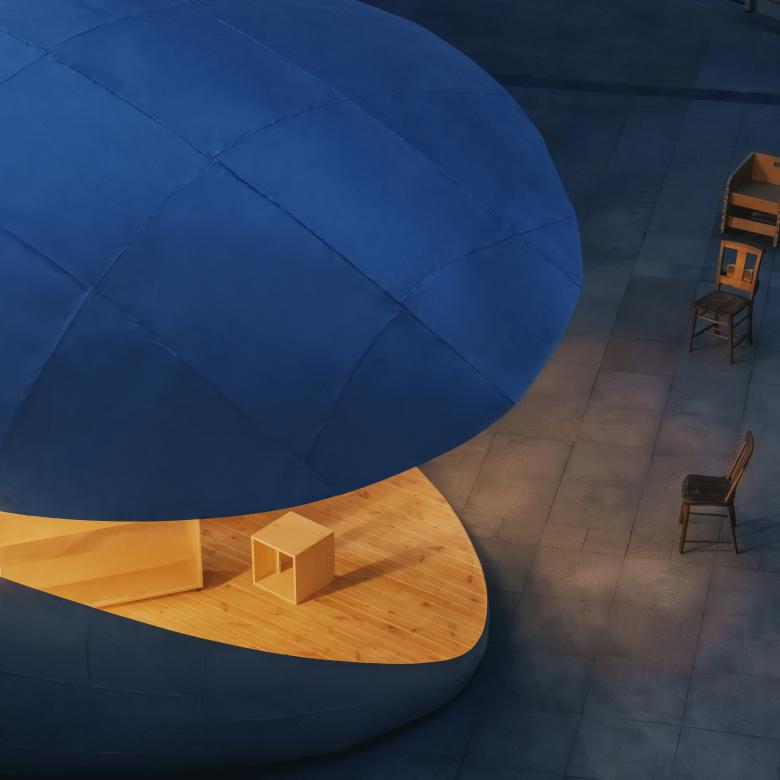
The structure does not simply open and close. Between these two states lies a continuous spectrum of possibilities. It can be fully open, half open, partially closed, nearly closed, and fully shut. Each state creates a different form, spatial atmosphere, and relationship with people.
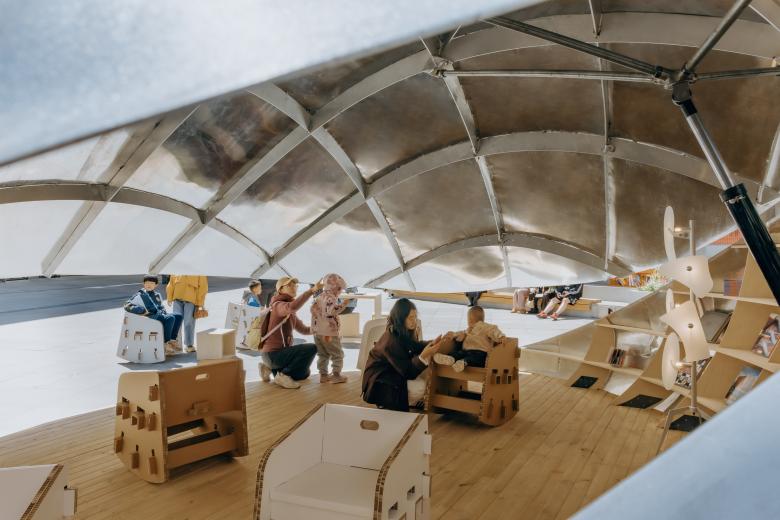
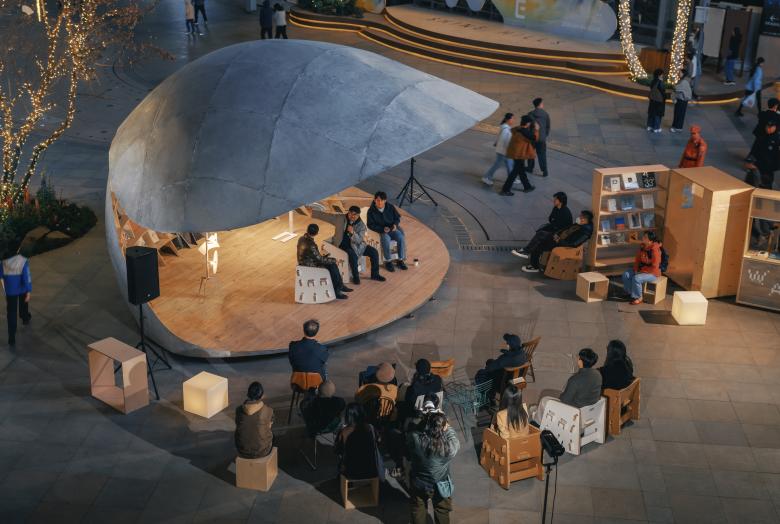
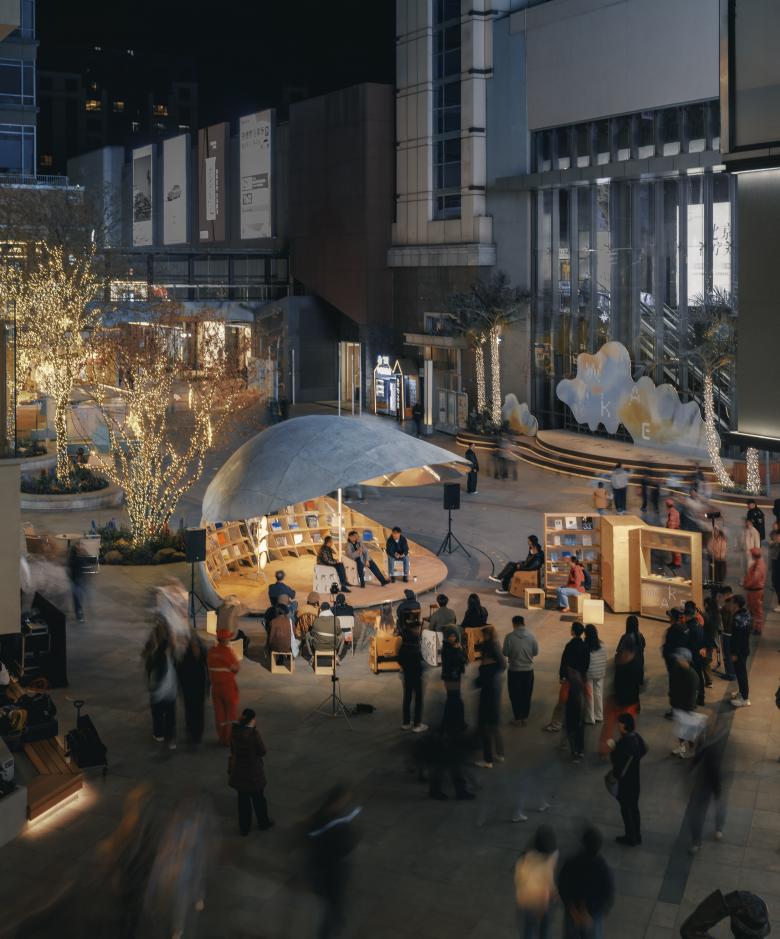
Fully open, it feels like a public stage unfolding outward.
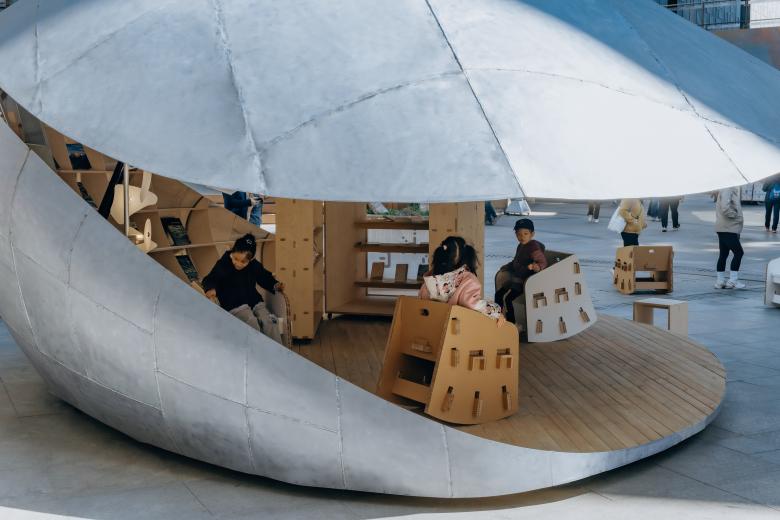
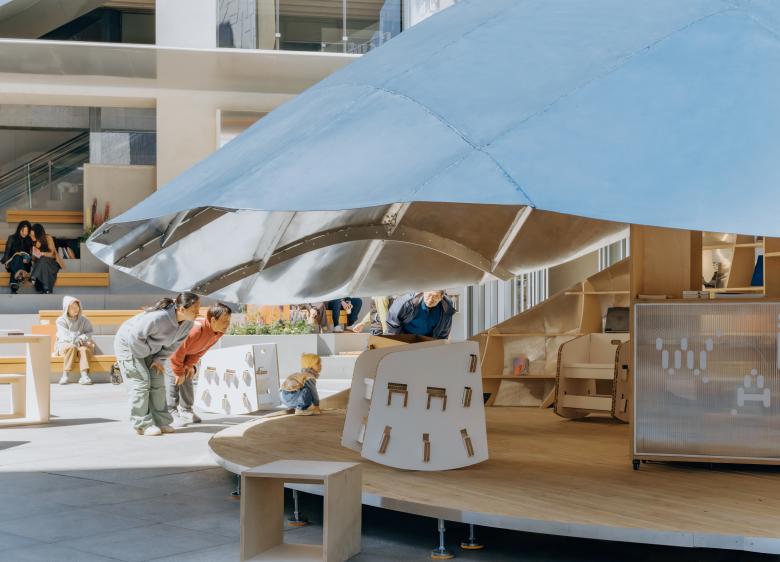
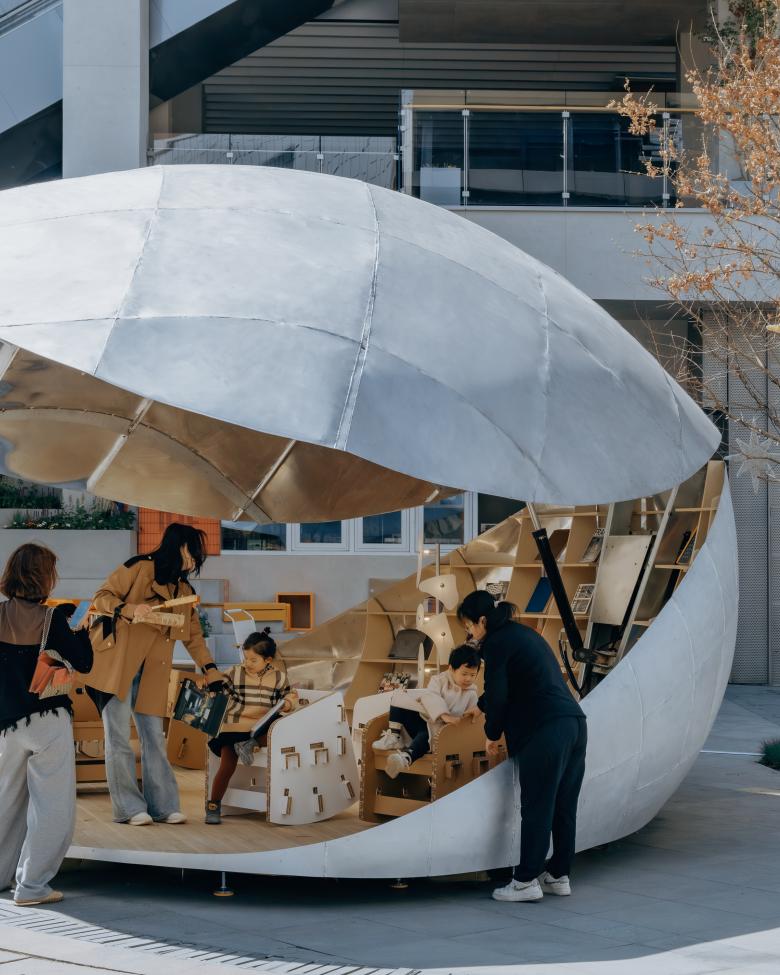
Half open, it stays connected to the outside while offering a strong sense of shelter.
Partially or nearly closed, it becomes quieter and more introverted, like a shell gently drawn inward.
This gradual transformation also plays an important role in actual use. During reading sessions, for instance, the speaker is initially within the closed shell, then gradually revealed to the audience as it opens. In this way, the space becomes part of the event—not as a static backdrop, but as an active presence that unfolds with it, lending the entire experience a subtle sense of ceremony.
Scale, Structure, and Craft: A Space to Enter and Linger
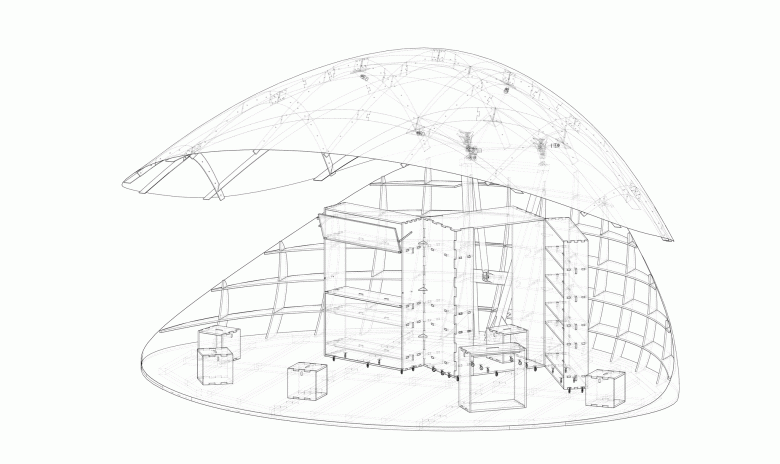
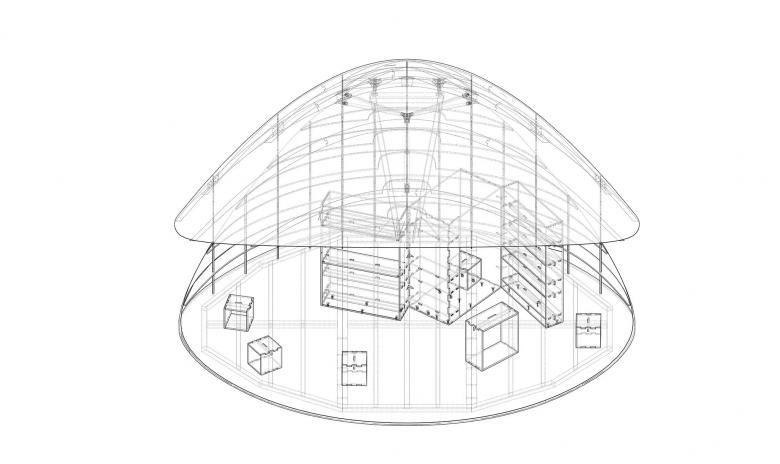
Despite its light, shell-like appearance, the project is conceived at an architectural scale rather than as a small installation. When fully opened, the roof spans over 40 square meters, measuring approximately 8 meters by 6 meters—defining a public space for lingering and sheltering. The interior height ranges from 2.5 meters to 4.2 meters, ensuring comfort for reading, gathering, and activities.
For this reason, the project transcends the visual interest of opening and closing, operating as architecture in terms of scale, stability, and safety. Beyond spatial design, it integrated mechanical systems, including a bearing-supported opening mechanism, and multiple metalworking processes such as forging, CNC machining, lathe work, and welding. To ensure long-term durability under repeated opening cycles, the structural frame was built from aerospace-grade aluminum. Timber elements were introduced into the interior, requiring a careful balance between engineered precision, structural reliability, and tactile warmth.
Challenges and Significance: Fostering Public Relationships Under Complex Conditions
The entire process—from design to fabrication to installation—had to be completed in just 20 days, a near-impossible task. When materials from different factories arrived on site, the challenges became more tangible. The plaza’s ground was uneven, with an elevation variation of nearly 18 centimeters, posing a significant challenge for an operable structure that required precise opening, accurate alignment, and overall stability. Foundation leveling, installation accuracy, structural positioning, and load performance all required repeated on-site calibration.
At the same time, construction was restricted to nighttime due to the project’s location within a commercial public plaza. Lifting, welding, assembly, testing, and on-site coordination all had to be carried out during limited nighttime hours, making the construction process highly demanding.
The structure’s sense of lightness—its quiet unfolding and gentle presence—is the result of intensive coordination, technical precision, and on-site problem-solving. It is not merely a small book pavilion, nor simply an installation, but a small public space that evolves with its different states—and with time, weather, and patterns of use. People can approach it, gather around it, step inside, or simply watch it slowly unfold and close. What matters here is not a fixed form, but how it continues to foster public relationships at the heart of the community plaza.
Project Information
Project Name: Shell Book Pavilion
Design & Construction: LUO studio
Design Team: Luo Yujie, Hong Lun, Cao Yutao
Client: Shine Hills
Location: Fountain Plaza, North Zone, Shine Hills, Shunyi District, Beijing
Roof Area (Fully Open): 43 m²
Photography: Zhu Yumeng
Completion: April 2026
- Anno
- 2026
- Stato del progetto
- Costruito