HS Building
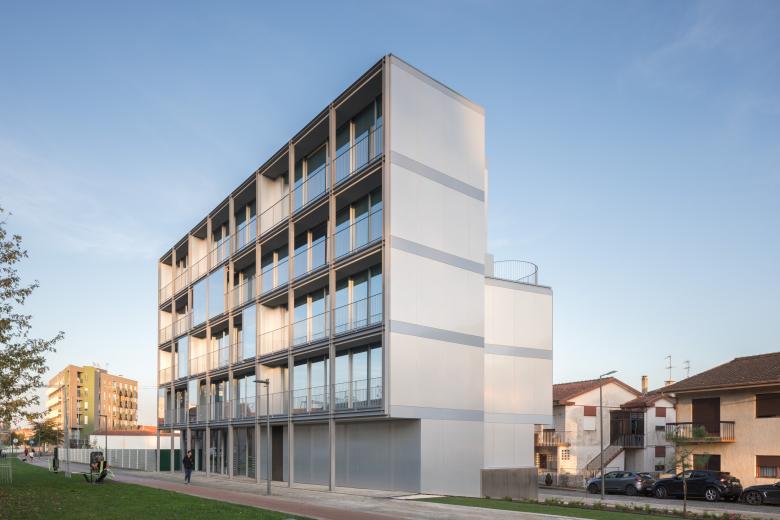
The client owned a plot of land in the city center, located at the edge of an urban frontage undergoing renewal. The site, occupied by an old single-family house, had become an anachronistic situation in contrast with the densification of the urban center.
The client requested a steel building, making a direct reference to imagery associated with their industrial imagination.
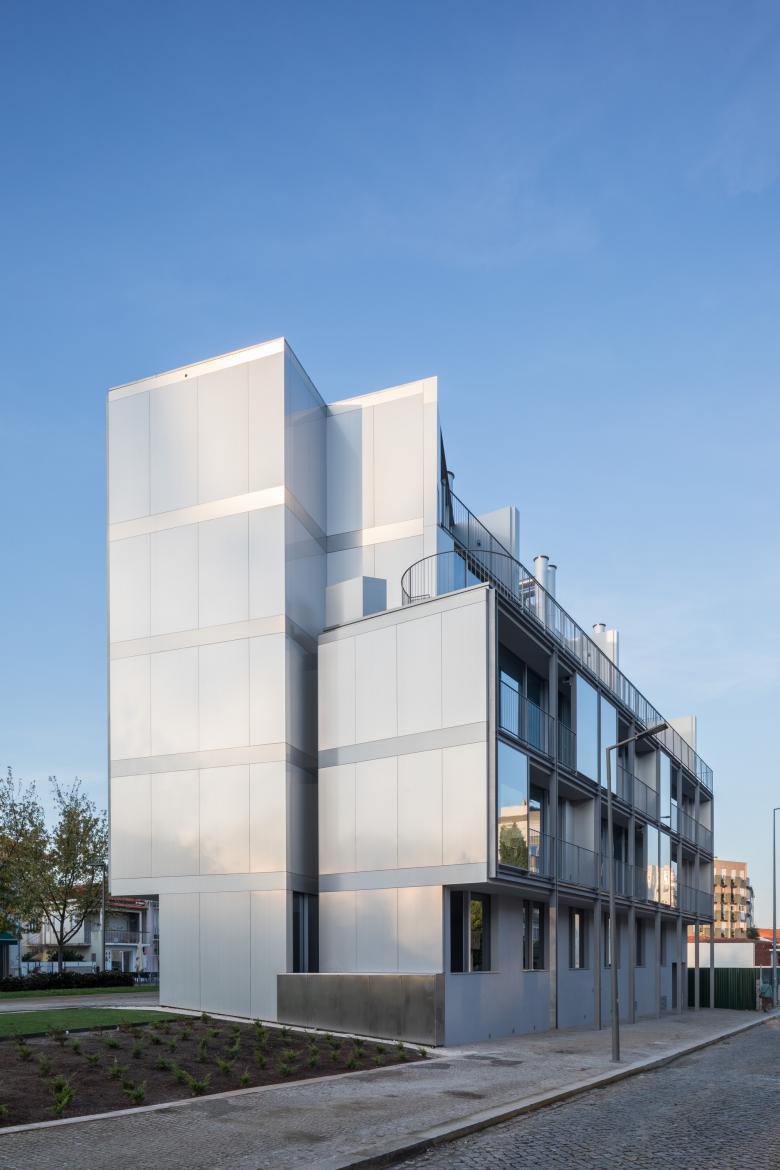
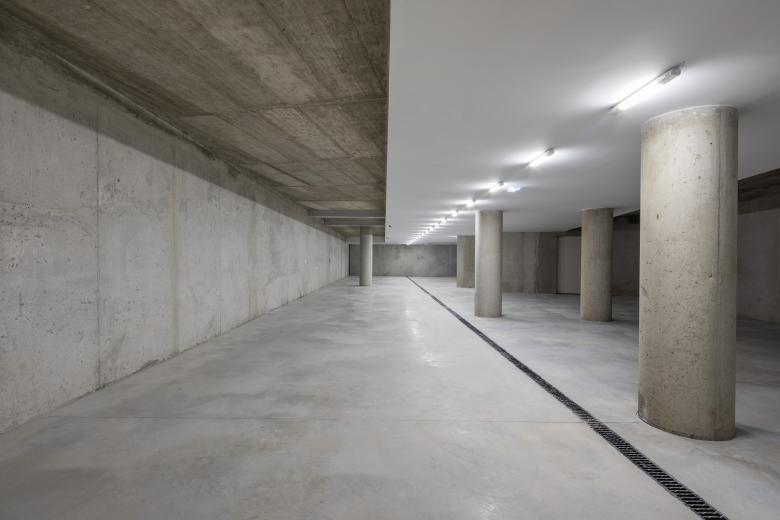
A multifamily residential building was developed, consisting of a basement and five floors, totaling 1,904.63 m² of built area.
The plot, with three frontages (east, south, and west), is located at the junction of Alameda da Estação and Rua Dr. Serafim Lima. Its geometry is trapezoidal, with a 10 m chamfered corner frontage, approximately 26 m in depth, and 15.75 m along the boundary with the northern neighboring plot.
The building footprint is 306.5 m², occupying almost the entire site.
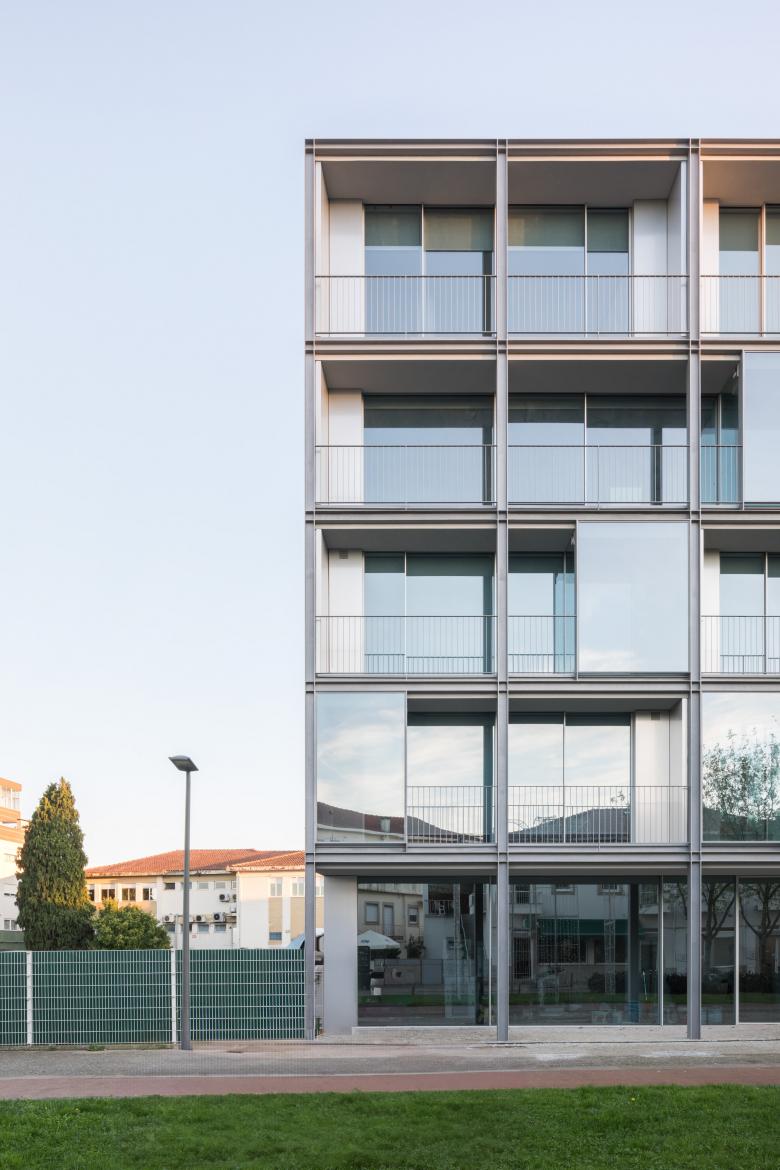
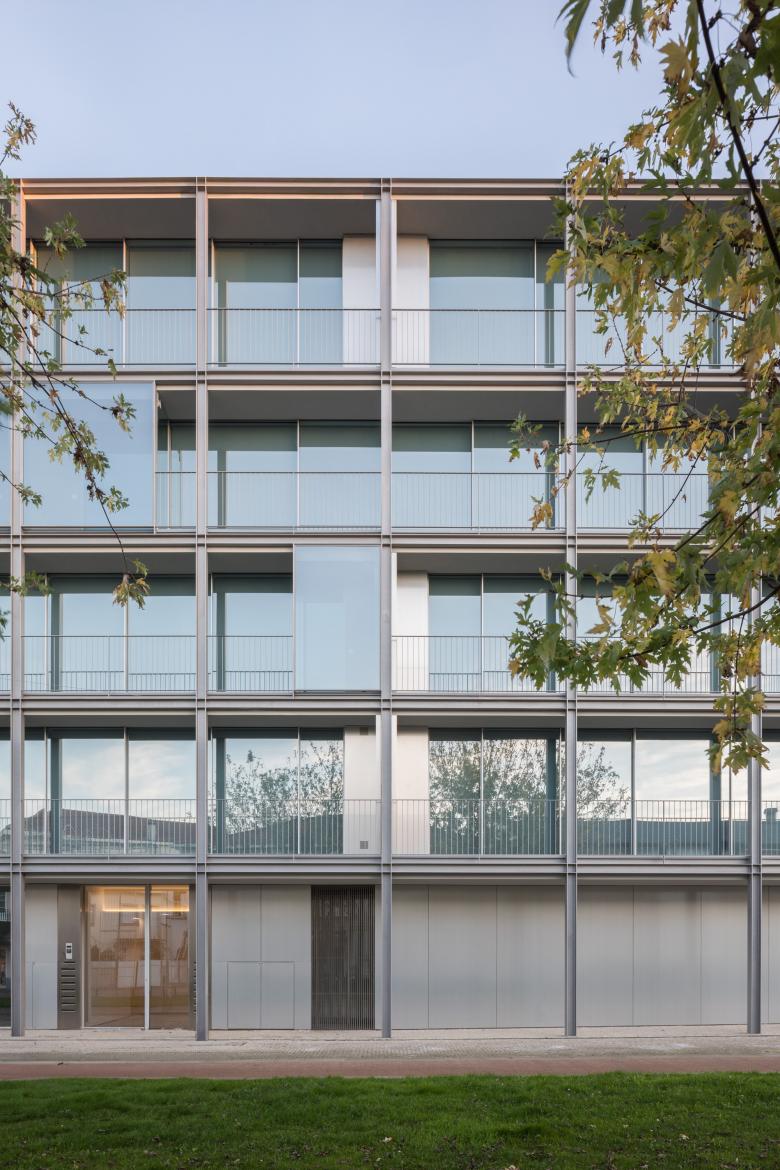
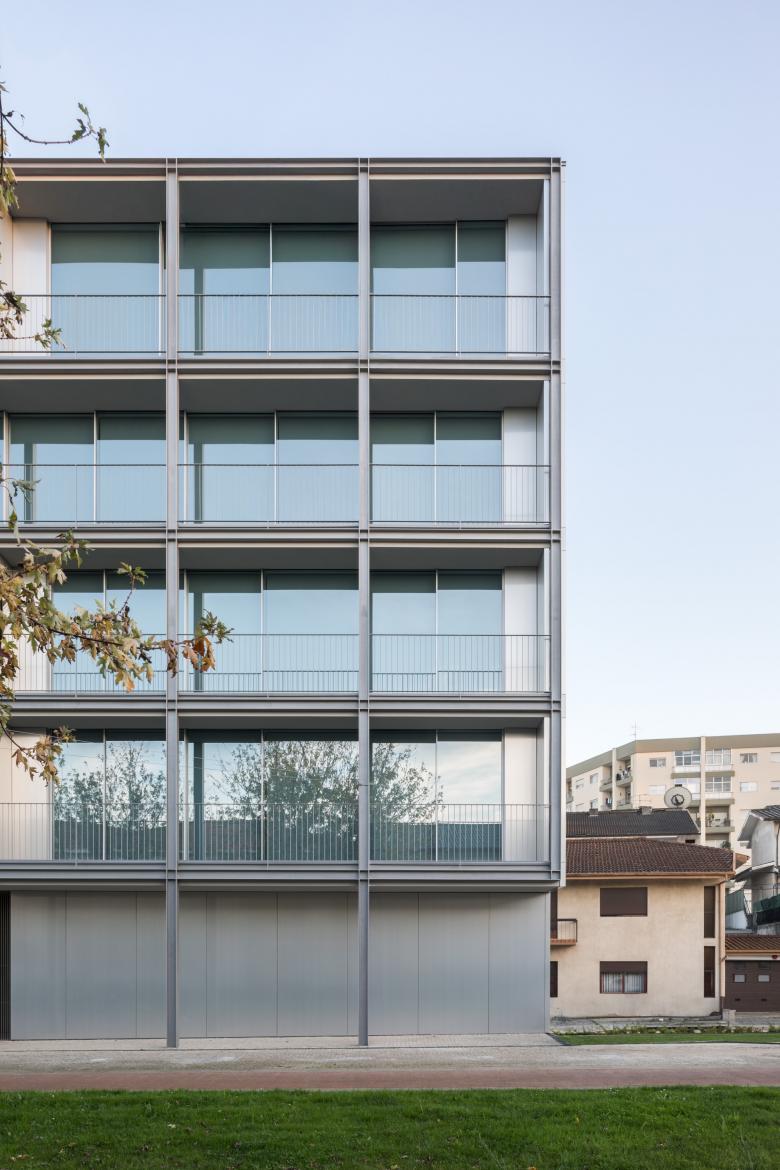
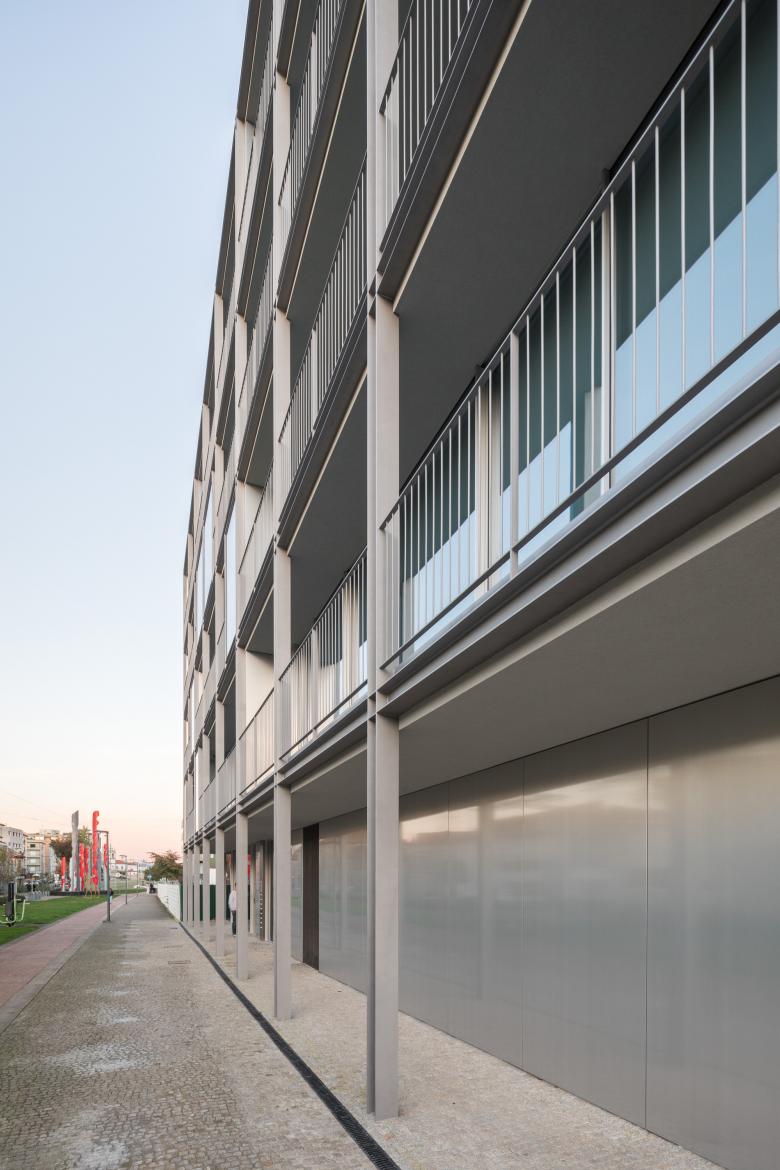
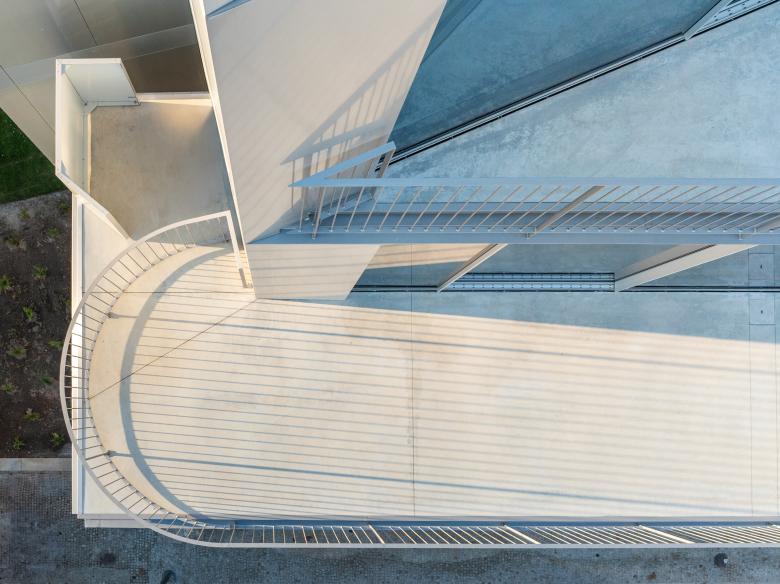
The ground floor, set back, provides two covered galleries beneath the balconies of the east and west elevations, expanding the public sidewalk and reinterpreting the arcades of medieval streets.
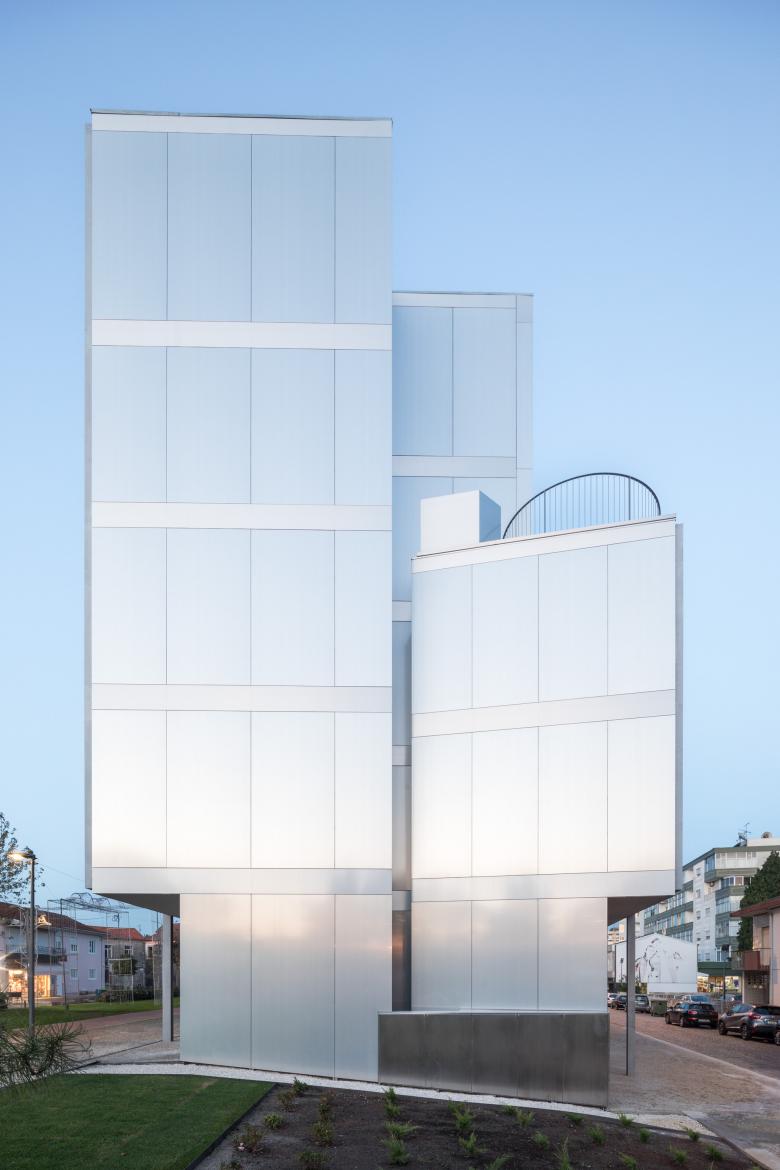
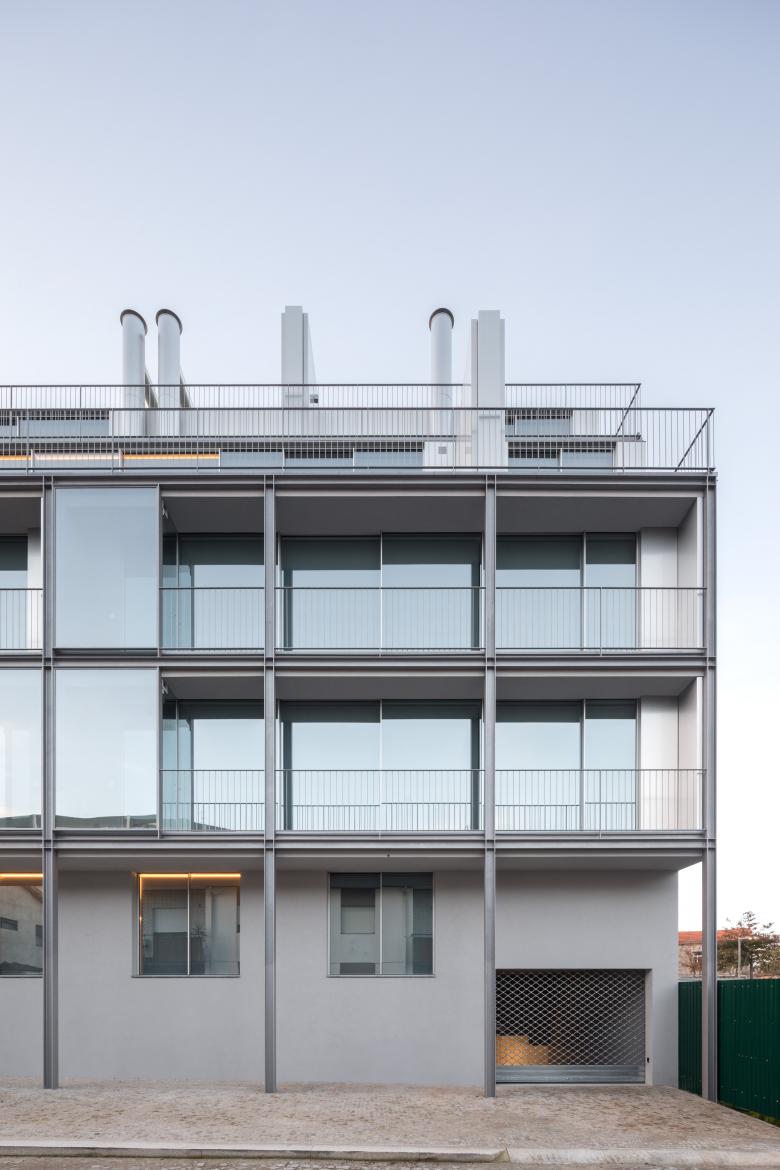
The building’s façades form a structural grid of 2.75 × 3.50 m, using HEB 180 steel profiles. For reasons of façade proportion and geometric regularization in plan, the south frontage was divided into two blind elevations, cut through by the galleries at sidewalk level.
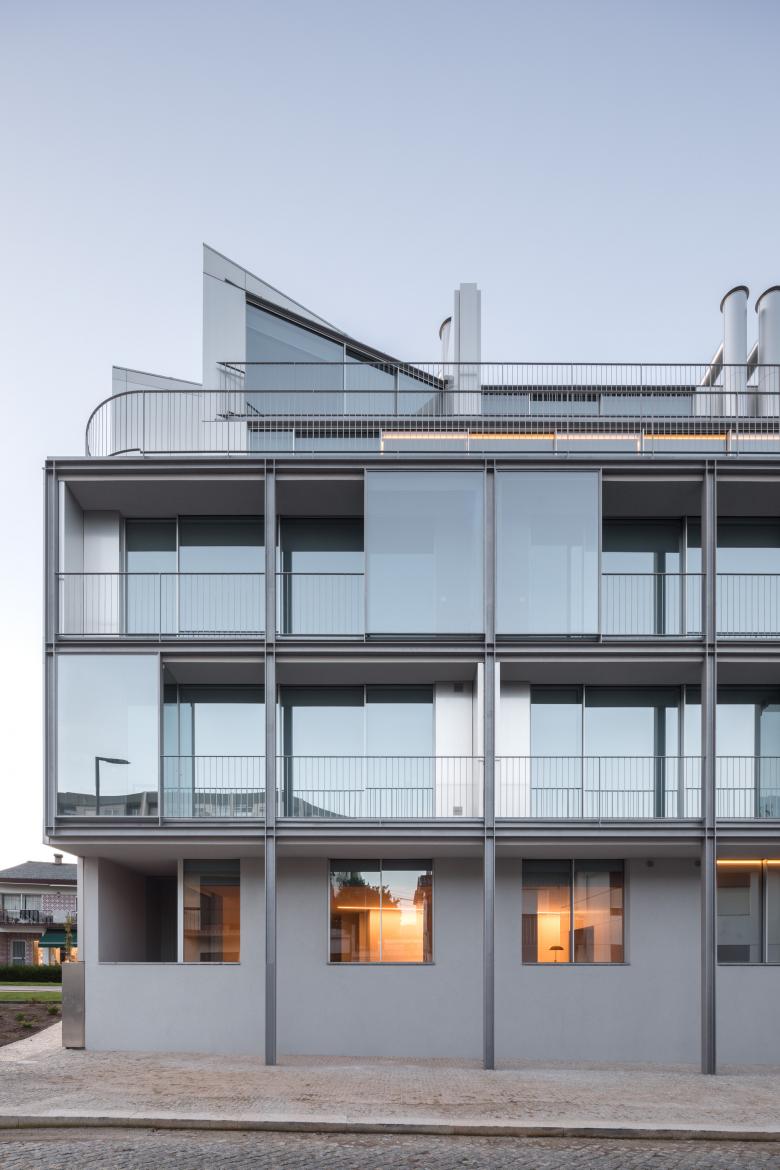
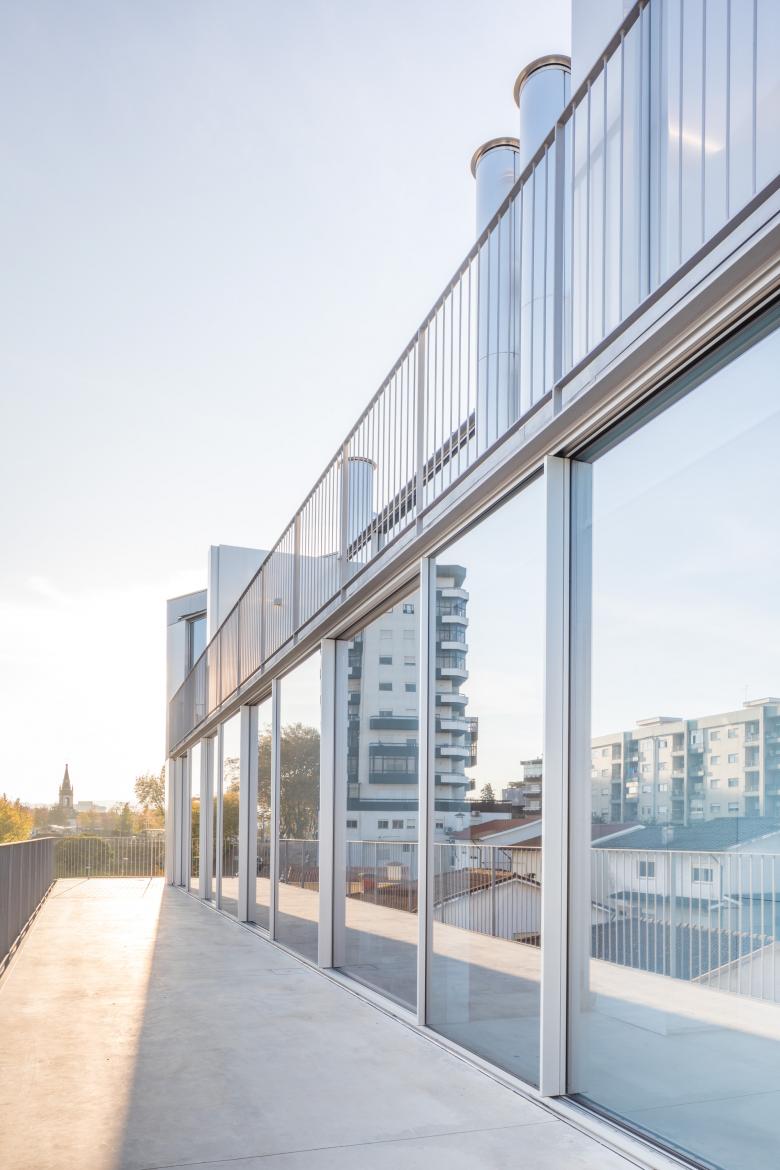
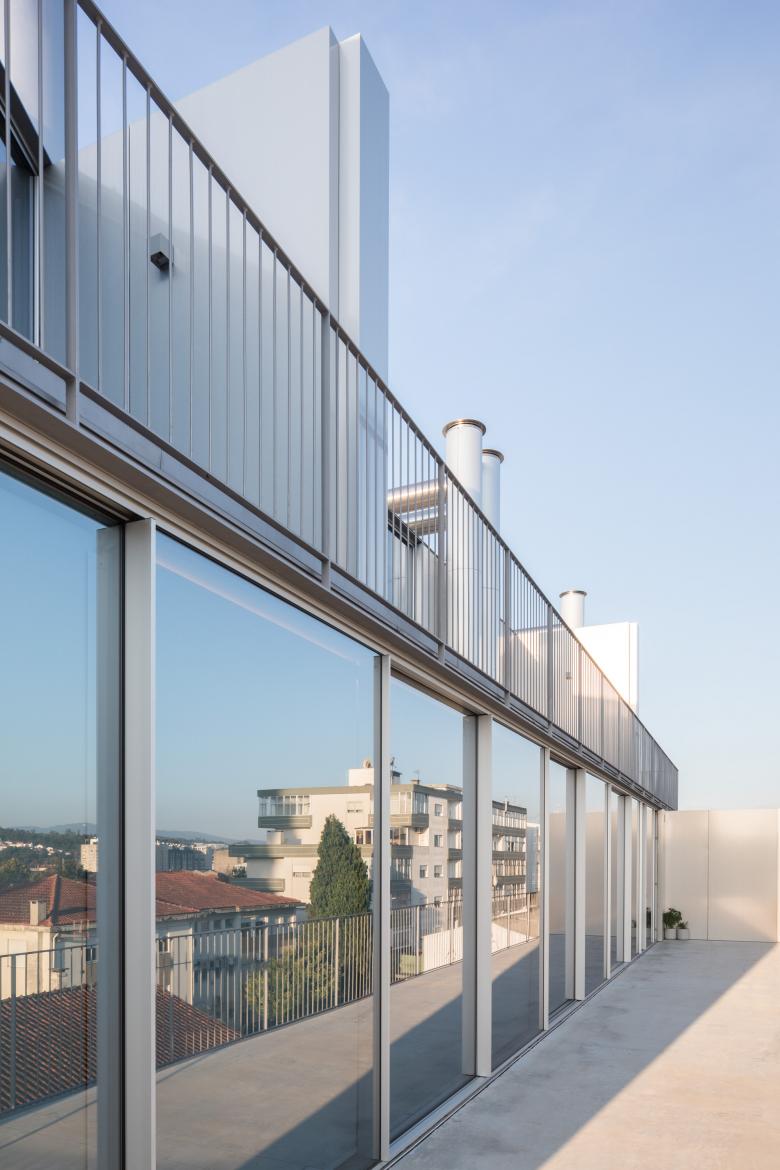
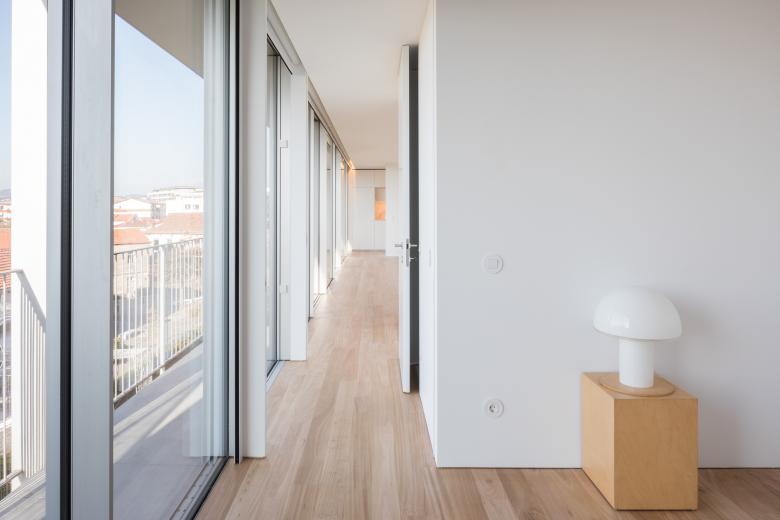
The building contains 16 units, 15 of which are residential. The ground floor includes two dwellings and one commercial space. Floors 1 and 2 share the same layout, each comprising five residential units. On floors 3 and 4, on the east side, the street façade is progressively set back to comply with the maximum height of three floors established for Rua Dr. Serafim Lima. This legal constraint allowed for the creation of large terraces for the larger housing typologies, organized as duplex units.
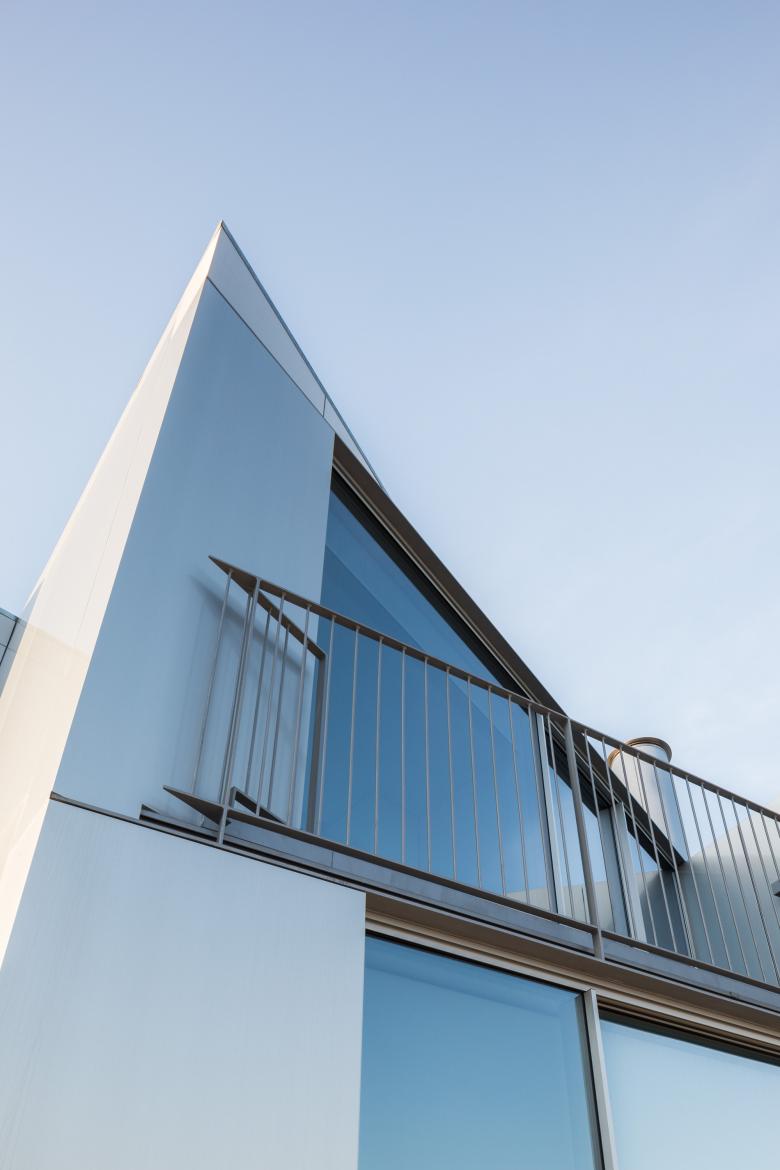
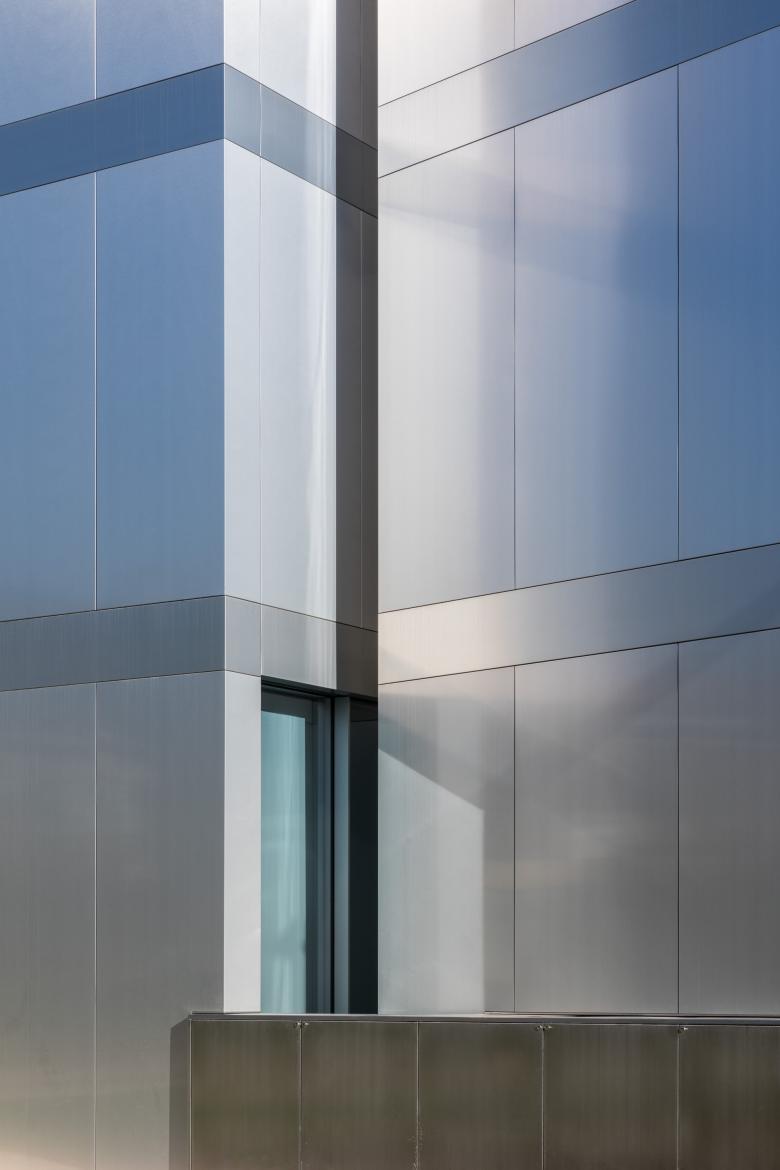
The internal structure is made of reinforced concrete, while the east and west façades are enclosed with low-profile aluminum frames fitted with solar-control glazing. The opaque vertical surfaces of the façade are clad with a ventilated system of brushed aluminum panels over a 10 cm layer of thermal insulation.
The flat roofs combine the concept of a conventional flat roof with that of an inverted roof system—an insulation layer protects the waterproofing membrane, eliminating ceiling condensation and increasing the durability of the waterproofing.
Technical installations, such as ventilation ducts and smoke exhausts, are visible on the east façade, clad in stainless steel with a finish similar to the building’s exterior cladding.
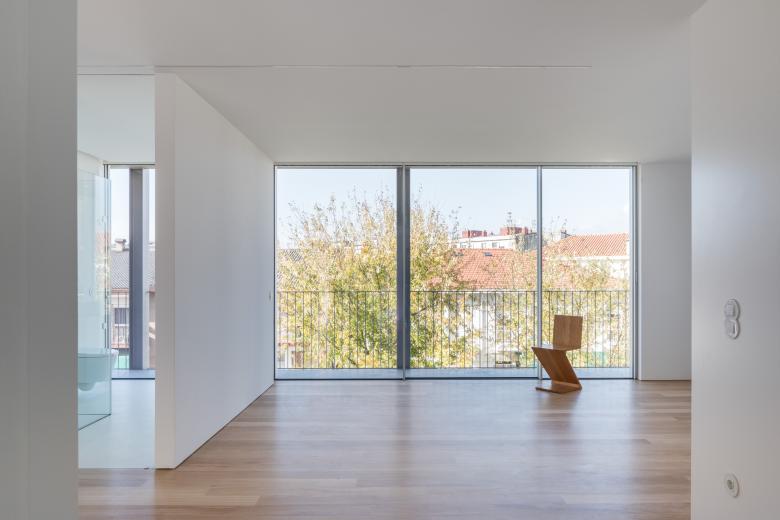
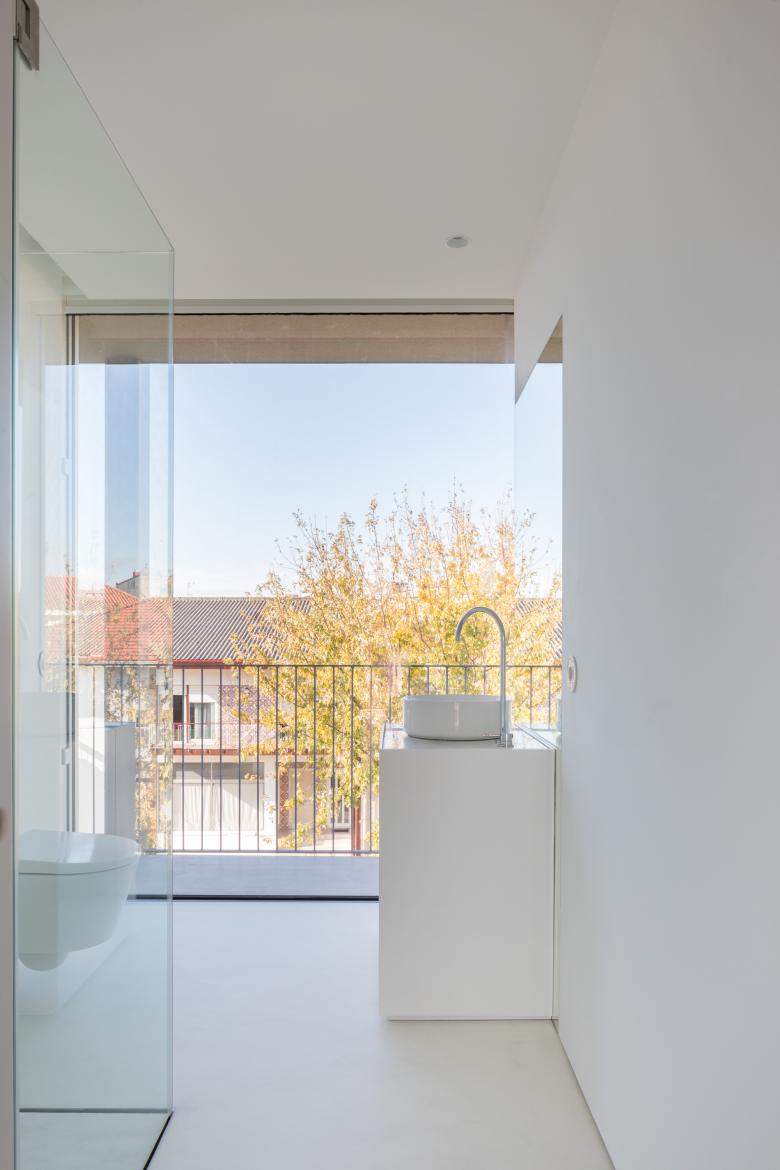
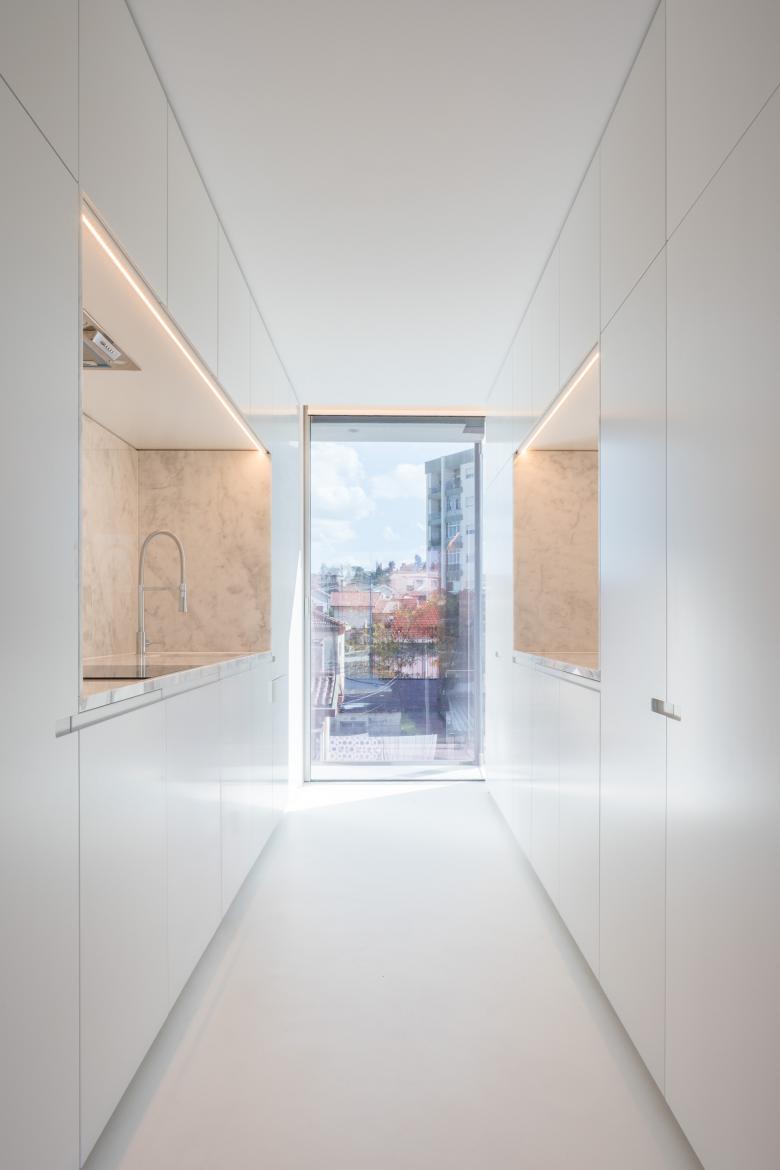
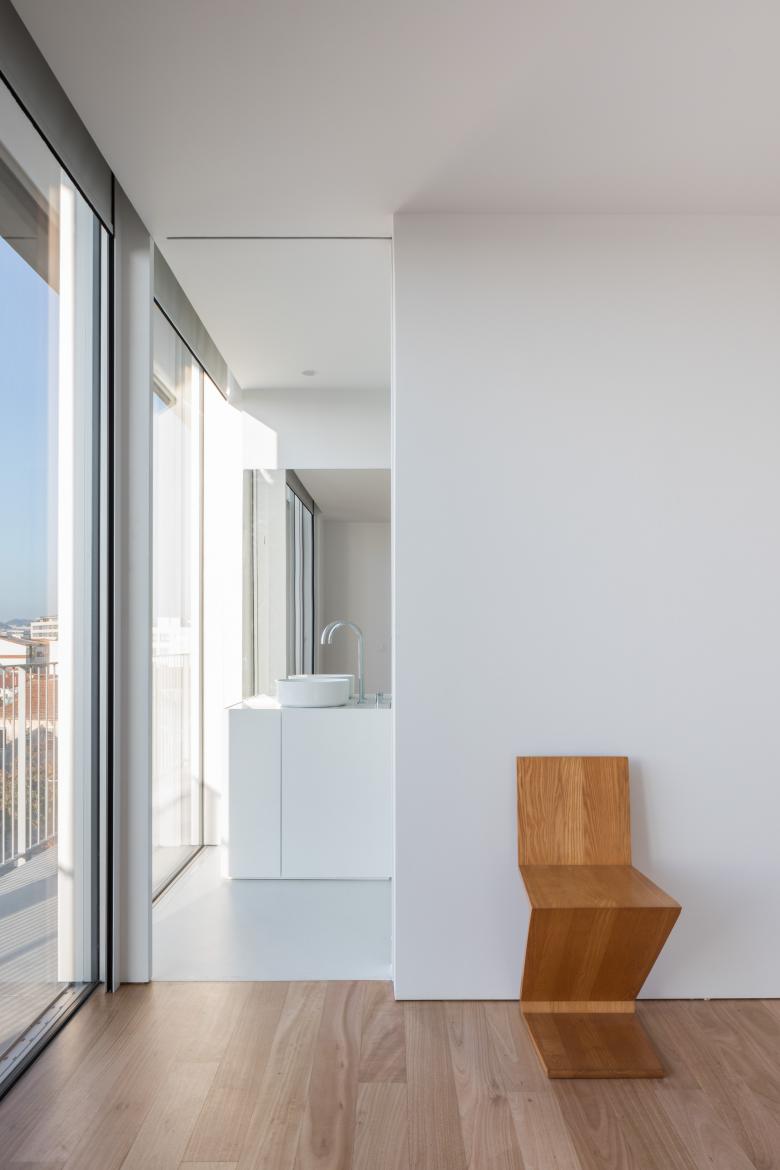
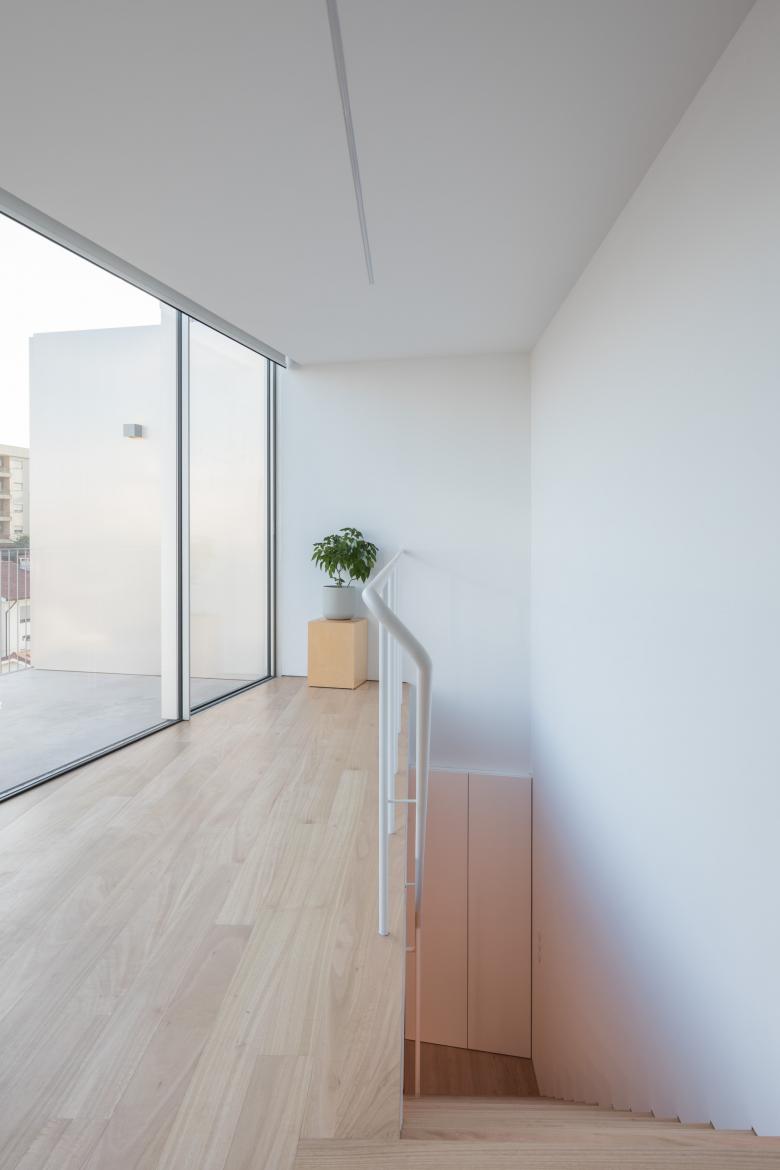
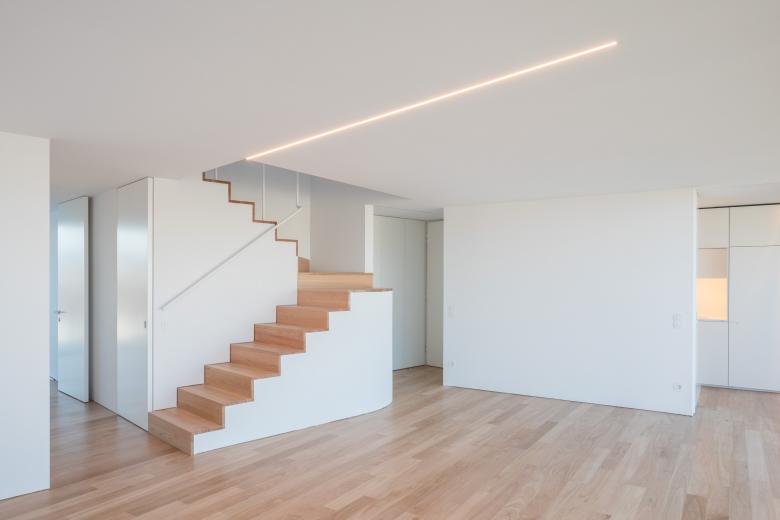
The residential units feature eucalyptus wood flooring and plasterboard walls and ceilings. Kitchens, bathrooms, common corridors, and staircases are finished with microcement mortar.
The climate control and water heating systems are electrically powered, offset by photovoltaic panels. The HVAC system operates on direct expansion, and domestic hot water is produced באמצעות a monobloc heat pump.
- Année
- 2024
- Statut du projet+
- Construit
- Équipe
- Architecture author and managing partner José Carlos Nunes de Oliveira (architect - NOARQ), Project managers NOARQ Eduardo Kenji (Phase Building), Hugo Araújo (tender package phase), Gaia Ferraris (Phase Interiors), Collaboration: Gloria Herranz, Laura Conde, Roberto Vale