Snøhetta's Masterplan for Aaltos' Paimio Sanatorium
Transforming a Modern Masterpiece
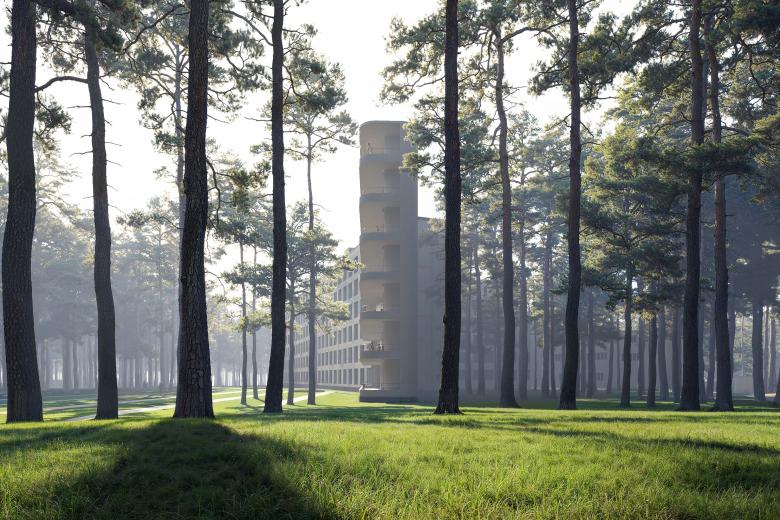
The world-famous Paimio Sanatorium in Finland, designed by Aino and Alvar Aalto in the early 1930s, is set to be transformed into a hotel and “well-being center” by Snøhetta, working with the Paimio Sanatorium Foundation.
When the Aaltos won the competition for the Paimio Sanatorium in 1929, the only cure for tuberculosis was a healthy environment of sunshine, fresh air, and exercise. Accordingly, they responded to the forested site in Paimio, east of Turku, by organizing the various programmatic elements into four wings located and oriented according to their functional needs. While the sanatorium's signature image is the long and narrow patient wing with its south-facing balconies, the project is notable for the way the Aalto's considered every aspect of the interior—the furniture and fixtures and, with Eino Kauria, the paint colors—in addition to the architecture and the building's relationship to its site. Echoing that, this week's announcement from the Paimio Sanatorium Foundation and Snøhetta that supplies details on the building's transformation asserts how the iconic masterpiece “must be seen as a complete work of art—a Gesamtkunstwerk in which architectural beauty, technological ingenuity and the daily life of the building’s occupants form a single, indivisible whole.”
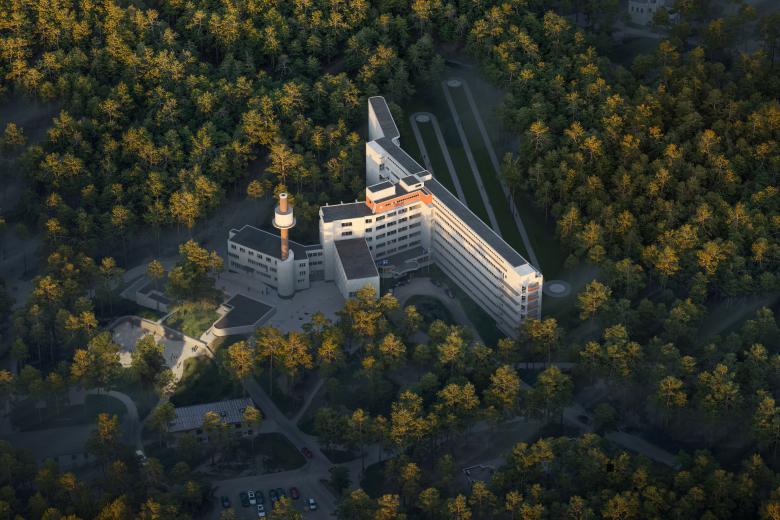
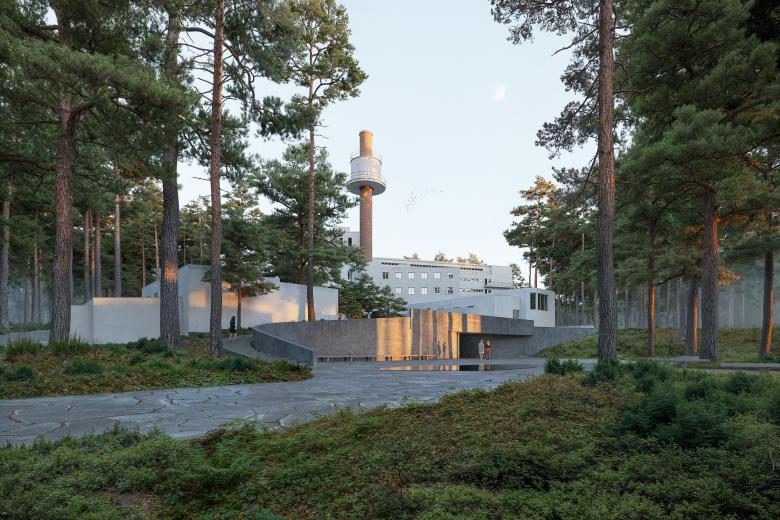
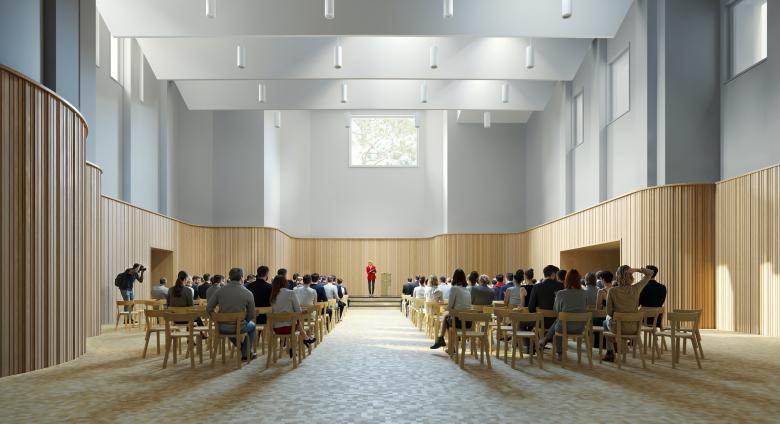
Completed in 1933, the Paimio Sanatorium served its original purpose until the early 1960s, after a medical cure for tuberculosis was discovered and then made widely available. Subsequently, the building was converted into a hospital and used in that capacity until a decade ago. “Over the years, the hospital buildings have been altered considerably,” per the Alvar Aalto Foundation, “but the key characteristics of the architecture and much of the original furniture have been preserved.” Stemming from this fact and the importance of the building in the history of modern Finnish architecture, the master plan is described by Snøhetta and the Paimio Sanatorium Foundation as “modest interventions with a transformative effect.” Aiming to turn the premises into “a destination for reflection, wellbeing and social diplomacy,” the new project insert a flexible auditorium into the former surgical wing, creating a new entrance at the rear of the building in the process. The space will seat approximately 200 people and feature a slatted birch wall echoing the Aaltos' architectural language.
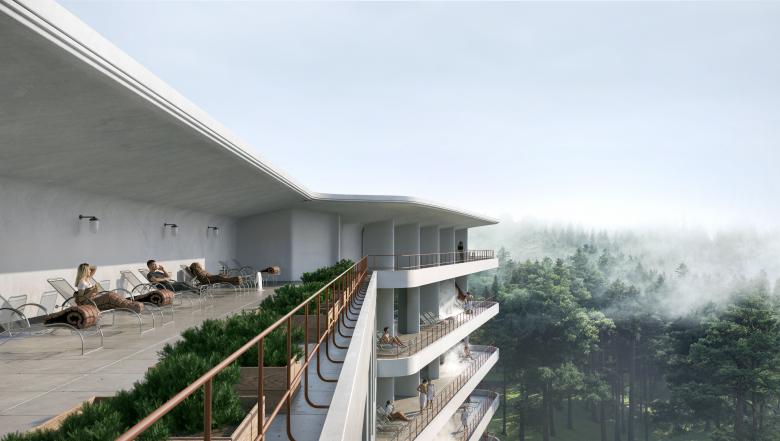
In the patient wing, the two-person rooms will be converted into hotel rooms, while a spa will be located on the lower level. Although Snøhetta's work in this wing will retain the proportions of the original rooms and reconstruct the colored surfaces, new amenities will be added, including bathroom units in some larger hotel rooms made by combining two patient rooms. Like the auditorium, the new freestanding bathrooms will be covered in birch to harmonize with the interiors yet also make a distinction between old and new. Later additions from the building's decades as a hospital, such as the glass enclosures at the open balconies, will be removed, giving hotel guests a sense of what the building was like nearly a century ago.
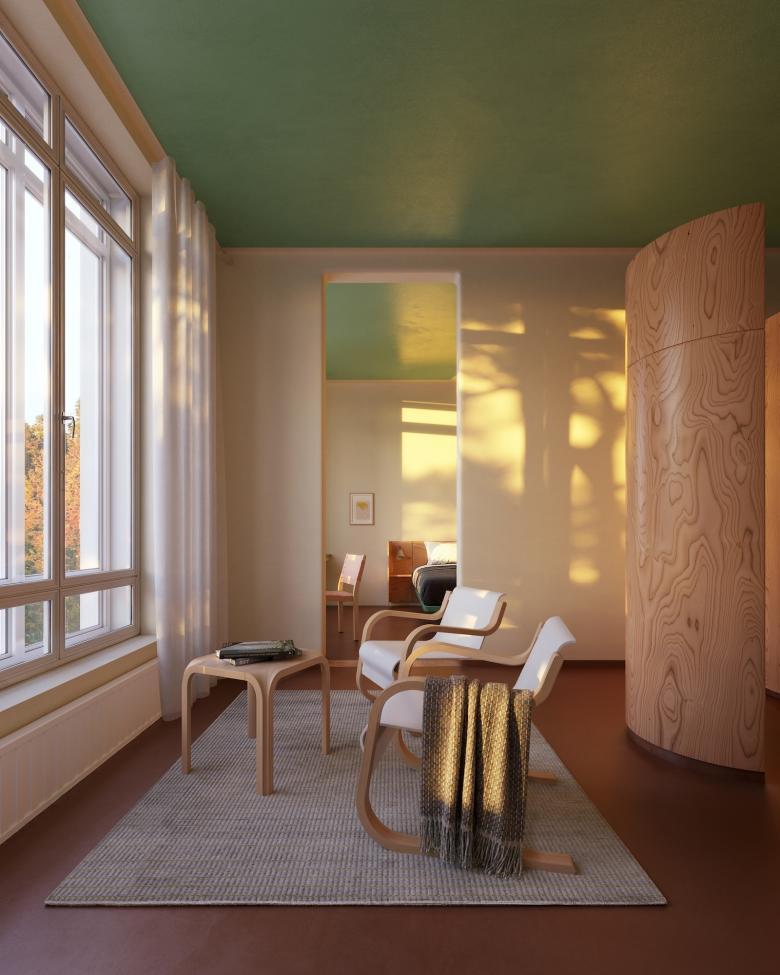
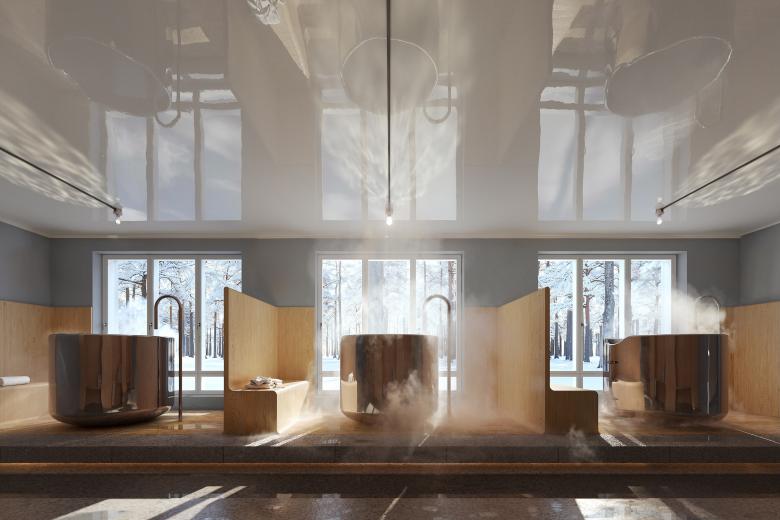
The revitalization of Paimio Sanitorium began in 2020 with the establishment of the Paimio Sanatorium Foundation, “with the aim of safeguarding the Aaltos' vision while securing an active future for the site.” A year later, in 2021, the building was included as one of the Aalto sites proposed for inscription on UNESCO’s World Heritage List; a decision is expected next month. The first phase of the master plan has been carried out in collaboration with Helsinki-based ALA Architects and Mustonen Architects.
Articles liés
-
A Theatre With 'Ripples on Its Surface'
Blight Rayner Architecture in partnership with Snøhetta | 20.04.2026 -