Interview with Manuelle Gautrand
'Architecture is a creation that comes from a dialogue'
Both of Manuelle Gautrand’s parents might have been architects, but she had decided to pursue the profession entirely on her own and only informed her parents after she had been accepted into architecture school. In Gautrand's interview with Vladimir Belogolovsky, she reflects on the path that led her to become an architect: “I was very eager to discover my own way of creating architecture… Without any hesitation, without any doubt. It was very intuitive. But I was very sure of it.”
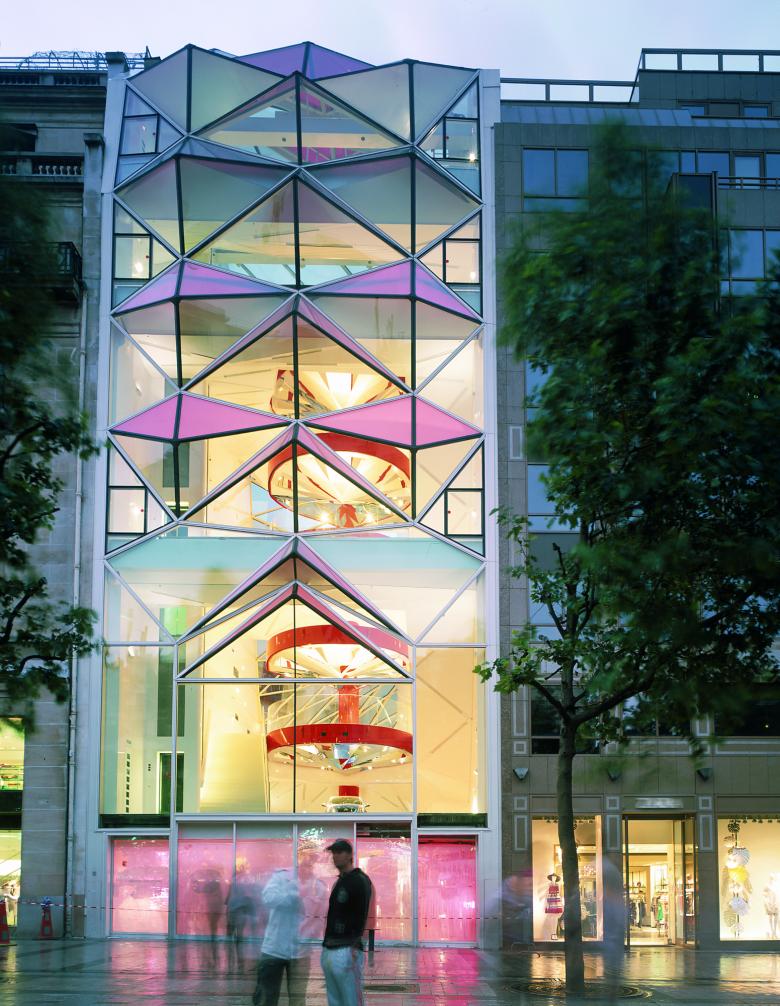
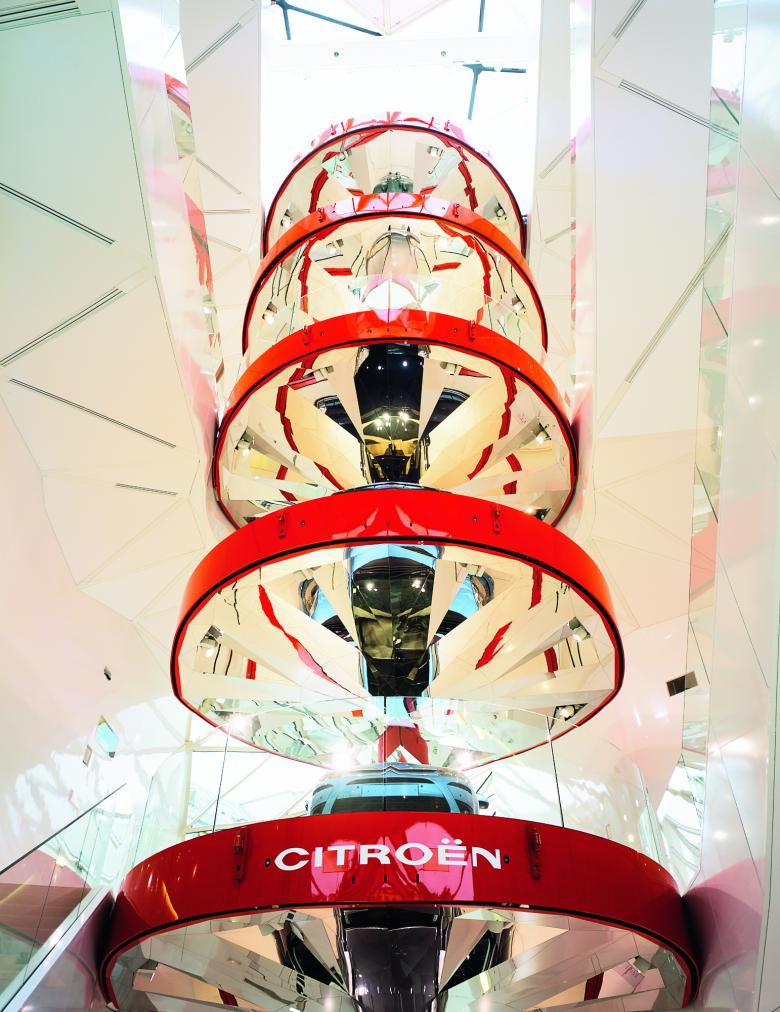
Gautrand’s international breakthrough came with C42, Citroën’s flagship showroom on the Champs-Élysées. Completed in 2007 and closed a decade later, it quickly became a sensation. Its distinctive facade functioned as a kind of urban advertising machine, transforming a commercial space into a spatial and graphic spectacle. During its years of operation, ten million people visited it.
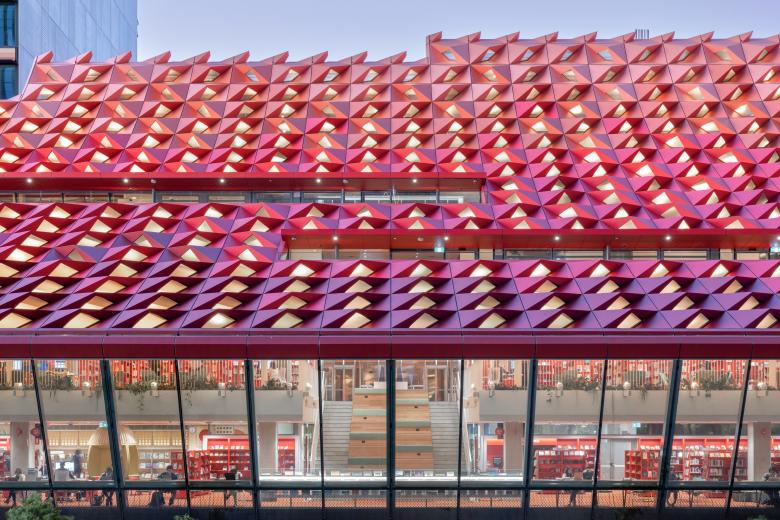
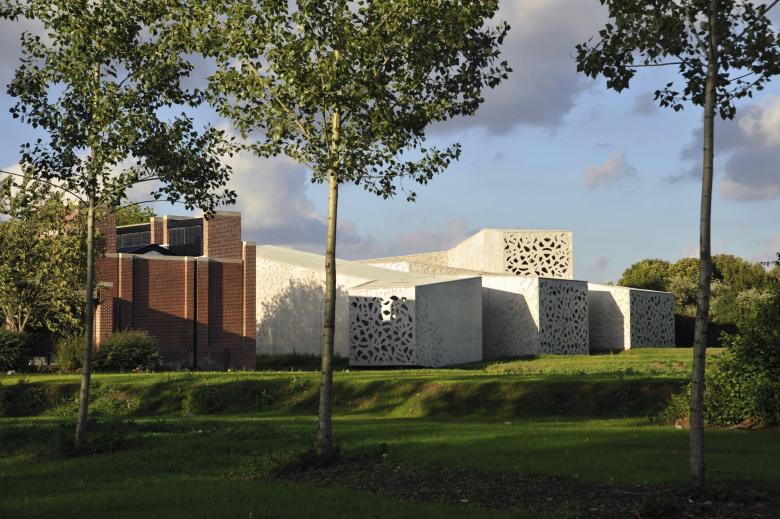
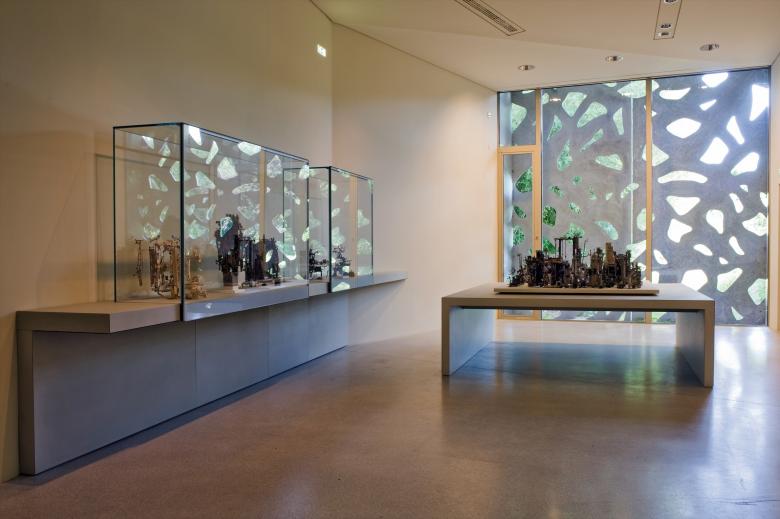
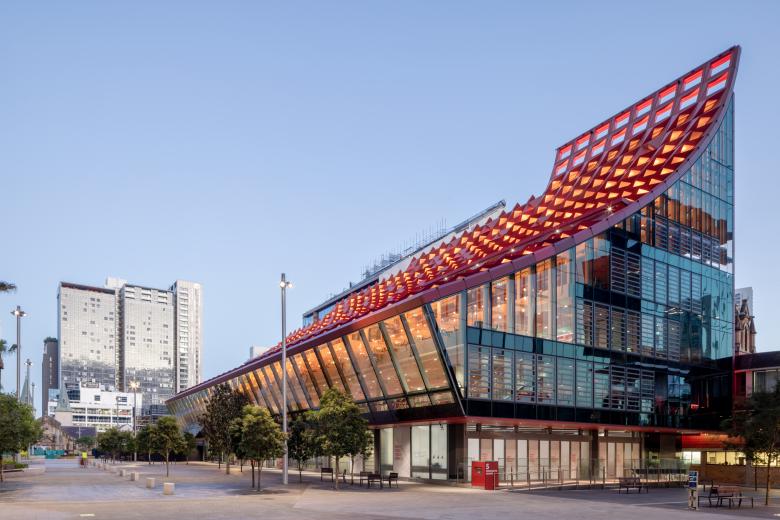
Manuelle Gautrand was born in Marseille and moved with her family to Montpellier at age four. After graduating from the École Nationale Supérieure d'Architecture of Montpellier, she soon moved to Paris, where she worked in architecture studios before founding Manuelle Gautrand Architecture in Lyon in 1991. Two years later, she returned to Paris. In addition to C42, which brought her international recognition, the architect’s most emblematic built works include PHIVE Library and Community Center in Parramatta, Sydney (2023); Origami Building, or Barclays Headquarters, in Paris (2012); and the Restructuring & Extension of LaM, Museum of Modern Art in Lille, France (2010). Speaking about the broader role of architects, Gautrand observes, “I think we are a crucial part of society, helping cities become more sustainable, publicly accessible, generous, meaningful, memorable, and ultimately more beautiful.”
Vladimir Belogolovsky (VB): You grew up in a family of architects. Have you considered other professional options besides becoming an architect yourself?
Manuelle Gautrand (MG): I don’t think so. I had other ideas, but I went into architecture in a very intuitive way. I had a feeling that there were no other options. Both of my parents studied architecture, but they did not work as architects. My father worked on urban master plans and landscapes. And my mother did not practice for long periods. I was very curious and wanted to be part of this beautiful profession. I wanted to become an architect without any hesitation, without any doubt. It was very intuitive. But I was very sure of it.
VB: You were born in Marseille and moved to Montpellier with your parents at age four. Was there a particular reason for that move?
MG: My parents were not attached to Marseille. Both of them are from northeastern France. They simply wanted to test living in different places. So, in a way, I am from the north but raised in the south, and I like the mix. Both Marseille and Montpellier had a great influence on me because of their proximity to the Mediterranean Sea. The sun is very harsh and powerful, and the shadows are sculpted, very dark, and high-contrast. And colors are bright and vivid. These are fabulous conditions for architecture.
VB: When you applied to study architecture at your university, you didn’t tell your parents, right?
MG: No, I didn’t. [Laughs] Precisely because they were architects. I was very independent. I was very sure of my decision, and I did not want to risk them telling me that it was not a good idea. I didn’t want them to criticize me. I submitted my documents on my own, and only a few weeks after getting into the program, I told my parents. And, by the way, they were very happy. [Laughs]
VB: How was your experience at the school?
MG: I was very frustrated. I don’t think there were many opportunities for innovation, and it was hard to establish a real dialogue with my professors. They were not particularly open-minded. I think architecture is a creation that comes from a dialogue. And one professor with whom I developed the closest connection was an art professor, not an architect. I learned a lot from that professor, and through that dialogue, students were enabled to express and assert their own thoughts. That’s the best way for students to learn—by being part of the learning process.
VB: Soon after graduation, you left for Paris.
MG: Yes. I wanted to change cities. I worked in Paris for a couple of years before opening my own office in 1991 in Lyon. I wanted to test myself. I was very eager to discover my own way of creating architecture. After a couple of years in Paris, I wanted to change cities once again. I think it is important to move. [Laughs] But already then, I knew I wanted to be in Paris. Now, after living here for more than thirty years, I can say that Paris is one of the best places in the world! In the beginning, it was very difficult to find work here. My first realized project in Paris became the Citroën showroom.
VB: When you speak about your architecture, you use words and phrases such as unexpected, joyful, disobedient, delicate, monumentality, powerful volumes, opposites of scales, always start with a blank page, beginning in all directions, materiality and color before form, and surprising a client. How else would you describe your work, and what kind of architecture do you try to achieve?
MG: I love all of these words, but to summarize, I always want to do contextual architecture. The context is the number one priority for me. The more you give to the context, the more it gives you back. When you emphasize your context, the context will emphasize your architecture. I want to know about history, culture, climate, weather, geography, and so on. I research the place's roots before starting any project. Then, architecture will emerge in a way that gives me confidence because everything in my proposal will be linked to the context. All of these aspects inspire me. Then I can choose to either complement or counter the context by choosing scale, materials, forms, and so on.
VB: What about the context of your own projects?
MG: It depends. Many of our projects are done through competitions. Many we lose, and very few win. As a result, many of our ideas remain unrealized. So, sometimes it makes sense to reuse ideas if they fit another context. Concepts may not be reused, but certain aspects or details can be. Sometimes, there is a link. And when I talk to various critics, they say there is a link. But I don’t make the connection consciously. I think it is much better to begin with a blank page. I like to have the courage to say: “Now, I have studied the site. What can I do here?” It is much more sensitive.
VB: What link do the critics see?
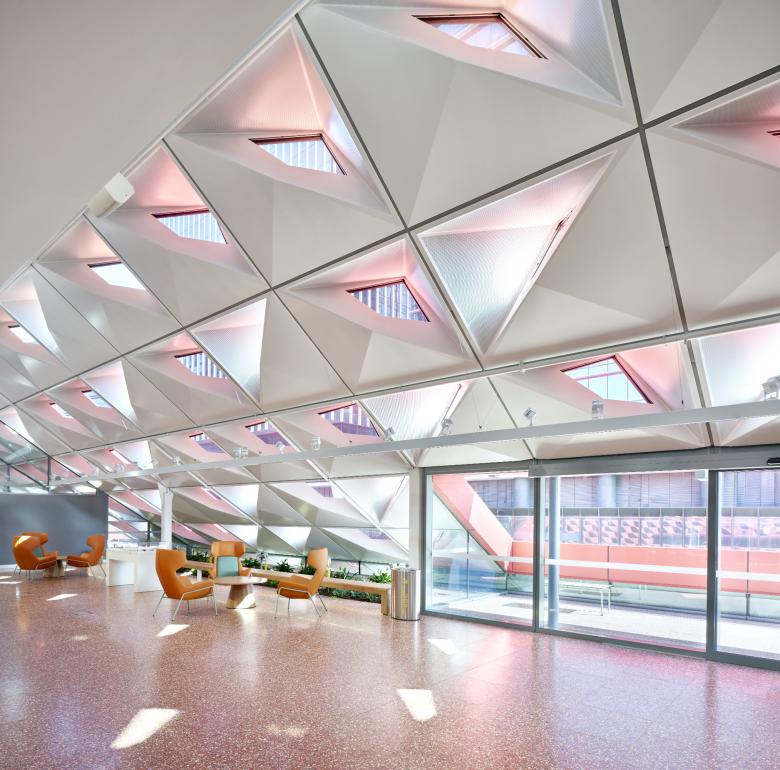
MG: First, the connections to the context, precisely. There are also connections to the envelopes of my buildings. Envelopes are important to me; they are the filters between the inside and the outside, between the context and the program. The envelope is the first element that you will see—the volume and the surface of the facades. You must find an immediate link between the city and the future user. It is also about filtering natural light. It is a way to be porous. Another important link between my projects is their incorporation of public spaces. I think each building has to respect the public space in front of it. It is always desirable for new buildings to improve public spaces within and around them.
VB: You once said, “We only do projects we love and in which we see that we can express something that is really essential.” Could you elaborate?
MG: That’s why I never wanted to grow into a large practice. I want to be very strategic about which projects we take on. Only the ones that inspire us. You can ask, “OK, when are you inspired?” I am inspired when my client is eager about architecture. When the client is open-minded. It is not a question of location, size, program, or even budget. But what matters much more is that the client is clever, confident, and open-minded, and that they trust you. If that relationship is there, then I can dream of something fabulous.
VB: You also said, “As architects, we need a lot of constraints to be creative.”
MG: I feel lost without a context. In cities, I prefer to work in places shaped by their surroundings, and in the countryside I want to address the landscape. Otherwise, it is very difficult.
VB: And finally, you said, “I am always trying to improve the program.” How?
MG: I don’t think I would sound pretentious if I say that most clients are not as creative as architects. Most of the time, programs are similar and expected. So, I believe it is important for architects to focus on improving the program, not just on designing spaces in response to client requests. We should be working on bringing flexibility, complexity, new possibilities, and the mixing and addition of new functions. We need to propose buildings to be more connected, more comfortable, more ambitious, more sustainable, and more valuable.
In one of our projects, the client asked us to design a new building with a hotel and offices. But we also proposed integrating apartments. As we know, cities around the world now face housing shortages. And it was a good idea with a clever mix of uses. Once we proposed our idea, the client became immediately convinced. We need to be much more active, adventurous, and innovative in how we propose new ideas to politicians and clients, and I can tell you from my own experience that they will listen and often agree with us.
VB: So, politicians should be much more interested in architecture, right?
MG: I think politicians who don’t believe in architecture don’t believe in the future. We, architects, are storytellers. We are a part of making history. I think we are a crucial part of society, helping cities become more sustainable, publicly accessible, generous, meaningful, memorable, and ultimately more beautiful.
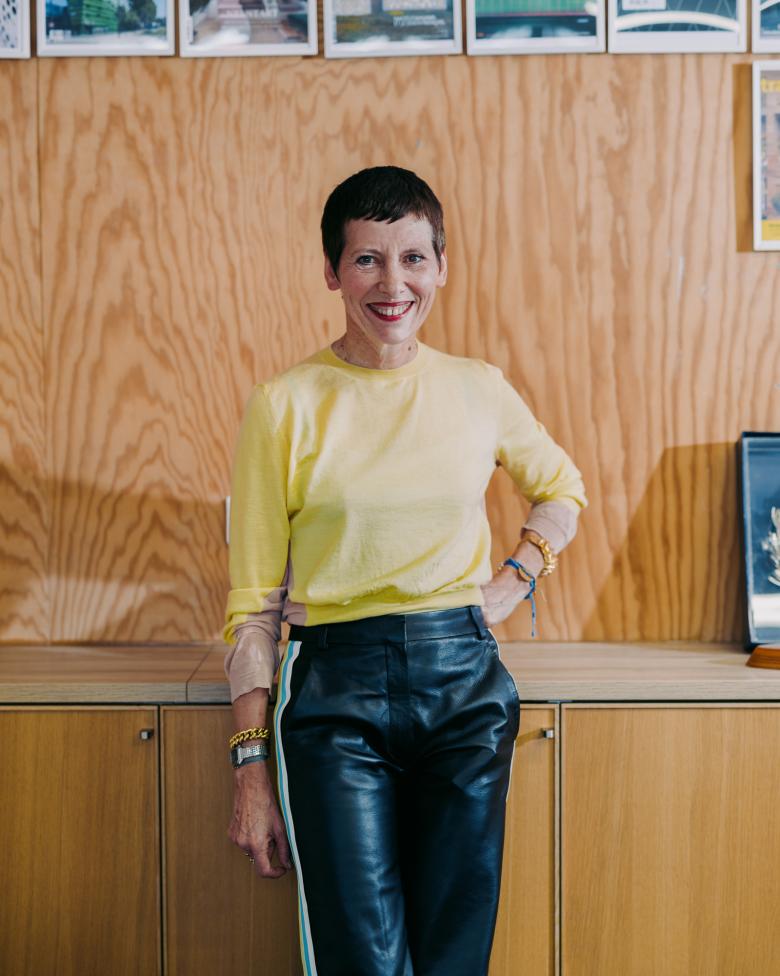
Watch the full video interview with Manuelle Gautrand: