The Green-House at Green-Wood
A Contemporary Gateway to Green-Wood Cemetery
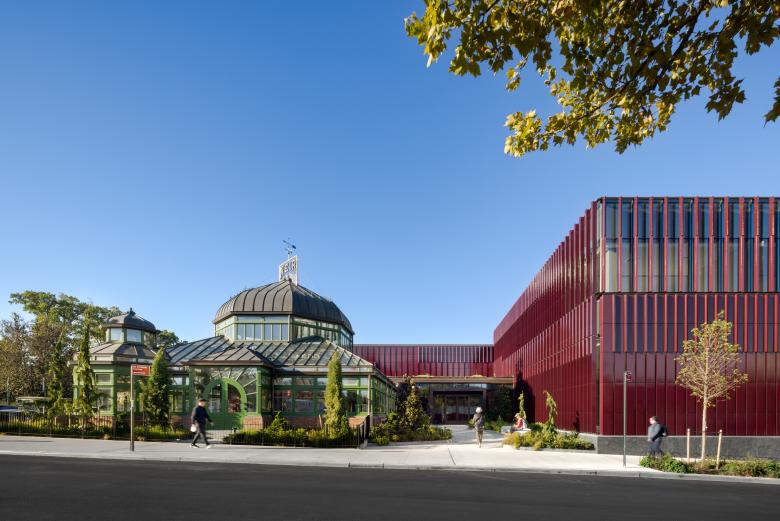
Decades before the creation of Central Park, New Yorkers seeking nature ventured to Green-Wood Cemetery in Brooklyn. Founded in 1838, the cemetery's now 478 acres still a half million visitors every year paying homage to some of the famous permanent residents or just taking in the site's natural beauty. The latest addition to the cemetery is The Green-House at Green-Wood, a building with offices and community spaces designed by Architecture Research Office (ARO), who answered a few questions about the project.
What were the circumstances of receiving this commission?ARO was awarded the project as part of a competitive pursuit in 2017 (RFQ then RFP, then interviews). At the time of pursuit, a previous design by another firm had been rejected by the NYC Landmarks Preservation Commission, prompting the client to consider other firms. Owner’s representative About the Work managed the project since that stage.
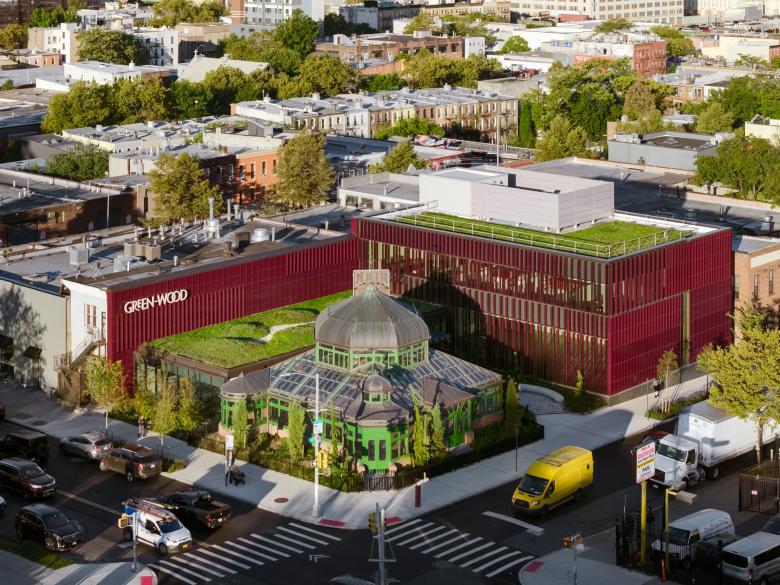
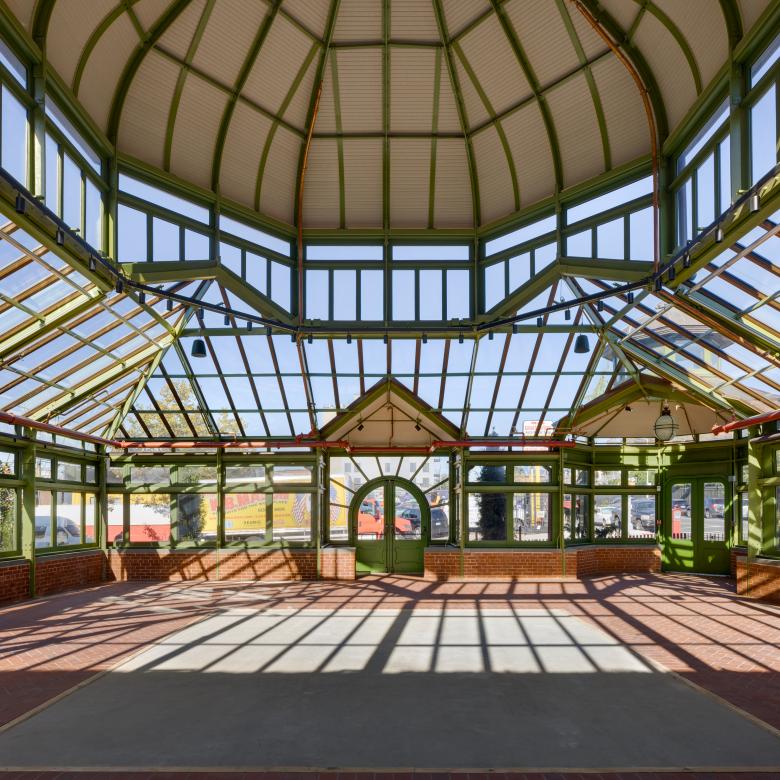
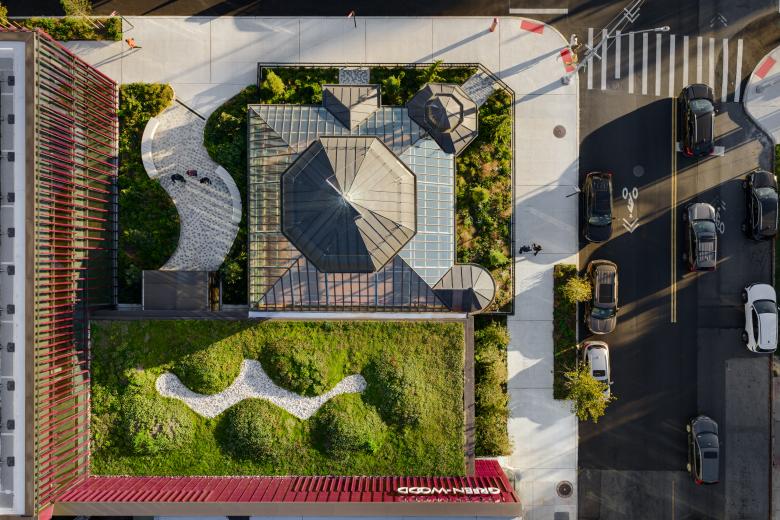
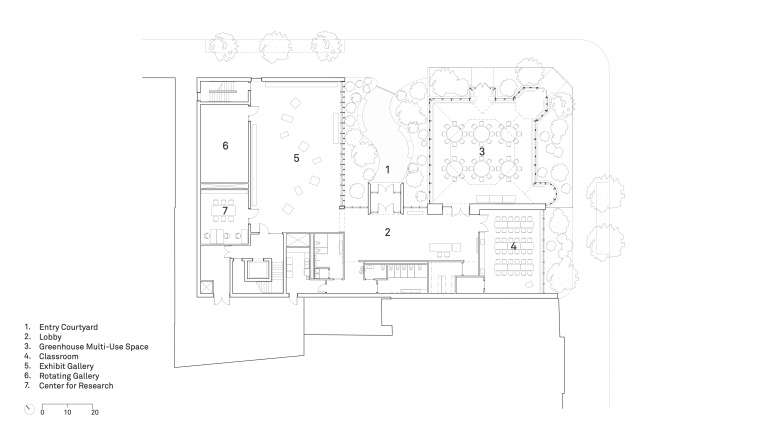
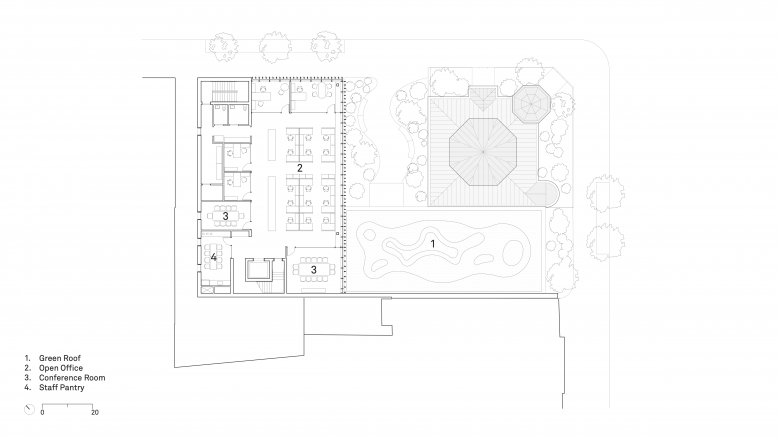
The Green-House at Green-Wood is unique because it integrates past, present, and future. The new L-shaped structure wraps around the restored, landmarked Victorian-era Weir Greenhouse, which once served the cemetery and creates a new front door to Green-Wood. The building offers community classrooms, staff offices, gallery spaces, and an archive, to reestablish Green-Wood’s role as a community anchor and cultural institution. The project builds upon Green-Wood’s organizational mission of stewarding the past while looking towards the future.
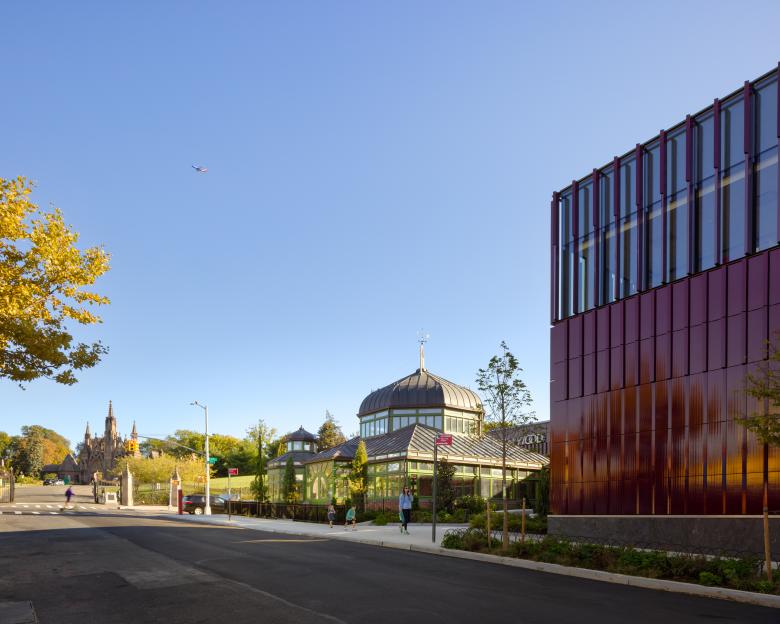
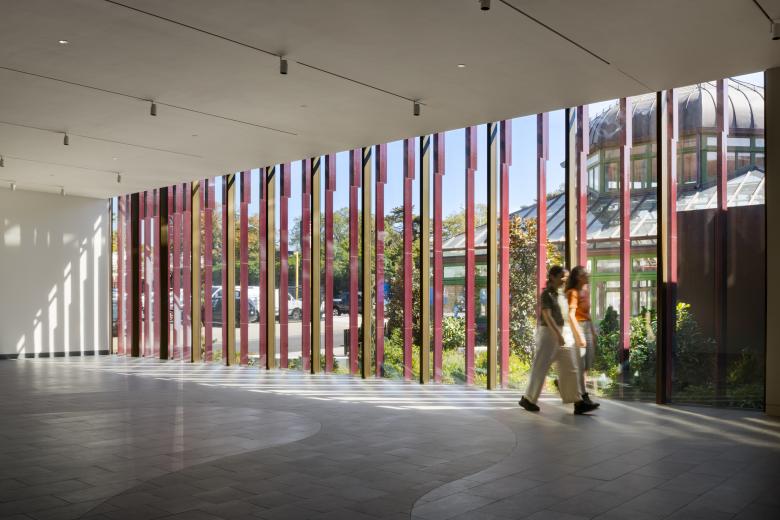
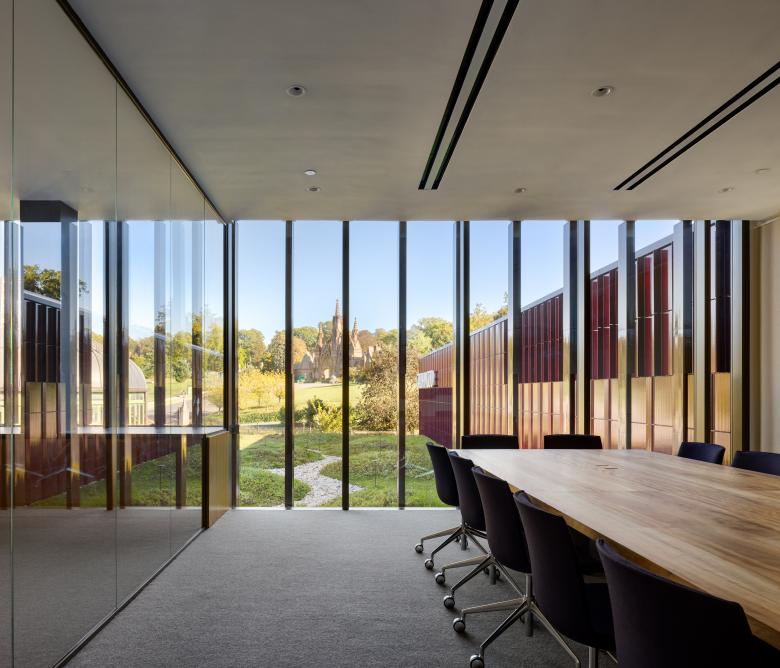
The design of the building highlights and celebrates Green-Wood’s landscape and history and becomes a new front door for the cemetery. Large windows on the second floor offer expansive views uphill towards the cemetery and its historic Richard Upjohn-designed arched gate, while a sculpted green roof and entry courtyard echo Green-Wood’s hills and extends into industrial Sunset Park. The custom-glazed, burgundy terra-cotta recalls the brownstone of the gothic Upjohn Arches and complements the Green-House’s copper roof. The new building’s materiality complements the cemetery’s palette, without competing with the Green-House.
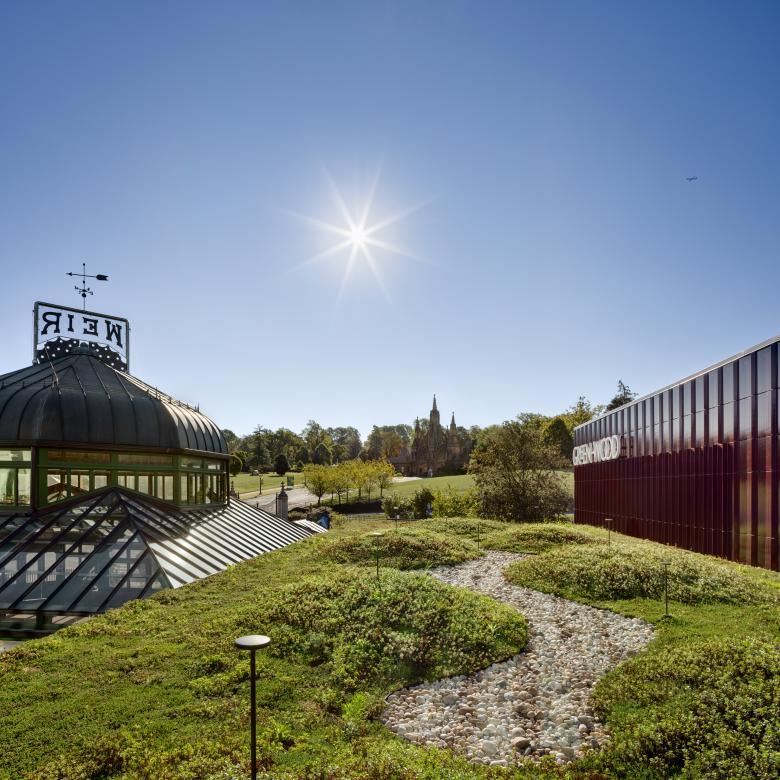
The Weir Greenhouse is located along Fifth Avenue, directly across from Green-Wood’s gates. The design of the new structure communicates and signals a new point of entry and orientation to the cemetery and facilitates a seamless transition into the cemetery grounds. The new center and main entrance were strategically placed behind the Weir Green-House, to provide ingress and egress and to minimize the number of architectural interventions to the historic structure. With this composition, the Green-House retains its historic architectural prominence while the new building imbues a contemporary design.
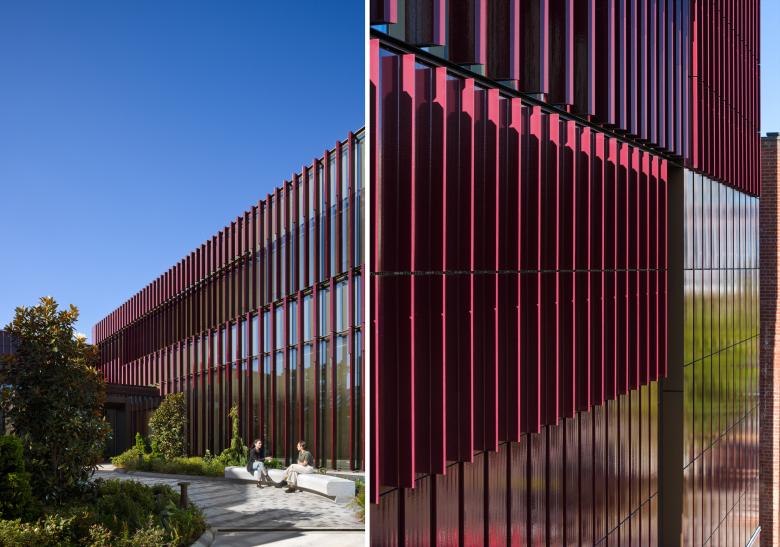
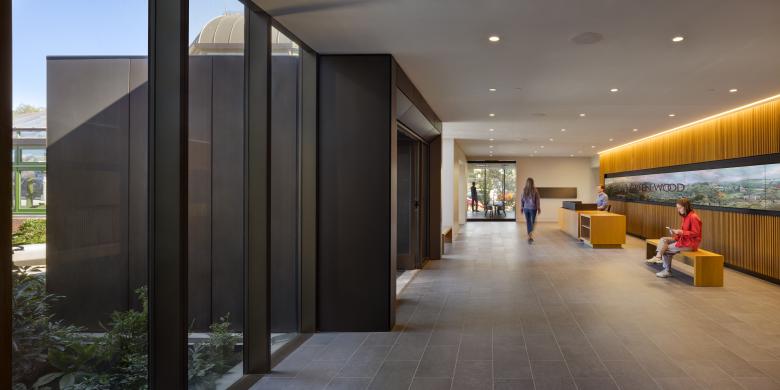
The Green-House at Green-Wood was designed to welcome and orient visitors, support the cemetery’s programmatic vision and development as a cultural organization, and provide exhibition and educational spaces for future community and cultural programming. Each of these considerations influenced the design of the building. When entering the new building, the ground floor directly connects to the exhibition hall on the right, and to the new community spaces on the left, creating an accessible experience for visitors.
The Green-House at Green-Wood is another example of our office’s thoughtful and contextual approach to public, cultural projects. The Frederic Church Center for Art and Landscape welcomes and orients visitors to the Olana New York State Historic Site and is a similar interpretive threshold. Our work connecting people with art includes Dia Art Foundation’s Chelsea galleries and offices and our posthumous collaborations (we do great work with departed artists) include our work at the Rothko Chapel and Donald Judd’s Home + Studio (as well as Olana) are additional examples. This project for Green-Wood also honors those buried at Green-Wood and is very much for the living to engage with memory, history, and culture.
Email interview conducted by John Hill.
Location: Brooklyn, NY, USA
Client: The Green-Wood Cemetery
Architect: Architecture Research Office, Brooklyn
- Design Principals: Stephen Cassell, FAIA and Kim Yao, FAIA
- Project Architect: Jeff Hong
- Project Manager: Drew Powers, AIA
- Project Team: Anastasia Yee, Chris Beck, Daniel Kuehn, Ericka Song, Jay Schairbaum, Jenny Hong, Kevin Ellingson, Lian Ren, Yongwon Kwon
MEP/FP Engineer: Altieri
Landscape Architect: Michael Van Valkenburgh Associates
Lighting Designer: Tillotson Design Associates
Construction Manager: Hunter Roberts Construction Group
Owner’s Representative: About the Work
Exhibition Designer: C&G Partners
Historic Greenhouse Exterior Restoration Architect: Walter B. Melvin Architects
Historic Greenhouse Exterior Structural Consultant: Old Structures Engineering PC
Acoustics: Threshold Acoustics
LEED Consultant: Encompass Energy & Code Green
Facade Consultant: Heintges
Civil Engineering: AKRF
Code: JS Consulting Engineers
Expediting: RPO
Cost Estimating: Stuart-Lynn
Envelope: Simpson Gumpertz & Heger
Building Area: 17,000 sf (new construction) | 19,200 sf (total, including greenhouse)
Important Manufacturers / Products:
- Aluminum Curtainwall and Entrances: Kawneer
- Terracotta Cladding and Components: Shildan Group
- Bird Protection Glazing: Arcon Ornilux
- Exterior Insulation and Finish System: Sto
- Elevator: Schindler
- Rooftop Acoustic Screens: IAC Acoustics
- Fall Protection: Kee Safety
- Window Treatment: Lutron; Mecho Shade
- Lighting Control: Lutron
- Interior Glazed Partition System: Modernfold
- Reclaimed Wood Tables: TriLox (wood from felled trees within Green-Wood Cemetery)