Glasshouse Theatre
A Theatre With 'Ripples on Its Surface'
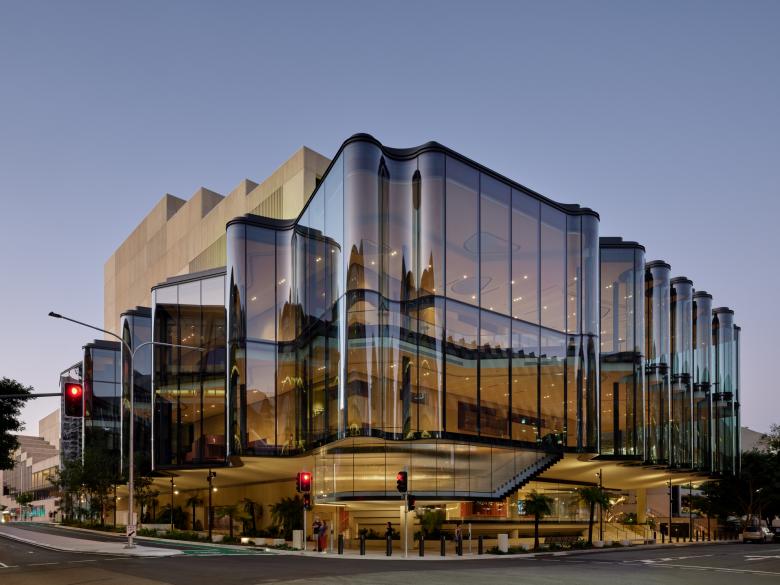
A rippling facade of glass cantilevering over the sidewalk greets visitors to the new Glasshouse Theatre in Brisbane, Australia, designed by Blight Rayner Architecture in partnership with Snøhetta. The architects answered a few questions about the recently completed project, revealing how the facade was inspired by an Aboriginal poem about the river fronting the theatre.
What were the circumstances of receiving this commission?The Glasshouse Theatre project was won in 2019 in an international competition by Blight Rayner Architecture in partnership with Snøhetta. The competition was run over six weeks involving five competing teams following a shortlisting process.
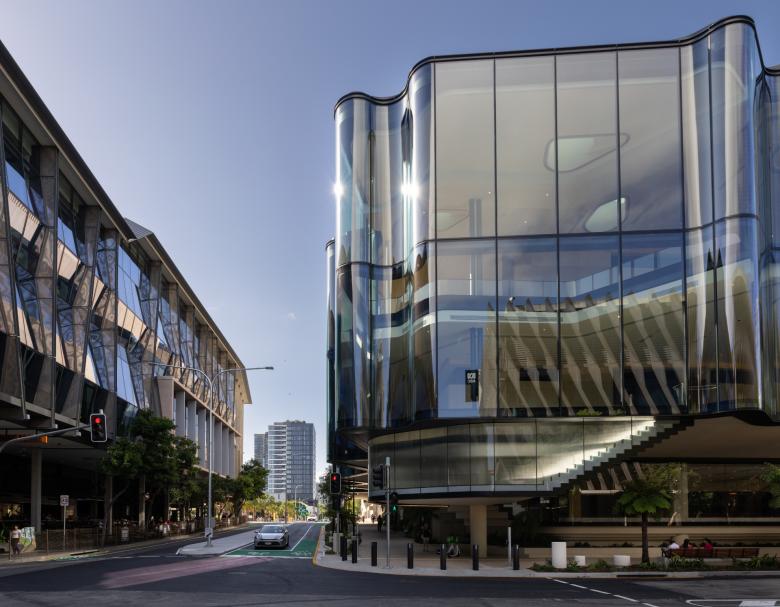
The Glasshouse Theatre will become renowned for its undulating 173-meter long glass facade comprising panels 7m high (total height 14.2m) that distinctly characterize the external appearance. The glass facade is entirely top hung, which enabled the ground level to be used continuously as a working platform during construction. The theatre itself is capable of staging world class performances in all modes including opera, ballet, dance, theatre, symphony and musicals through innovative acoustic systems.
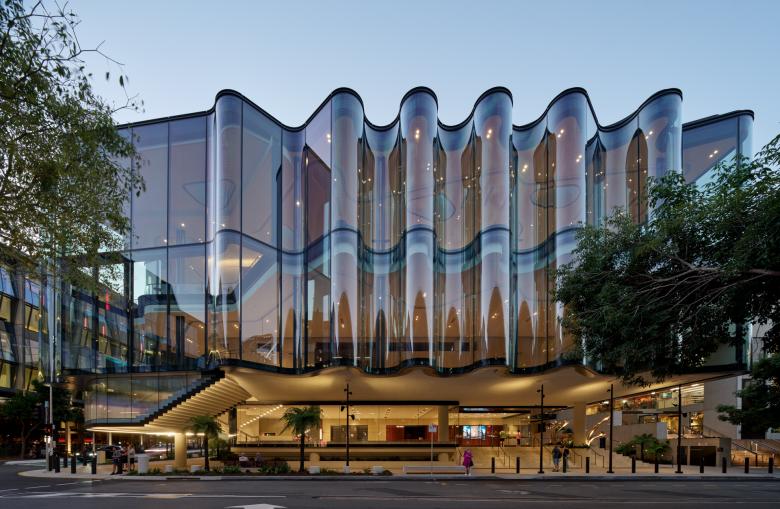
The inspiration for the undulating facade was a poem written by First Nations Elder and artist Lilla Watson about the river fronting the Glasshouse precinct. It talked of the image of viewing fish swimming through the ripples of the river, and we conceived the idea of viewing people in the foyers in the same way—through rippled glass, creating a sense of “public” theatre. Of course, it is also an abstraction of a stage curtain through which people in the street gain glimpses through to what’s occurring inside.
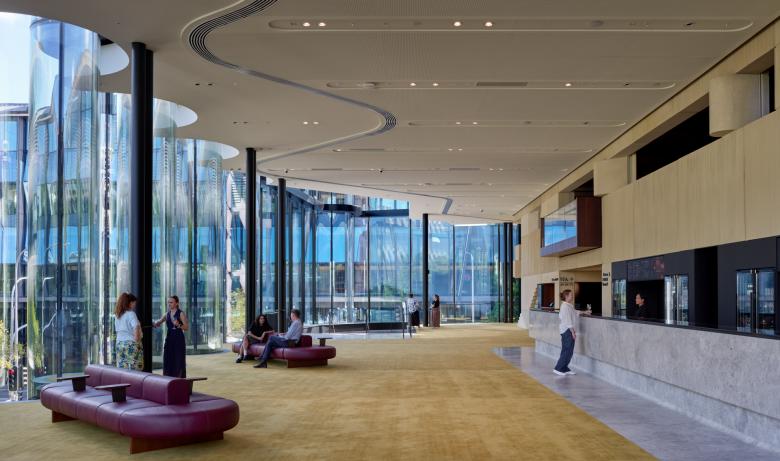
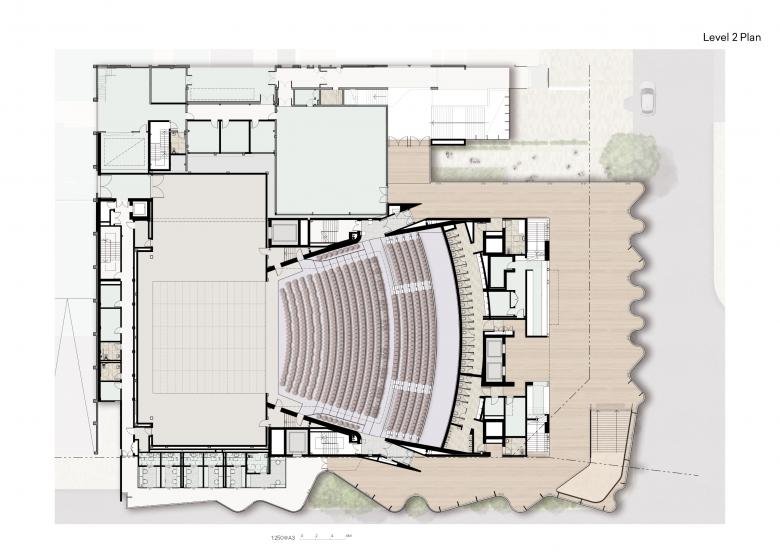
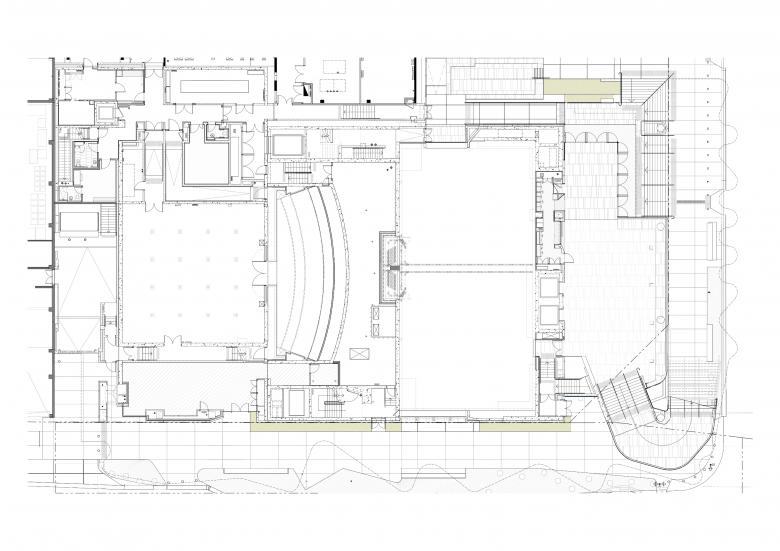
The site was always intended to accommodate a cultural facility—the site being known as Stage 7 of the Queensland Performing Arts Centre (QPAC) designed by Robin Gibson. For the Glasshouse project—a 1500-seat theatre—the site was not large enough, however the brief allowed a 6m cantilever on its two street sides. Our approach was to treat the outer edge as a “glass veil” through which the actual theatre box would be visible, its sides aligning with the solid sides of Gibson’s QPAC.
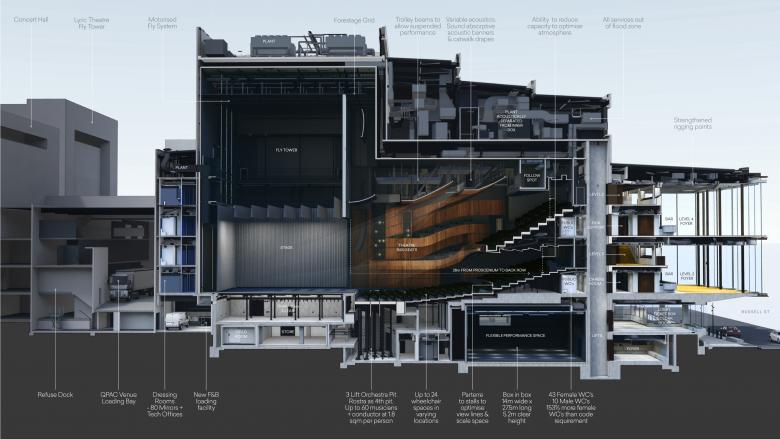
The brief had anticipated that two protruding existing rehearsal studios would need to be demolished to fit the new building, however we managed to retain them in the design, and provide two additional rehearsal studios under the rake of the theatre. This gave QPAC an asset the client wasn’t expecting and helped solve an existing deficiency. Our idea for the new studios—now also seen as flexible performance spaces—was to enable them to be viewed into from the neighboring streets as a further means of making the performing arts feel more accessible than conventional theatres like the QPAC theatres. However, the studios will only be complete in mid-2027.
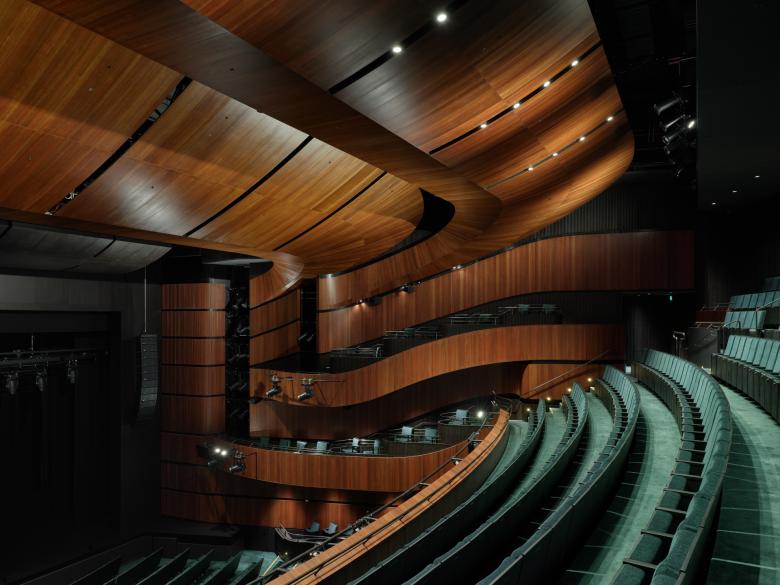
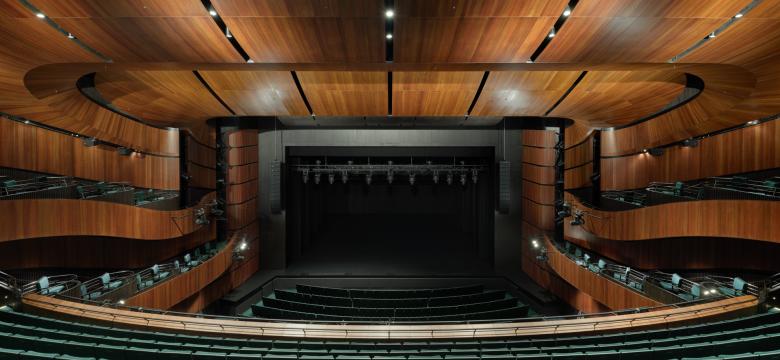
From a user perspective, the key driver was to make the theatre as intimate as possible both for performers and audience. The furthest seat is only 28m from the stage and balconies are wrapped around the sides to achieve this outcome.
The only significant change from initial design to completion is an enlargement of the ground floor foyer to enable it to accommodate informal functions. Otherwise, the final outcome reflects the initial concept very closely.
From Blight Rayner Architecture’s perspective, the project embodies our ethos based upon Structure, Craft, Art and Nature—we seek where possible to integrate aspects of these in our projects. It is our only major cultural project we have designed since our establishment in 2016, thus we did not call upon precedents for the design, rather we responded to an excellent project brief, our own passion for the performing arts and our desire to engage the theatre with the public life of the city.
For Snøhetta, the Glasshouse Theatre at QPAC sits within Snøhetta’s long-standing portfolio of civic and cultural projects, while representing a distinctly Australian and place-specific evolution of that work. Like projects such as the Norwegian National Opera and Ballet in Oslo, the Glasshouse places its primary cultural function at the center of the building, both spatially and symbolically. The auditorium forms a solid core, anchoring the project structurally and conceptually, while remaining legible to the city. This approach echoes Snøhetta’s broader commitment to making cultural institutions accessible, democratic, and embedded in everyday urban life.
Email interview conducted by John Hill.
Location: South Bank, Brisbane, Australia
Client: Queensland Government (Arts Queensland)
Architects: Blight Rayner Architecture in partnership with Snøhetta
Design Architect: Blight Rayner Architecture, Brisbane
- Project Architect: Jayson Blight, John Campbell
- Project Team: Michael Rayner, Peter Brown, Lauren Hickling, Benjamin Carter, Akiko Spencer
Structural Engineer: Arup
MEP/FP Engineer: NDY Engineering, Holmes Engineering
Landscape Architect: LAT 27
Lighting Designer/Theatre: Schuler Shook
Acoustics: Acoustic Studio
Contractor: Lendlease
Construction Manager: Queensland Department of Public Works and Housing
Building Area: 8,600 m2
Important Manufacturers / Products:
- Facade: Seele
- Theatre: The P.A. People
- Ceilings and Partitions: Superior Walls & Ceilings
- Electrical/Lighting: Stowe