Made In Denmark
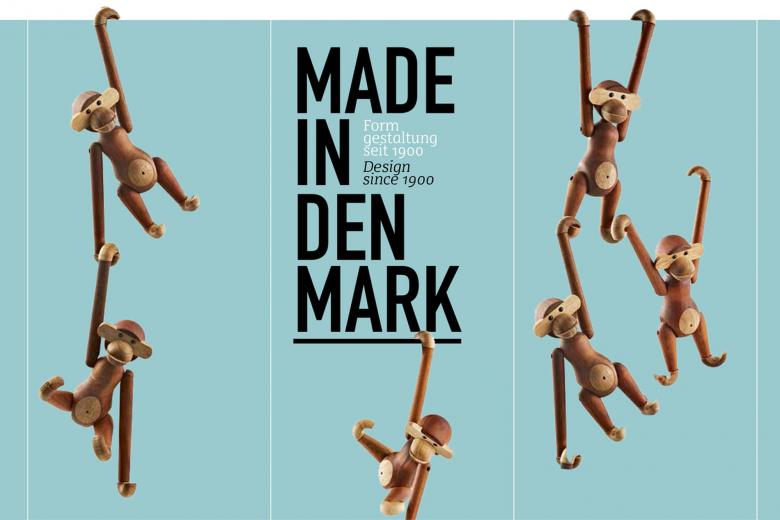
“Made in Denmark” was the title of an exhibition at the GRASSI Museum of Applied Arts in Leipzig, whose curatorial approach is now being continued and reinterpreted in Vienna. The objects gathered there form the core of the exhibition and are complemented by carefully selected design classics from renowned collections, including the MAK – Museum of Applied Arts Vienna, the Vitra Design Museum, the Hofmobiliendepot’s own holdings, and loans from private collectors. The result is a multifaceted panorama of Danish design that interweaves institutional and personal perspectives.
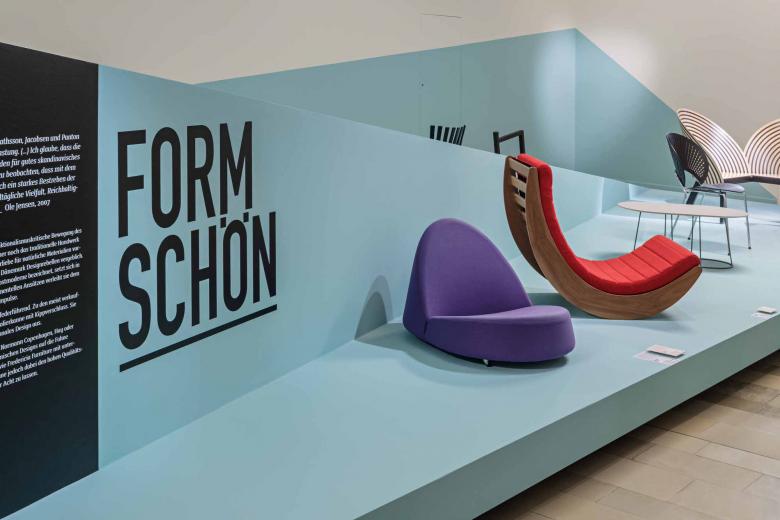
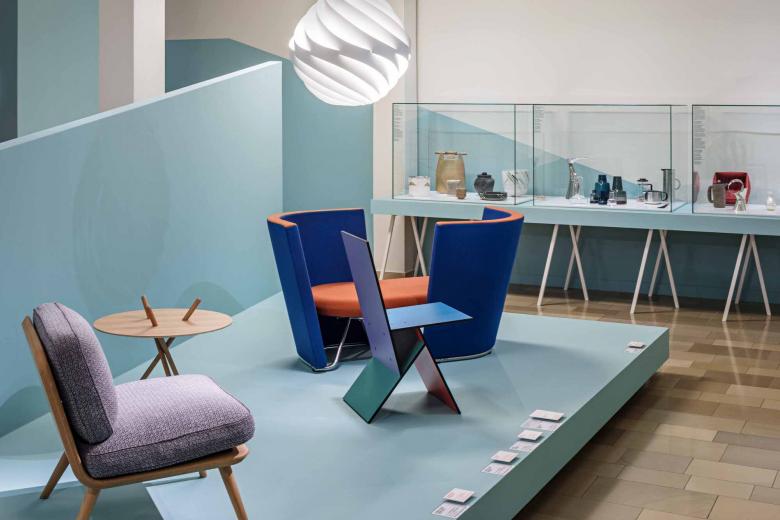
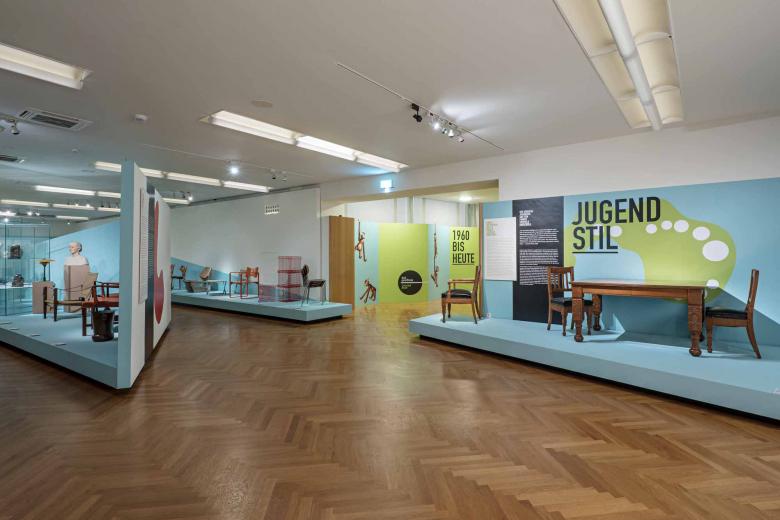
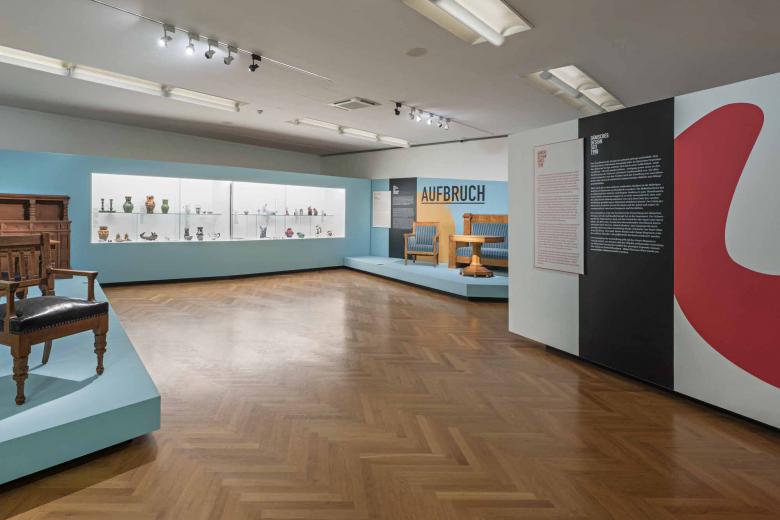
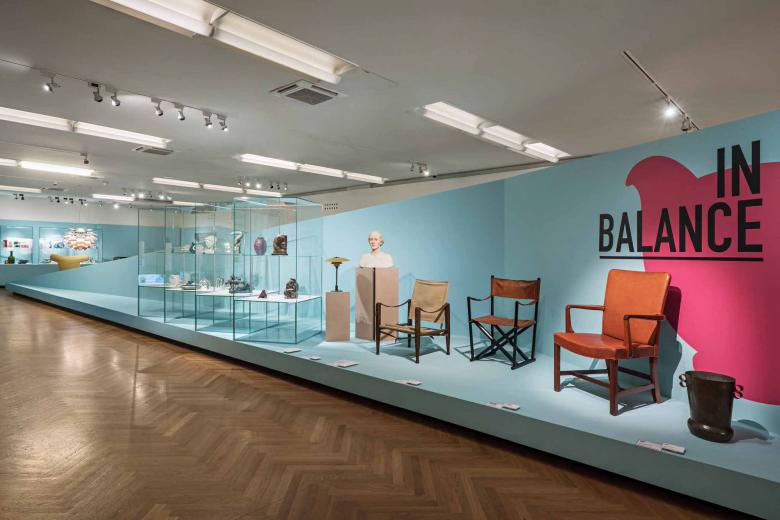
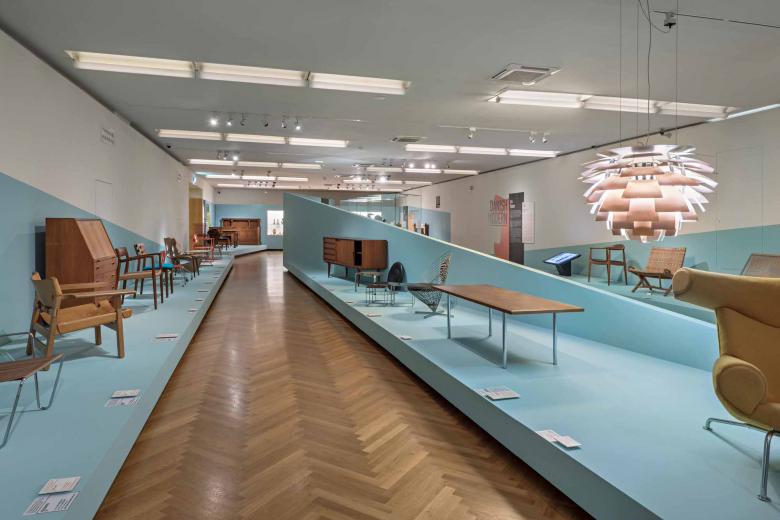
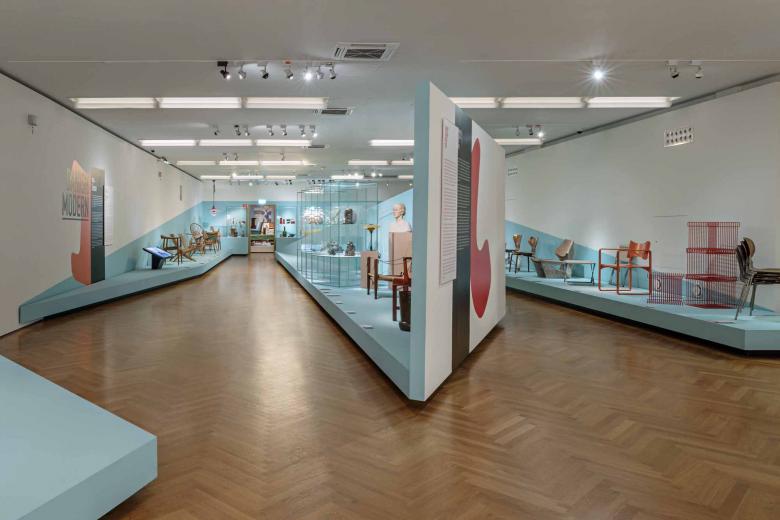
The exhibition design translates the temporal continuity of the works on display into a spatially expansive, bright, and fluid narrative. Diagonally placed installations divide the space into thematic zones that open up or condense depending on the viewer’s vantage point. This creates a dynamic interplay of proximity and distance, of density and expansiveness. Deliberately placed visual axes and clear lines of orientation connect the individual eras of design development and reveal their contextual connections—as a network of ideas, influences, and further developments.
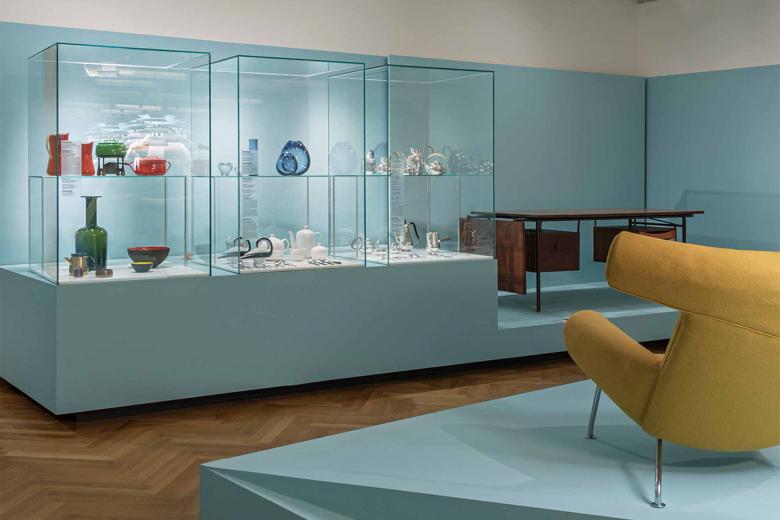
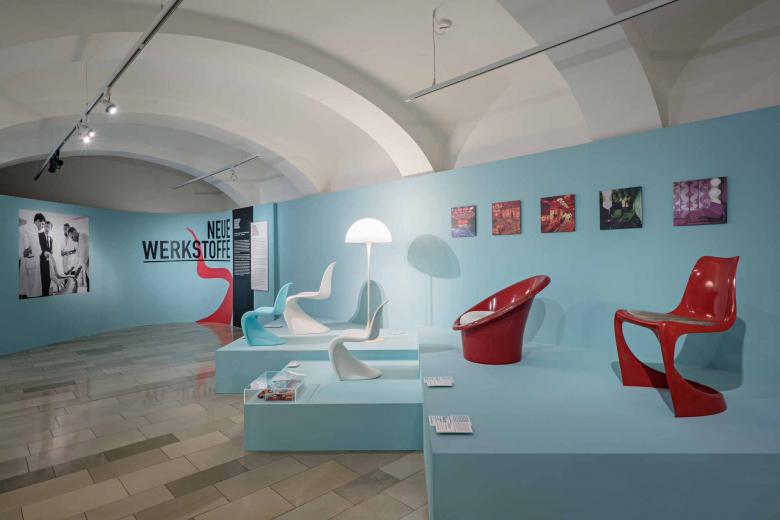
The understated color palette of the display stands serves as a backdrop that precisely highlights the material qualities of the furniture on display without drawing attention to itself. The variety of wood types, textiles, and finishes thus enters into a nuanced dialogue with the space.
Danish design icons—from Kaare Klint to Arne Jacobsen to Verner Panton—have left a lasting mark on the product and interior design of entire generations. Particularly in the second half of the 20th century, “Made in Denmark” established itself as an internationally recognized promise of quality and became synonymous with functional clarity, precision craftsmanship, and design innovation.
At the same time, the exhibition deliberately looks further back: it demonstrates that this internationally celebrated heyday was preceded by an equally significant phase in which designers, artisans, and pioneering movements laid the foundations for later success. By bringing these early developments to light, a more comprehensive understanding of Danish design emerges—as a continuous process that intertwines tradition and modernity within a multifaceted cultural context.
An exhibition by Schloss Schönbrunn Kultur- und Betriebsges.m.b.H. in cooperation with the Grassi Museum of Applied Arts 2019–2020
- Year
- 2019
- Project Status
- Built
- Client
- Eine Ausstellung der Schloss Schönbrunn Kultur- und Betriebsges.m.b.H. in Kooperation mit dem Grassi Museum für Angewandte Kunst
- Ausstellungsgrafik
- Gerda Wimmer : grafik-design
- Ausstellungsbau
- Tischlerei Pucher
- Ausstellungsbau
- Malerei Horny
- Druck Ausstellungsgrafik
- Plakativ Green Printing
- Kunsttransporte
- hs art service austria
- Objektmontage
- vienna arthandling