Cycle City -Almaty East Gate Masterplan
Almaty, Kazakhstan
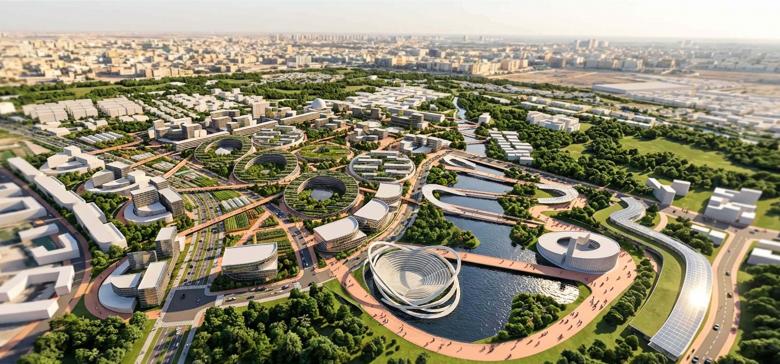
Habibeh Madjdabadi envisions a 3D ‘Cycle City’ for Almaty’s East Gate Masterplan
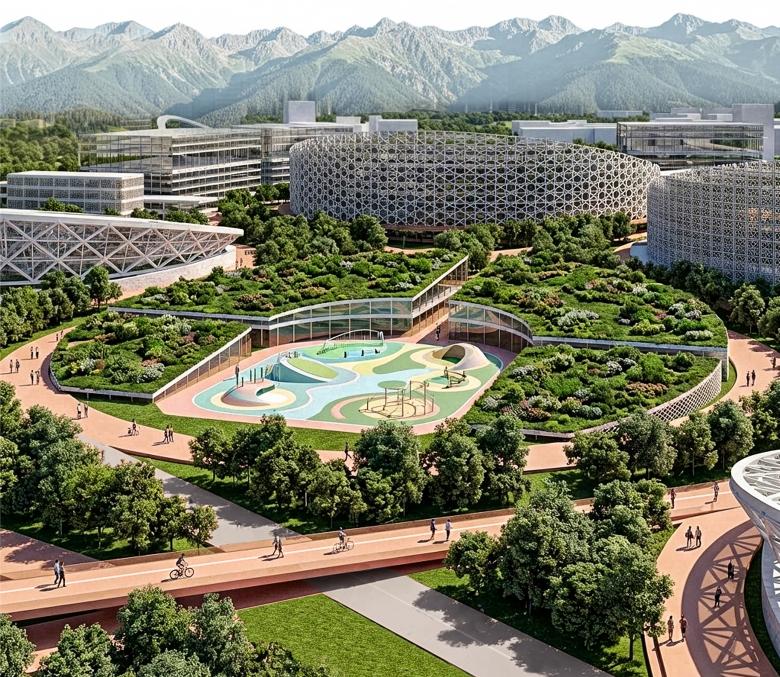
For the Almaty East Gate Masterplan competition, Habibeh Madjdabadi Studio proposes ‘Cycle City’—a design strategy that separates non-motorized transport from vehicular traffic. By introducing an elevated network for pedestrians and cyclists, the project aims to create a safer, more active urban environment. The masterplan’s circular geometry draws inspiration from the traditional Kazakh Yurt to address local climate challenges and community connectivity.
Habibeh Madjdabadi Architecture Studio has unveiled ‘Cycle City,’ a futuristic urban masterplan designed for the East Gate Polycenter of Almaty, Kazakhstan. Developed as part of an invited international competition organized by the Municipality of Almaty and SHARE Architects in late 2025, the proposal represents a bold reimagining of Central Asian urbanism. The competition invited 15 prestigious firms from Europe, North America, and Asia to design two strategic nodes: the East and West Gates. In a collaborative entry, the West Gate was designed by Valentiny hvp architects, while East Gate—the focus of this feature—was developed by Habibeh Madjdabadi Studio from Iran.
A New Paradigm: The 3D Active Network
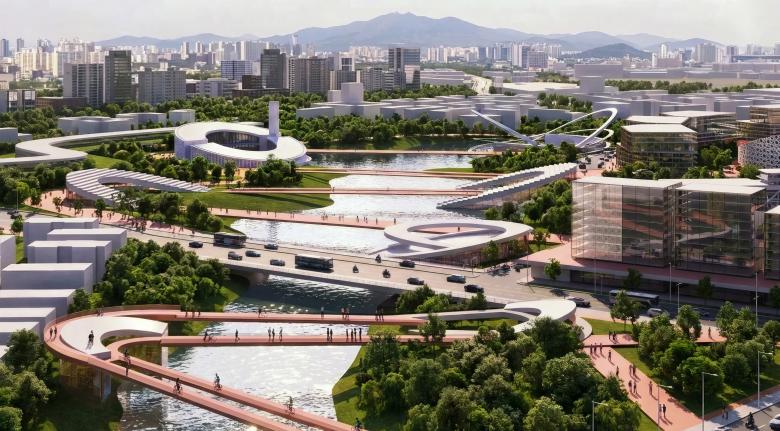
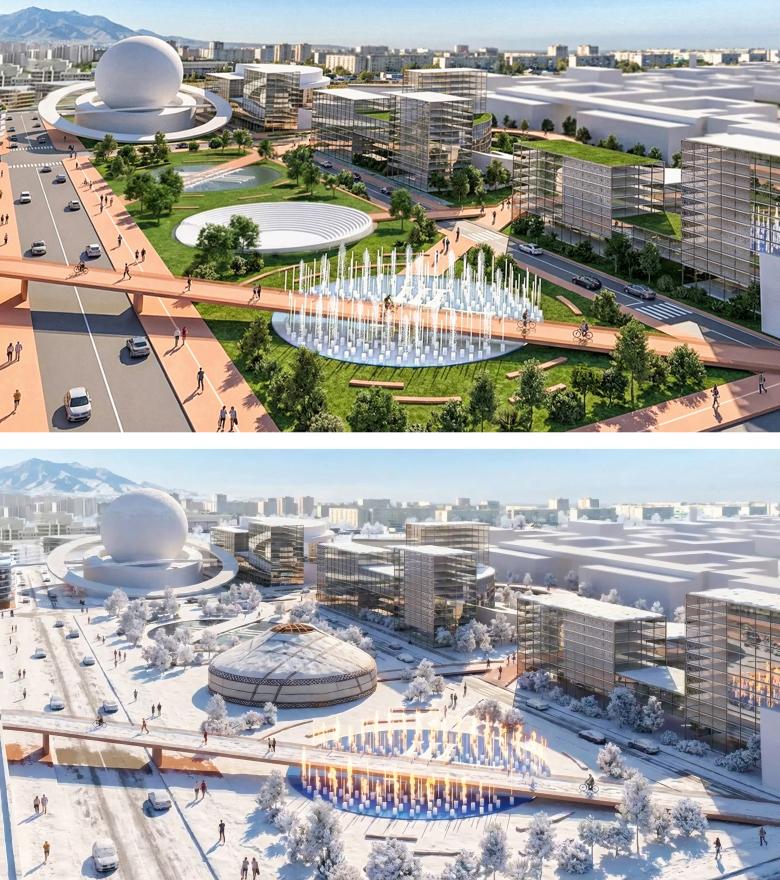
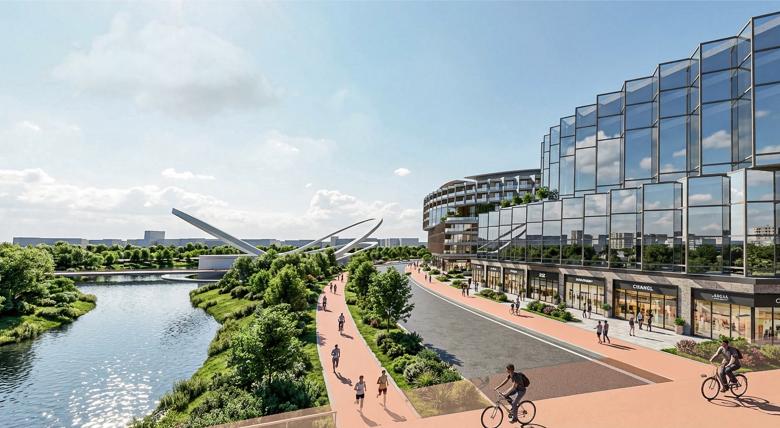
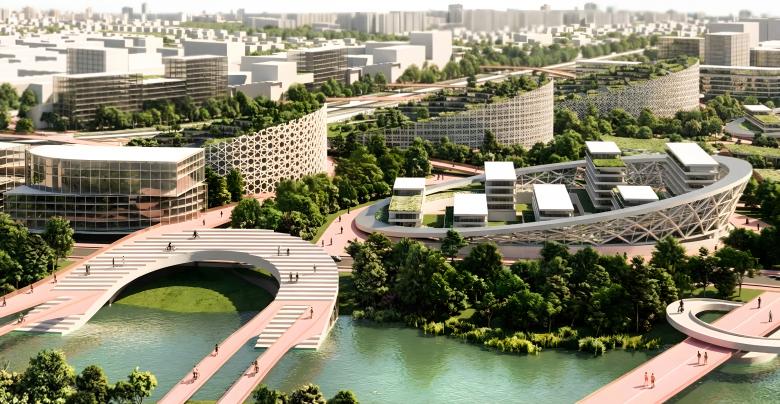
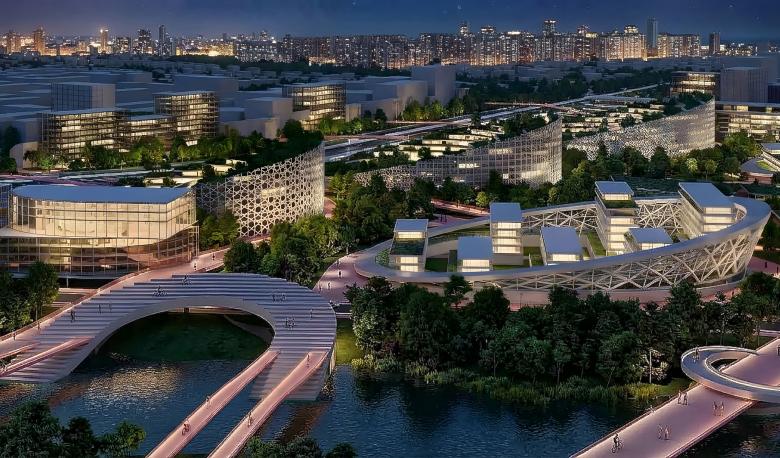
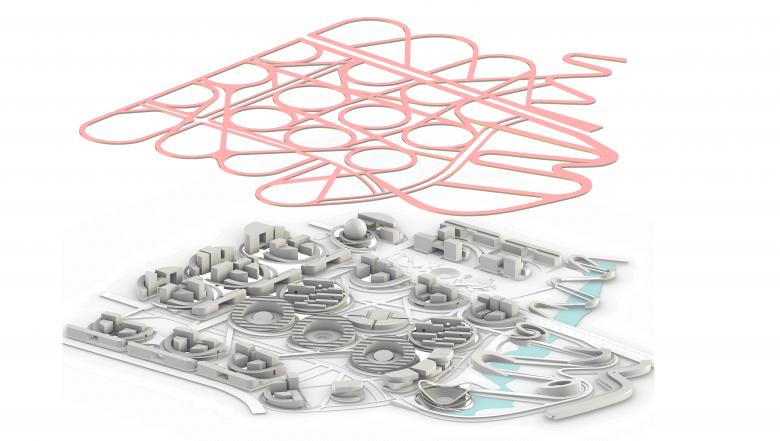
Located to the east of the historic city, the project addresses a critical challenge: how to create a human-centric district on a scale typically dominated by automobiles. The studio’s solution creates a vertical separation of speed and experience. While preserving the efficiency of the existing vehicular grid on the ground level for logistical connectivity, the design superimposes a radical new layer: a dedicated, three-dimensional ecosystem for non-motorized transport.
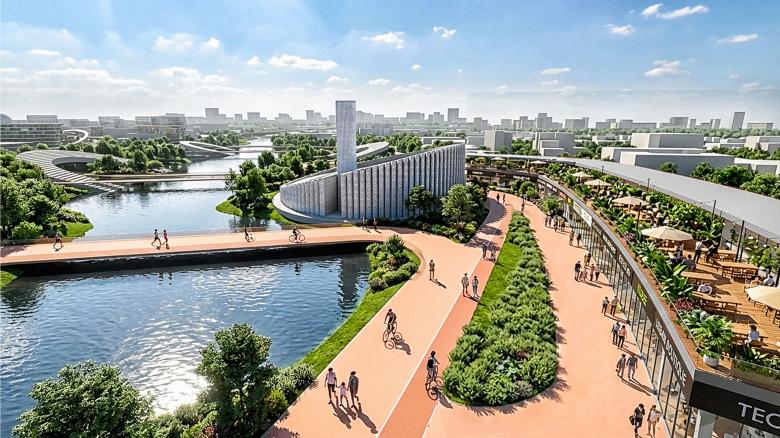
This elevated network serves as the spine of the city, lifting pedestrians and cyclists into a dynamic topography of ramps, bridges, and elevated plazas. Unlike a rigid grid, this bicycle network functions as a non-linear “web,” encouraging exploration and turning the daily commute into a journey of discovery.
Cultural Morphology: The Yurt and the Shanyrak
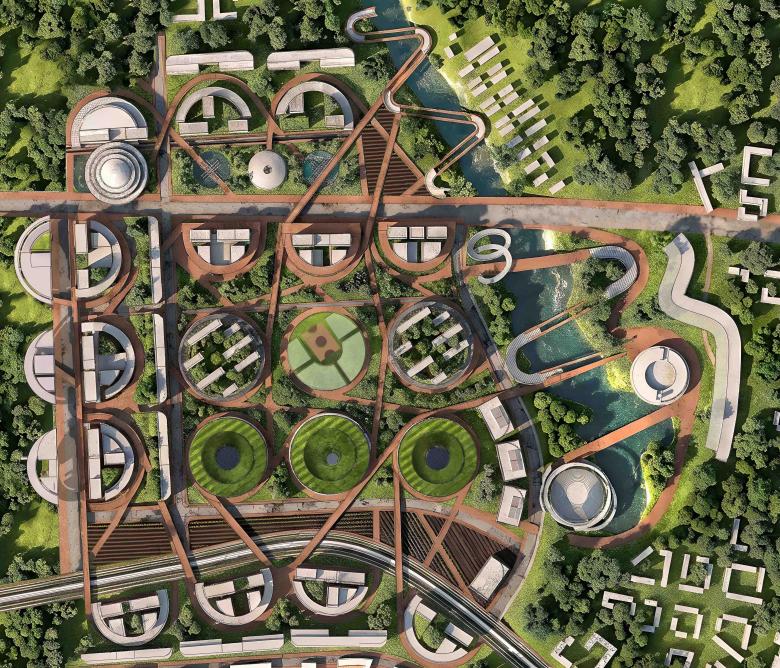
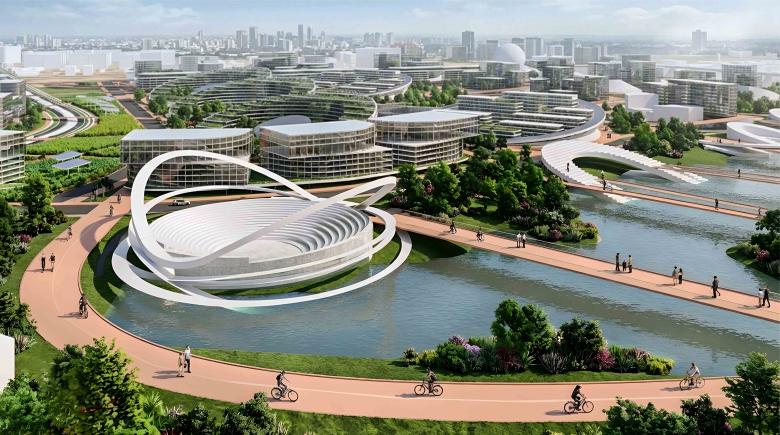
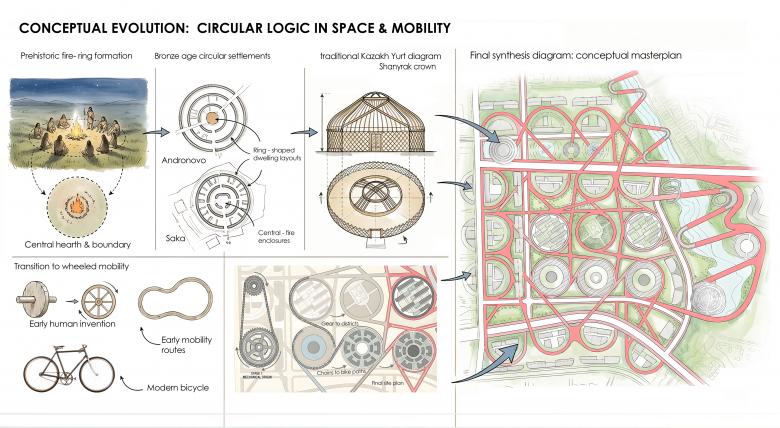
The geometry of ‘Cycle City’ is not arbitrary; it is a direct derivation of the Kazakh vernacular. The masterplan is governed by a holistic circular strategy that references the Yurt and its sacred crown, the Shanyrak.
“Historically, the circular plan of the Yurt was an engineering response to the fierce steppe winds, offering aerodynamic stability and thermal efficiency.
At the macro scale, the city functions as a “Macro-Shanyrak.” Just as the Shanyrak symbolizes family and unity in Kazakh culture, the circular loops of the masterplan connect diverse community elements—housing, commerce, and nature—into a unified whole.
Smart Mobility and the “15-Minute” Polycenter
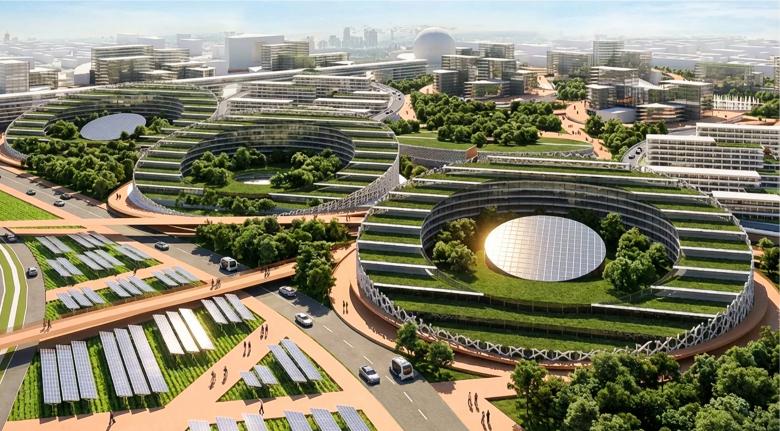
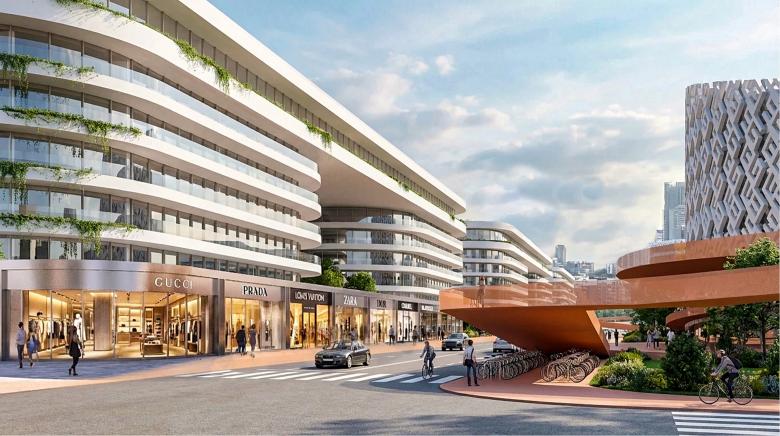
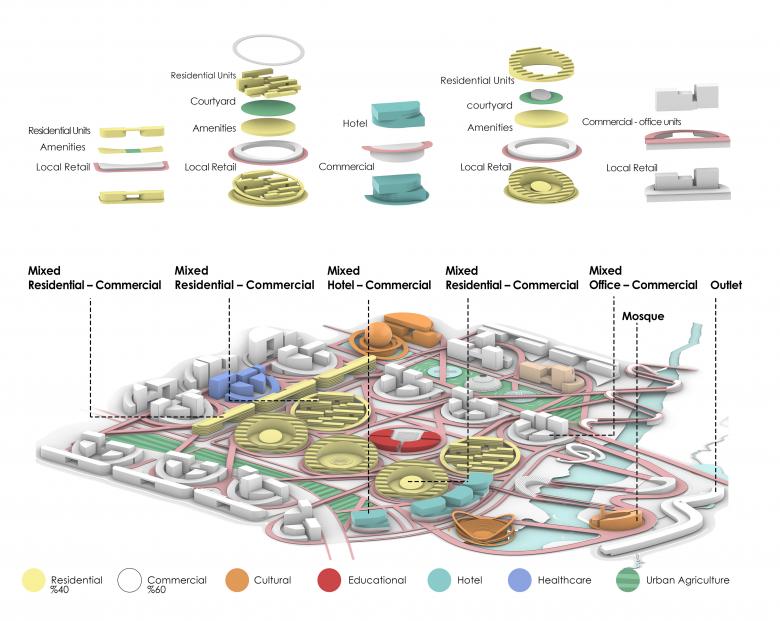
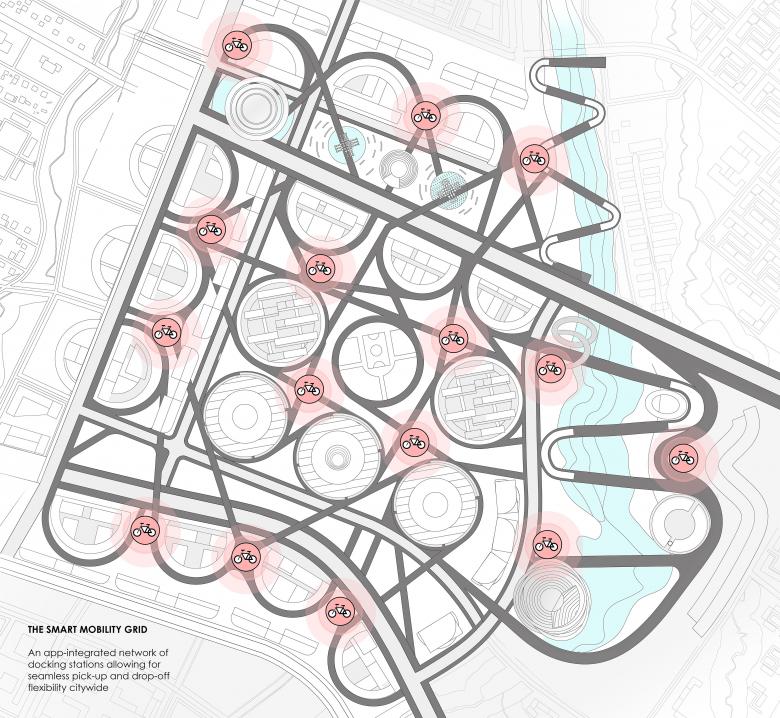
Rejecting the obsolete model of zoning segregation, the proposal adopts a comprehensive mixed-use strategy. Every residential block sits atop an active commercial podium, ensuring vitality and safety through the “eyes on the street” principle. The city functions as a “living laboratory” for smart mobility, featuring a “hop-on, hop-off” bicycle system with high-density docking stations every 200 meters. An integrated app-based ecosystem eliminates the burden of ownership, prioritizing shared mobility as a fundamental public service.
Climate Response and Blue-Green Infrastructure
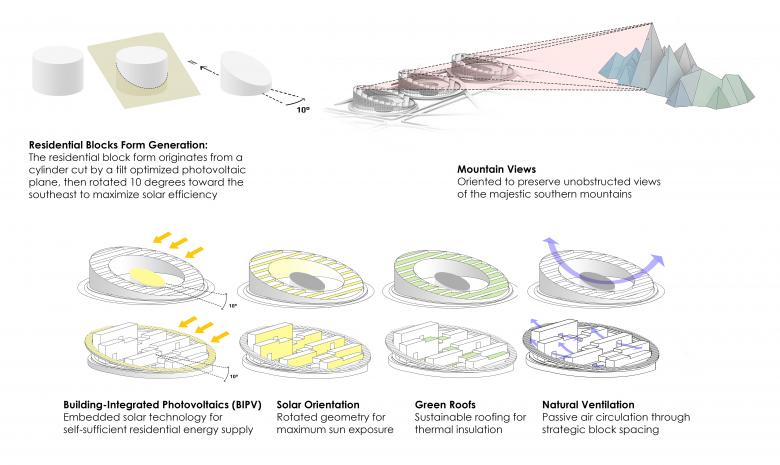
The architectural morphology is rigorously climate-responsive. Residential volumes are oriented southeast to capture optimal solar gain during harsh winters while avoiding the direct glare of the summer western sun. Furthermore, the project moves beyond “add-on” sustainability by employing Building-Integrated Photovoltaics (BIPV), where energy generation is sculpted into the building skins as an intrinsic aesthetic element.
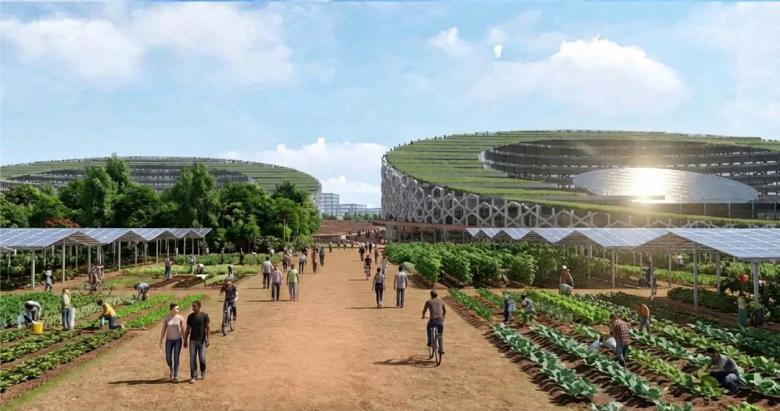
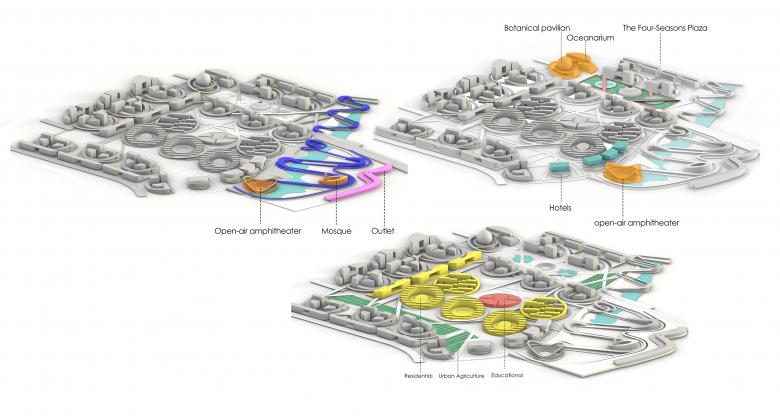
The masterplan also activates the adjacent river and lake, expanding the waterfront to create a “Leisure Corridor.” Hotels and cultural venues, including an open-air amphitheater, anchor the waterfront, while urban farming pockets utilize rainwater harvesting to mitigate the urban heat island effect, merging high-density living with productive landscapes.
‘Cycle City,’ proposes not just an expansion of Almaty, but a prototype for sustainable, active living deeply rooted in the cultural DNA of the Silk Road.
________________________________________
Project Info (Data Sheet)
Project Name: Cycle City - Almaty East Gate Masterplan
• Location: Almaty, Kazakhstan
• Status: Invited Competition Proposal
• Year: Dec.2025
• Site Area: 180 Hectares
• Program: Mixed-use Masterplan (Residential, Commercial, Cultural, Hospitality, Urban Infrastructure)
• Lead Architect: Habibeh Madjdabadi
• Design Team: Hossein Bashari, Mona Mohseni, Shadi Torkamanpari
• Collaboration: Joint entry with Valentiny hvp architects (West Gate design)
• Organizer: Municipality of Almaty in collaboration with SHARE Architects
*For this competition, the office formed a joint entry with VALENTINY hvp architects (Luxembourg). The collaboration was structured such that:
• Habibeh Madjdabadi Architecture Studio designed the Eastern section (this project ).
• VALENTINY hvp architects designed the Western section.
- Public Buildings
- Collective Housing + Multiple Houses
- Mixed Use
- Office Buildings
- Agriculture + Farms
- Cultural Centers
- Hotels + Hostels + Guest Houses
- Shopping Centers + Malls
- Masterplan
- Urban Developments
- Commercial Buildings
- Architects
- Habibeh Madjdabadi Architecture Studio
- Year
- 2025
- Project Status
- Design
- Client
- Municipality of Almaty