House off the ground
Method for Resolving Contradictions Between Site Conditions and Client Requirements on Sloped Land
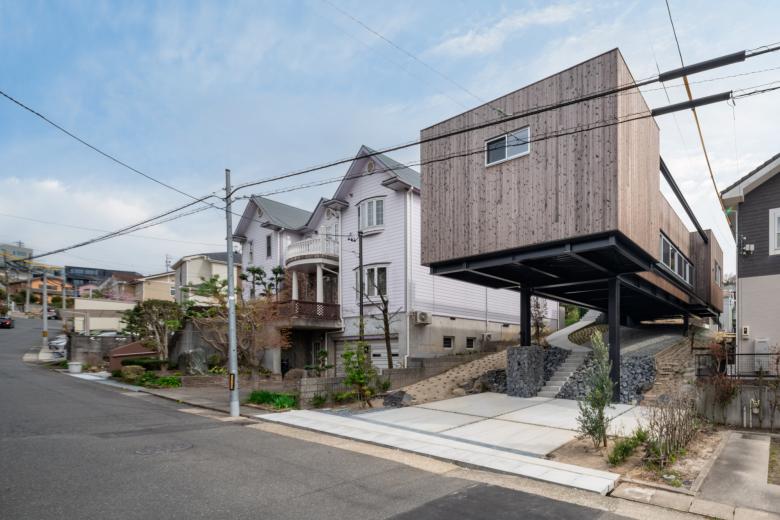
The site lifts 5 meters from the front road toward the back, and the building coverage ratio is not large. The client's requests were specific, with room sizes and heights already determined. They said they didn't want a garden because they couldn't maintain it. But this site has green space requirements, thus we had to face various contradictions.
Previously, this site was a farm yard left behind in a residential district, with numerous crops and trees within the site. Surrounding houses were built either on cut-and-fill ground or and built above a semi-underground garage. However, this required considerable expense for soil moving and retaining walls, resulting in gardens that ignored the terrain or a large, poorly maintained garden on the south side.
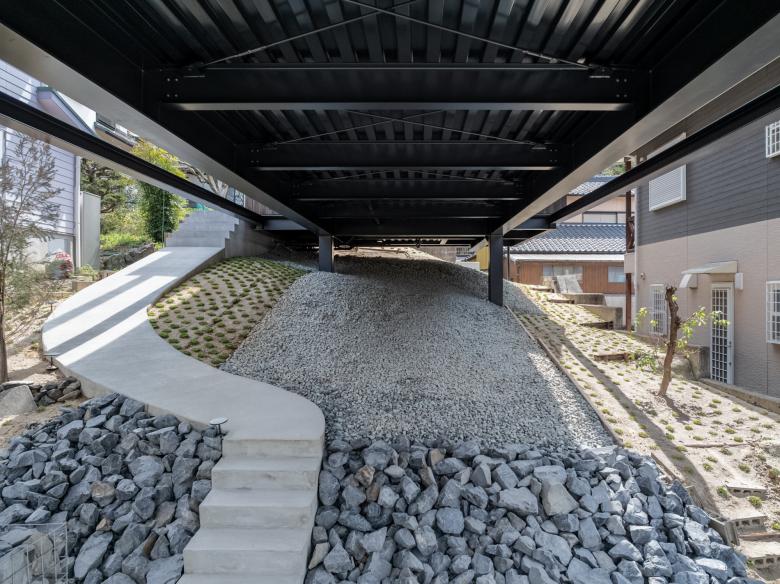
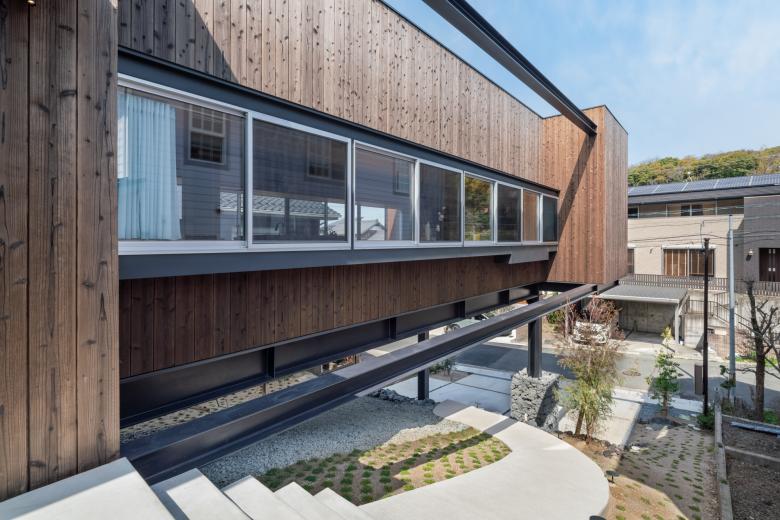
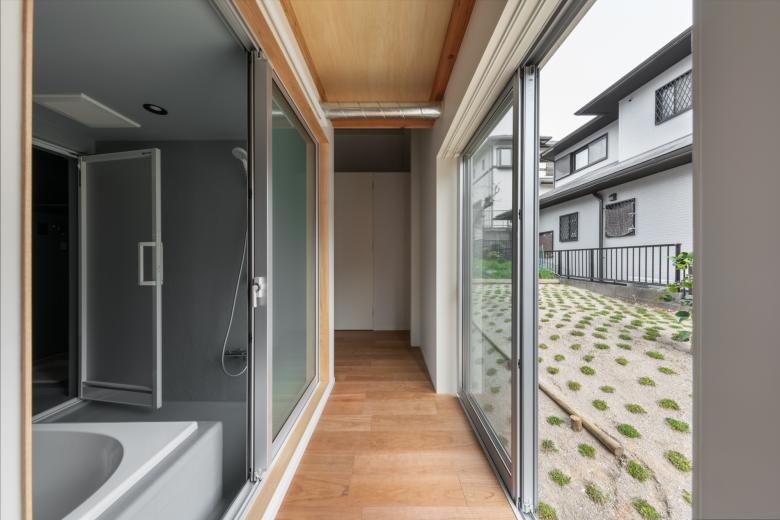
Therefore, we lifted the houses while preserving the characteristics of the former farmland and largely maintaining the existing elevation differences. By turning the ground level into a space for pilotis and vegetation, a horizontal expanse has been gained at ground level. In that case, the entrance would be placed at the back of the site, thus requiring passage through the landscaped area. If it is a garden, they might not mind that it is overgrown.Whereas if it is a path they walk every day, they would probably want to maintain it. And if it is a pilotis, they might want to play with their children regardless of the weather.
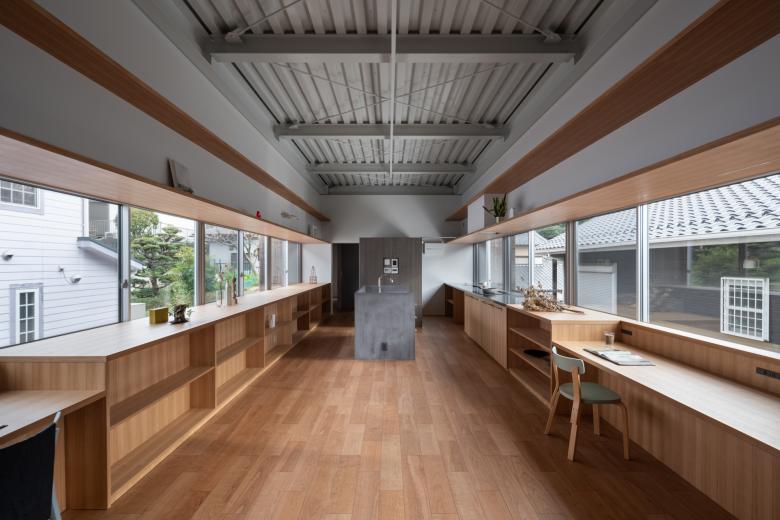
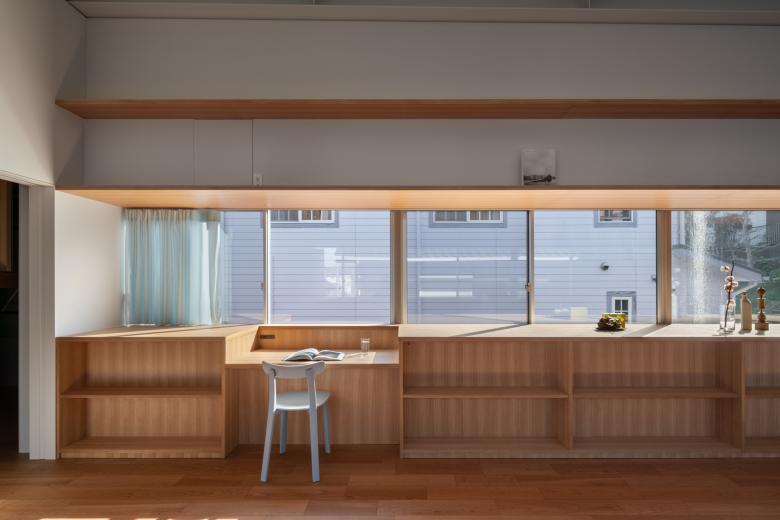
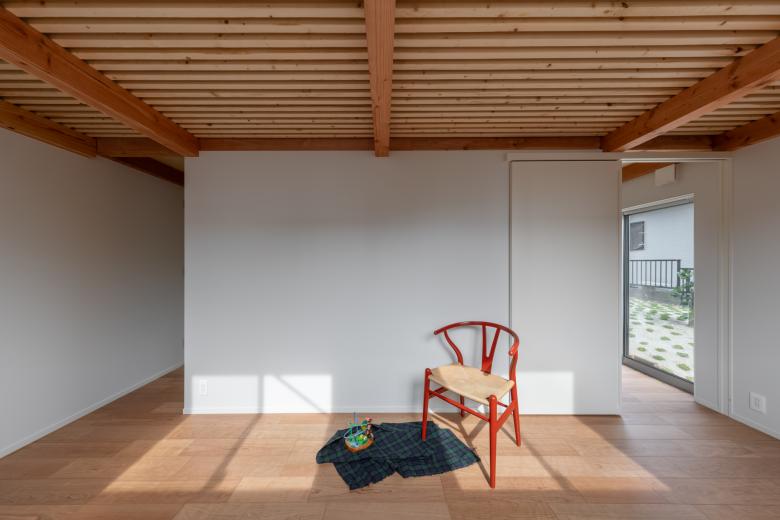
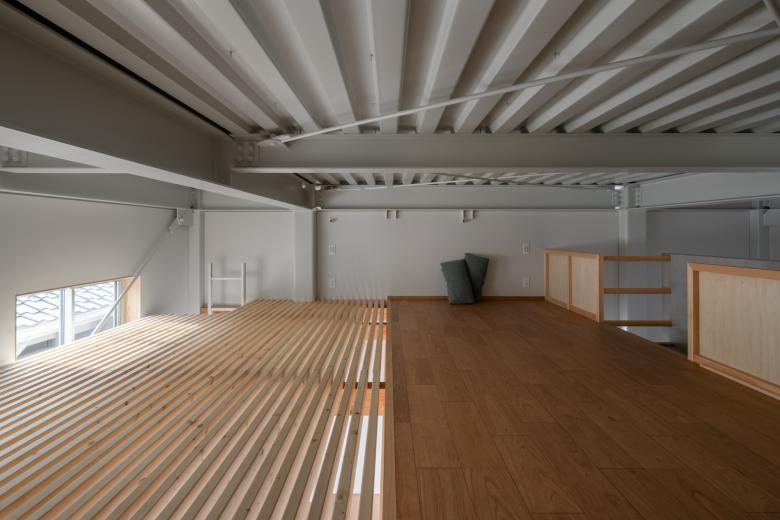
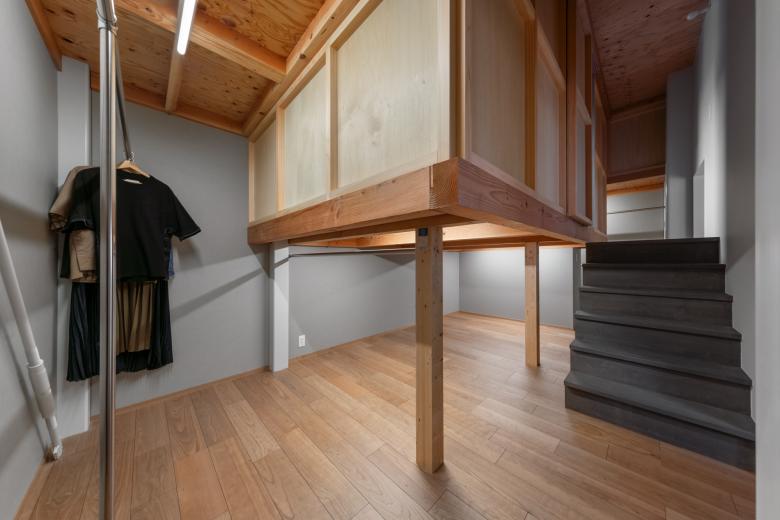
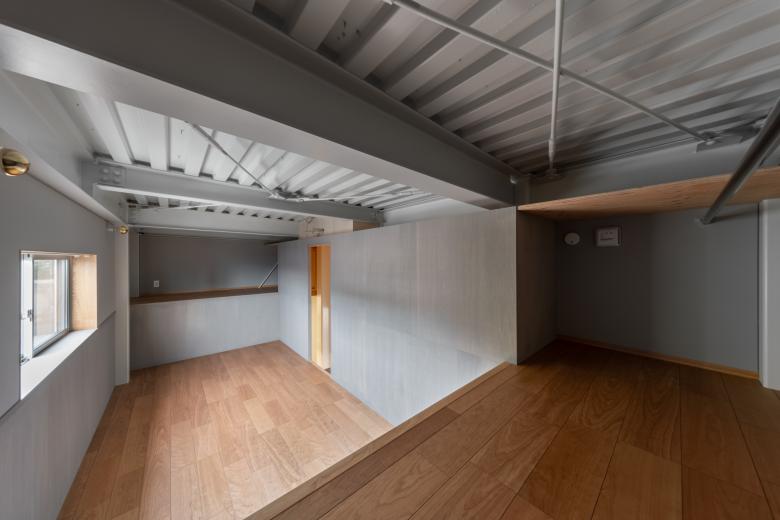
Attempting to achieve the requested floor area for each room resulted in exceeding the building coverage ratio. A two-story residential section is feasible, but a three-story residential section faces stricter regulations and coincides with a period of soaring building material costs, leading to the adoption of a single-level design. Despite being a single-level structure, the LDK maintains a high ceiling height of 3.8 meters as required by the open-ceiling design. To secure the desired floor area, the bedrooms, storage, and wet areas placed at both ends of the building were made into second floor lofts that are not counted as floors. Furthermore, by narrowing the width of the LDK to balance with the greenery ratio, adopting an I-shaped floor plan, and installing bay windows not included in the building area, a spacious interior is achieved by expanding the floor plan.
When a house was built on a sloping site, it was likely that the floor levels were constructed in steps to follow the slope of the land. This construction method resembles a cantilevered structure with an entrance on the upper cliff and an entrance that is not allowed on the lower part of the cliff. It became a new solution for facing sloped terrain, resulting in a residence built upon land, and liberated from the ground.
- Year
- 2024
- Project Status
- Built