A Conversation with the Dean of the Architects’ Association of Catalonia
Architects as Agitators: Guim Costa Wants an Uncomfortable UIA Congress
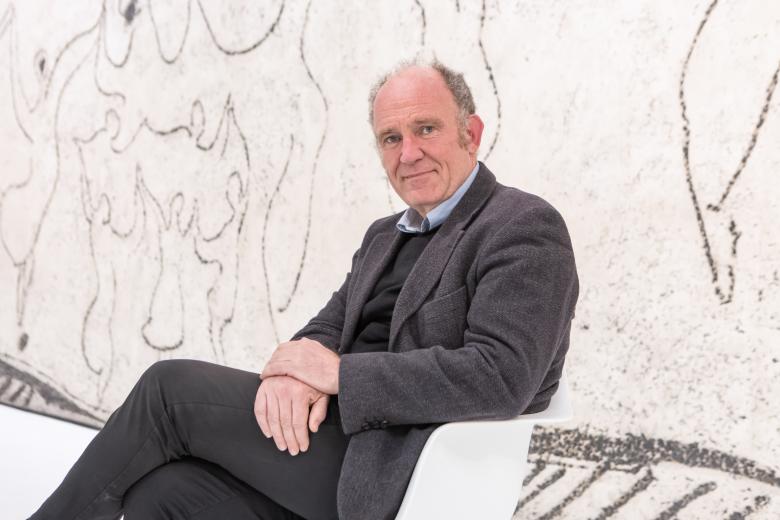
The Architects’ Association of Catalonia (COAC), founded in 1931 and heir to the Association of Architects (1874), is a corporation representing Catalan architects, promoting excellence in architecture, and spreading its values, especially its social and cultural dimensions. COAC has been tasked with organizing the International Union of Architects’ UIA 2026 World Congress of Architects, bringing the international architectural community to Barcelona from June 28 to July 2. Themed Becoming: Architecture for a Planet in Transition, this year’s Congress is expected to gather approximately 10,000 participants from over 130 countries. Madeline Beach Carey recently met up with COAC Dean Guim Costa at COAC’s headquarters in Barcelona’s Gothic Quarter.
In addition to his current role as COAC dean, Guim Costa (b. 1968 in Barcelona) is an architect who founded Costa Calsamiglia, a studio for architecture and furniture design projects, in 2010. Throughout his career, he has worked on publications such as Quaderns d’Arquitectura i Urbanisme and with the publishing house Gustavo Gili. In addition to participating in the governing bodies of COAC, Costa is a member of the executive committee of the Manuel Blancafort Foundation and patron of the Ginesta Foundation.
Their conversation has been edited for length and clarity.
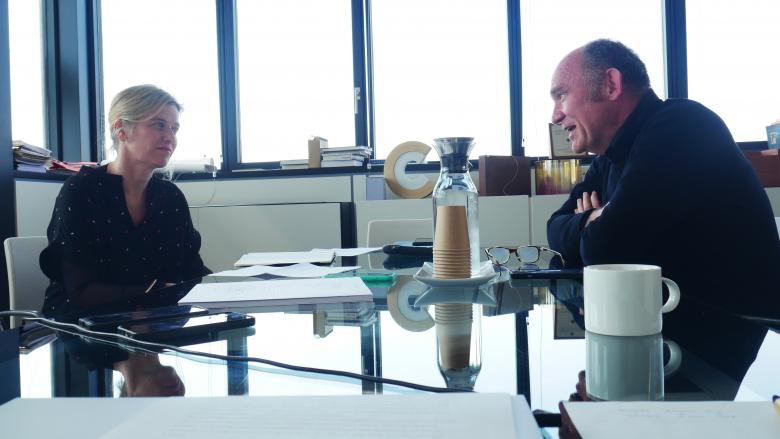
Guim Costa (GC): Well, in my family there weren’t any architects. My father was an economist, so economics was a possibility. But when I was a kid I liked to draw. And I liked to do things with my hands. I wanted to be a carpenter when I was a child. I also wanted to be a football player. Also, my parents had a lot of friends who were architects that I admired. And that they admired too. My parents admired them as people that were open-minded, left-wing thinking. Nice people, they knew how to cook, how to draw, so it was a good reference for them, and for me as a child. So I had architect career in my head since I was 13 or 14, and so I started to learn how to draw better.
GC: It's quite special. It's a circumstance that is quite common in our country. Of course, it’s because we had a dictatorship for forty years; my parents were young by the end of the dictatorship, so they were very active in that period as young members of this society. At the same time, Barcelona has always been an urban and architectural laboratory. It's not a capital, so architects have shaped the city from the private sector, from the private realm, from the families.
MBC: Yes, it’s a city very much planned by the civil society.
GC: There's a lot of wealth in Barcelona coming from commerce and industry, so we could define Barcelona as a bourgeois city. Another thing that has defined the city a lot is the Cerdà Plan that built a grid on the plains between the small walled city of Barcelona and the mountain of Collserola. It unified all these small villages around Barcelona and made a fantastic platform to start building and start doing architecture. The innovative urban planning of Ildefons Cerdà is why Barcelona has been a laboratory for the last 150 years. And we have architecture from different styles across these 150 years, which is all quite interesting.
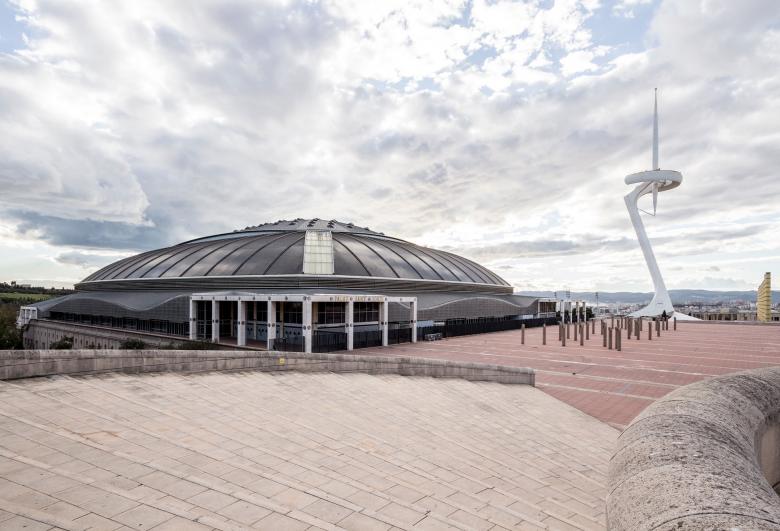
GC: I think it's related to what we were talking about before about Barcelona not being a capital. It is a very cyclical city, in a way. The urban projects and architectural projects have always related to the universal, through events like in 1888, 1929, the Eucharistic Congress in 1956, the Olympic Games… After the dictatorship, there was a movement in Barcelona to find something to do for the city, something that moves the city forward like with these big events. That's why Narcis Serra, with Samaranch at the time, asked for the Olympic Games. It really made a fantastic change, because it wasn't just a matter of sports; it was also a matter of urban planning, of things like opening the city to the sea and connecting the city with the “rondas”—the beltways—to improve mobility. The Olympic Games provided the opportunity to bring in a lot of money—from the Catalan government, from the Spanish government, from the society—to put the city in shape after these 40 years of grayness and with a lot of enthusiasm.
GC: That's a very good question because the Congresses of the UIA have been happening for 70 years. It started in 1948 and happens every three years. Seven years ago, there was an agreement between the UIA and UNESCO declaring that the city hosting the Congress is also the UNESCO World Capital of Architecture. When there wasn't the Capital, the Congress was the important thing. In 1996, for instance, it was just the Congress in Barcelona. This time we have the Capital too, so the UIA has signed with the municipality as well as with COAC.
MBC: Does that make everything easier for you?
GC: It's not easier. As Dean of the Architects for the City of Barcelona, it's fantastic. We have the whole city devoted to urban planning, to architecture, and we bring architecture to the citizens. That looks fantastic. But I had made a proposal to the UIA that there should be a unique scientific committee that conceptualized what the World Capital talks about. I think it would have been better if we, the actual architects, defined the things the World Capital of Architecture talks about. Otherwise you leave it in the hands of the politicians in the city.
MBC: The architects can set the discussion, the framework, you mean?
GC: In this case, for example, we’ll have Mariana Mazzucato and others coming as “critical antagonists,” following the idea of the curators working with the scientific committee. The idea is to provoke a debate, and these critical antagonists can do a lot for that. I think that's very nice and that's very new. Also, having prepared a competition to choose the curators—a first for the Congress—is super interesting, because you bring fresh air into the scientific committee and you also bring a concept for the Congress, whether you like it or not. You can follow it or you can go against it, but the debate will for sure be there.
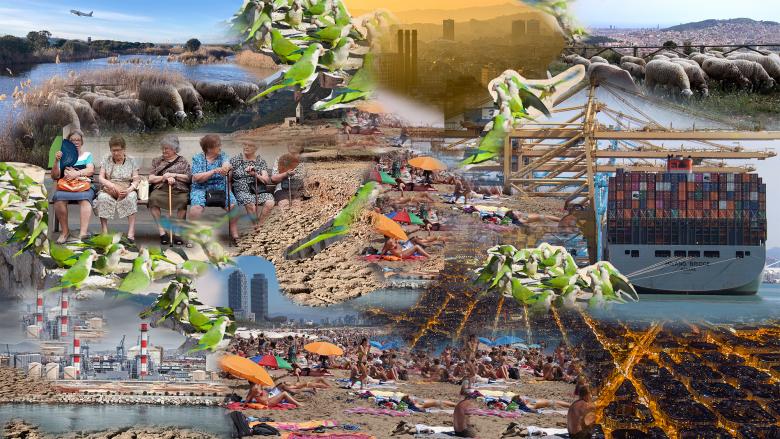
MBC: So, we have this title Becoming: Architectures for a planet in transition. Reading the news, sometimes it seems like we're in a major crisis, more than a transition. Even at the local level and certainly on the European and global level.
GC: Yeah, a breakup.
MBC: In Barcelona and certainly in Europe and many other parts of the world, there's a housing crisis, an affordability crisis that has been discussed amongst architects, amongst city planners, it’s been vastly important in every mayoral election of the last few years. What role does the Congress play in addressing this issue? And what about Catalan architects specifically?
GC: I think we're at a point that the housing problem is an emergency. We need to declare it an emergency. In different parts of the world, the problem is different, but in Barcelona and Catalonia, the population has grown 20% over the last 20 years, with immigration from all parts of the world, from Europe, but also from Africa, also from South America. We need to have residences for these people, but nothing is moving. Why? Because we have so many regulations, the complexity of having land to build on.
Housing is complicated here: everything is highly regulated, the complexity of having land to build on, getting all the licenses you need is very complicated. In every election, everybody talks a lot about it, but after a year and a half with the new government, not much has happened. There's a lot going on, I know, but it’s slow.
We will talk about housing in the Congress. We will have the six thematic points, and in every point there's housing—in sustainability, in circularity, in project and design… It will be a little bit like in the Olympic Games, in that you have to look at the schedule and choose which of the round tables you want to attend.
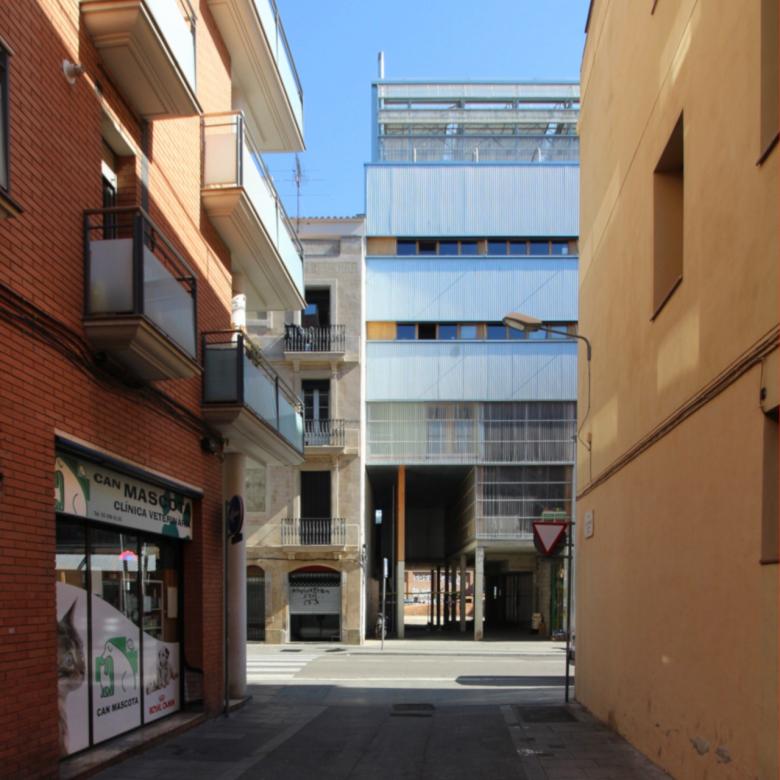
GC: Yes, I think it's very interesting and I agree. I think in the future we have to work on developing a very dense nucleus, a dense urban tissue, in order to have all the facilities nearby. So if we have dense cities or dense nuclei, we have a hospital nearby, a school nearby, stores nearby, so you don't need cars to go around in for your day-by-day life. That's funny because it's like going to the Middle Ages.
MBC: When they had less diesel fumes.
GC: Exactly. [Laughs] At the same time, we are in the 21st century, so we can build these nuclei in a very good way, combining the construction with green and making a very livable city. And all these very dense nuclei need to be related with very efficient mobility. The future, I think, is all these spots: density with all the services that humans need and well connected very efficiently.
MBC: Sort of like dense village squares?
GC: Yes. Barcelona, for example, is a city very well prepared for that, because it's a very dense city and is very small, in a way. A population of 1.5 million is living in just 90 square kilometers. It's a good laboratory, as we see with the superblocks, where 53 indicators have been studied for pollution, public use, socializing, acoustics… They can help urban planners design better the cities of the future—from the Barcelona laboratory.
MBC: It seems that Barcelona is one of the few places on earth that has the ability to make density humane, livable.
GC: Yes, exactly. The Eixample neighborhood is very dense, yet you feel comfortable. And you have all the stores on the ground floor. All the apartments are correct, livable. You have good ventilation. Mixed uses. Maybe there's a lack of squares with green, with trees. Barcelona has a lot of trees, but they’re in the streets; there aren’t any parks.
We’re a small city with a lot of tension (overcrowding) from many people wanting to live here. Cerdà thought about the squares as different buildings on every block with green spaces, but this has been changed over the last 150 years in order to densify. There was a demand, and the density answered that demand. But I think that has improved the model, the evolution, because now we have more density than it was previously and it's better.
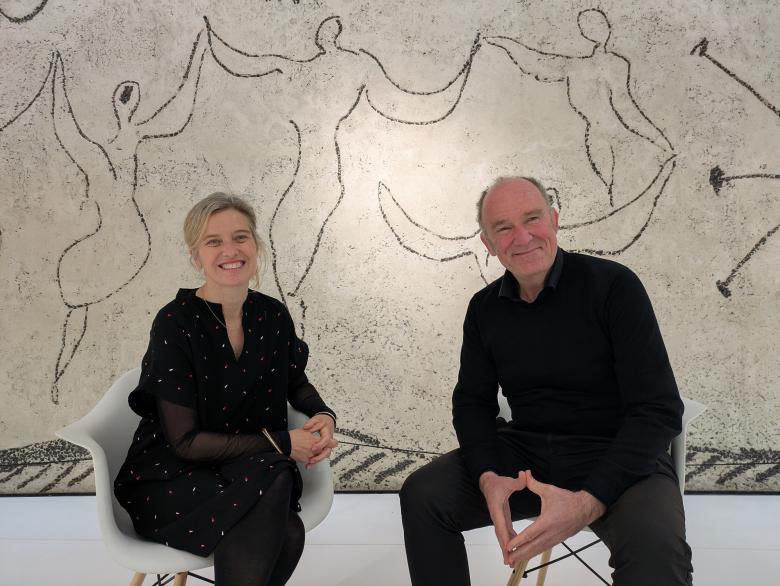
GC: Have you gone through the whole schedule? It's fantastic, beautiful. The thing was to look for those architects that are really surfing the wave. You're not looking for the consolidated architects to explain the same things. We want new voices—new voices who are struggling with what the future of architecture and the profession will be. Some of my friends say you have to do a Congress that is not comfortable. I think we're going to agitate.
MBC: You have to agitate a bit. But then what happens with all of this agitation? Because sometimes with these events, they get lost in collective memory. Will everything be archived on the website? Will people have access to the debates?
GC: Yes, everything will be recorded, though we're not going to stream it live because we want people to come.
MBC: When all this is over—it seems strange to ask, it almost sounds like science fiction, yet it’s right around the corner—what projects are you excited to tackle by 2030? What do you want to be doing?
GC: That's a complicated question. But I do have a project that I already discussed with the mayor of the city, which is the legacy this Congress will leave us. On one hand, it will be recorded and we will have a catalogue of abstracts from the Congress, but at the same time, I would love to have Barcelona as a platform for debate on emergent architecture for the future. So try to make it periodical: every three years Barcelona would have some kind of, I don't know, Emerging Architecture Triennale. I think the city deserves it. I think this is an opportunity to show the world that Barcelona can do it.
MBC: Thank you so much for talking with me. I certainly hope that in three or four years there's another moment for Barcelona to be the center of the debate.
GC: I think it would be super interesting if every once in a while, you went to Barcelona to debate architecture, urban planning. We just created a nonprofit foundation that could be the lever to organize it: Fundació Centre Oberta d’Arquitectura Catalana, Fundació COAC. You can include public institutions and private companies. We already have Simon, Fluidra, Escofet, Roca. It's wonderful. I think it will be a fantastic platform that can be useful for the purpose of communicating architecture and to fight for a better architecture and a better city.
MBC: Wonderful. Thank you so much.
GC: You're welcome.