Groups Sue Over Trump's Kennedy Center Plans
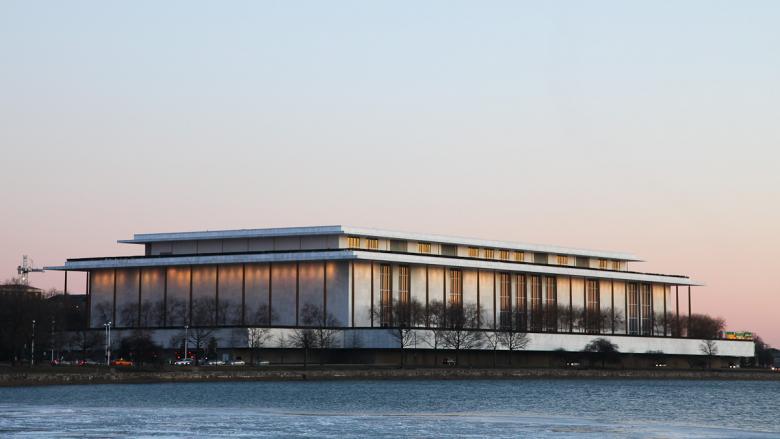
In response to the anticipated closure of the Kennedy Center in July for a two-year renovation, eight cultural and architectural organizations—including the American Institute of Architects and the National Trust for Historic Preservation—have filed suit against the Trump administration so it complies with historic preservation laws and secures Congressional authorization.
Disregarding rules and norms has been a preferred tactic for US President Donald Trump in just about every part of his second term—from government bureaucracy and foreign diplomacy down to even the remaking of Washington, DC. Trump demolished the East Wing of the White House without partaking in the required reviews or submitting plans of what would replace it, and he seems set to do something similar with the John F. Kennedy Center for the Performing Arts. The cultural venue overlooking the Potomac River was designed by Edward Durell Stone, built in 1971, and is a living memorial to the 35th US president. Even before saying that he would take the building “down to the steel” during a two-year closure of the facility, Trump had removed the previous board members, installed himself as chair, and selected a new board; and then the board voted to rename the building by adding Trump's name in front of Kennedy's, even though the board has no legal right to do so. These and other actions led many performers to pull out of their engagements and resulted in plunging ticket sales, with some reports finding the new leadership's inability to secure enough acts for the 2026-27 season as the main reason for the anticipated closure.
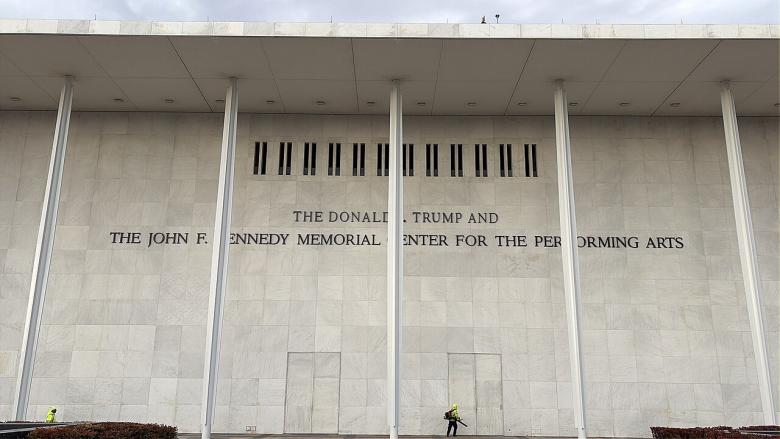
Trump's skirting of norms and reliance on executive actions has led to a spate of lawsuits against the administration—727 ongoing lawsuits as of this week, per one judicial watchdog. One of the latest is DC Preservation League v. Board of Trustees of the John F. Kennedy Center for the Performing Arts, filed on March 23 by The Committee of 100 on the Federal City, the National Trust for Historic Preservation, the DC Preservation League, the Society of Architectural Historians, the American Institute of Architects (AIA), The Cultural Landscape Foundation (TCLF), the American Society of Landscape Architects (ASLA), and Docomomo US.
The complaint contends that Kennedy Center's “Modernist design, grand public spaces, and role as a premier cultural institution together form an irreplaceable legacy of history, architecture, and civic purpose,” but “that legacy is in peril.” Further contending that “the Kennedy Center buildings and grounds will undergo major structural work—up to and including demolition and reconstruction,” the lawsuit seeks to prohibit Trump and the board from “proceeding with any demolition, new construction, major reconstruction, major renovation, or major aesthetic transformation of the Kennedy Center buildings or grounds that exceeds statutory limits, circumvents mandatory federal review, or fails to comply with fundamental historic preservation and environmental laws.”
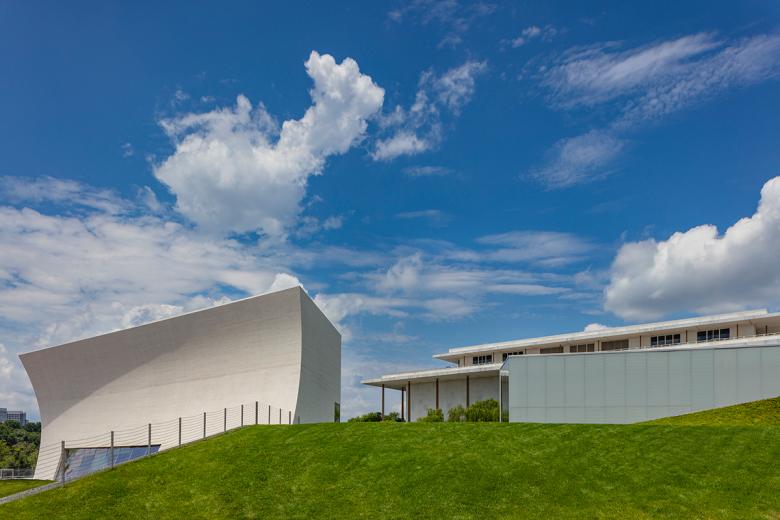
Although it is not mentioned in the complaint, the specter of Trump destroying a modern building and replacing it with a neoclassical building that follows from his “Promoting Beautiful Federal Civic Architecture” executive order is a subtext of this latest bit of Trump architecture news. This explains the presence of Docomomo US in the lawsuit, while the ASLA and TCLF's inclusion acknowledges the importance of the building's landscape design and hints at potential threats to The REACH, the 2019 expansion by Steven Holl that put new rehearsal and educational facilities in pavilions integrated into a flowing landscape.
A curious feature of the lawsuit is that it “brings together for the first time,” per a National Trust press release, "three law firms whose clients have challenged several other high-profile efforts by the administration to alter historic federal properties without following legally required review processes.
“In November, Cultural Heritage Partners filed suit to prevent the administration from painting the historic granite facade of the Eisenhower Executive Office Building without public consultation. In December, Foley Hoag challenged plans to construct a large ballroom following demolition of the White House East Wing. In February, Lowell & Associates sued seeking to enjoin the planned redevelopment of the historic East Potomac Golf Course and the dumping of East Wing demolition debris on the site.”