Interview with Iñaqui Carnicero
Bringing an Architectural Way of Thinking Into Politics
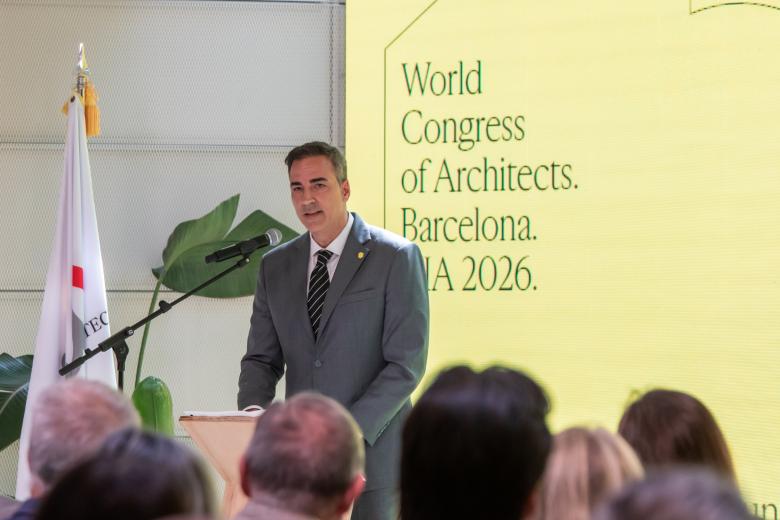
Iñaqui Carnicero Alonso-Colmenares is an architect and educator who, since 2023, has served as Secretary General for Urban Agenda, Housing and Architecture in Spain. Architects in politics are in the minority compared to lawyers, economists, and other professions—anywhere, not just Spain. This fact, and Barcelona’s hosting of the 2026 UIA World Congress of Architects, prompted us to reach out to Carnicero with some questions about his roles in government and with the upcoming Congress. Read on for his thorough and thoughtful replies.
John Hill: Very few architects are in political positions. How did it come about for you?Iñaqui Carnicero: My transition into public service was not the result of a single decision, but the continuation of a way of understanding architecture. I have always seen it less as a profession confined to buildings and more as a form of public responsibility—one that operates at the intersection of space, society, and time.
Architecture, at its core, is about shaping the conditions in which life unfolds. It deals with housing, public space, infrastructure, and the everyday environments that define collective wellbeing. From that perspective, moving into public administration was not a departure from practice, but an expansion of it: a shift from designing individual projects to helping frame the conditions under which many projects—and, ultimately, many lives—take place.
This step has allowed me to bring an architectural way of thinking into policymaking. Architects are trained to work across scales, to reconcile competing demands, and to translate complexity into coherent, tangible proposals. That capacity is particularly valuable in the public sphere, where social, environmental, and economic challenges are deeply intertwined and require integrated responses rather than isolated solutions.
In this role, that perspective has informed initiatives aimed at positioning architecture as a matter of public interest. The promotion of the Law on High-Quality of Architecture, the creation of the Council on High-Quality of Architecture, and the launch of the institution La Casa de la Arquitectura (ES_ARQ) are all part of a broader effort to recognize architecture not only as a technical service, but as a cultural, social, and environmental asset.
Ultimately, I do not see the presence of architects in public office as an exception, but as something increasingly necessary. At a time defined by climate urgency, housing challenges, and territorial inequality, architecture provides tools to think long-term, to connect disciplines, and to place people at the center of transformation. Bringing that mindset into public policy is, in many ways, a natural evolution of the discipline itself.
To a large extent, yes—because the core concerns of architecture do not change: how we live, how we inhabit space, and how we relate to one another and to the environment. What changes is the scale at which those questions are addressed and the tools available to respond to them.
In professional practice, those concerns take shape through the project. Architecture operates as a precise instrument, capable of transforming a specific place through design decisions that integrate spatial quality, materiality, climate, and use. The project is both a synthesis and a proposition: it resolves constraints while imagining better ways of living within a concrete context.
In public service, those same questions expand beyond the boundaries of the individual project and begin to operate at the level of systems. Housing, public space, urban form, and territorial cohesion are no longer approached case by case, but as part of a broader ecosystem. The focus shifts from designing objects to structuring relationships—between policies, regulations, economic conditions, and social needs—that ultimately shape the built environment.
This implies a change in the architect’s tools. Instead of plans, sections, and details, one works with regulatory frameworks, strategic agendas, and instruments that influence how architecture is commissioned, designed, and built. It is a move from authorship to stewardship: from directly producing architecture to creating the conditions that allow quality architecture to emerge more widely and more equitably.
"As architects, we are used to the project as a space of relative control, where ideas can be developed with a certain degree of authorship and precision. In the political and administrative sphere, the process is necessarily more open, slower, and collective."
There is also a shift in time. Architectural projects often operate within defined timelines, with a clear beginning and end. Public action, however, requires a longer horizon—one that considers not only immediate needs, such as access to housing or urban regeneration, but also long-term challenges like climate adaptation, resource management, and demographic change. In this sense, the architectural mindset—accustomed to thinking in terms of durability, lifecycle, and context—becomes particularly valuable.
At the same time, responsibility acquires a different dimension. As an architect, responsibility is closely tied to the integrity and quality of a specific work. In the public sphere, it extends to society as a whole, requiring decisions that balance diverse and sometimes conflicting interests, while maintaining a clear commitment to the collective good.
So there is continuity in the concerns, but an evolution in their scope and impact. Architecture moves from being a discipline that intervenes in reality project by project, to one that helps define the very framework in which that reality is produced. And in that transition, its capacity to contribute to addressing today’s challenges—social, environmental, and cultural—becomes not only relevant, but essential.
The Law on High-Quality of Architecture is grounded in a clear architectural premise: the quality of the built environment is not a secondary issue, but a matter of public interest. It recognizes that architecture shapes everyday life—through housing, public space, and infrastructure—and therefore has direct implications for wellbeing, sustainability, and social cohesion.
From that standpoint, the law does not operate only as a regulatory text; it introduces a shift in how architecture is understood within public policy. Rather than focusing exclusively on technical compliance, it places design quality, cultural value, and long-term impact at the center of decision-making processes.
In legislative terms, one of its key contributions is to reorient public procurement. It promotes the use of architectural competitions and qualitative criteria over purely economic ones, encouraging processes where ideas, innovation, and contextual response are given priority. This represents a structural change: architecture is no longer treated as a standard service, but as a discipline requiring specific evaluation frameworks capable of addressing complexity.
At the same time, the law broadens the scope of what is considered “architecture.” It explicitly links buildings with urban space, landscape, and territory, promoting an integrated approach that connects different scales—from the domestic to the territorial—and different dimensions, from environmental performance to cultural meaning. In this sense, it aligns architectural practice with broader agendas such as ecological transition, resource efficiency, and urban resilience.
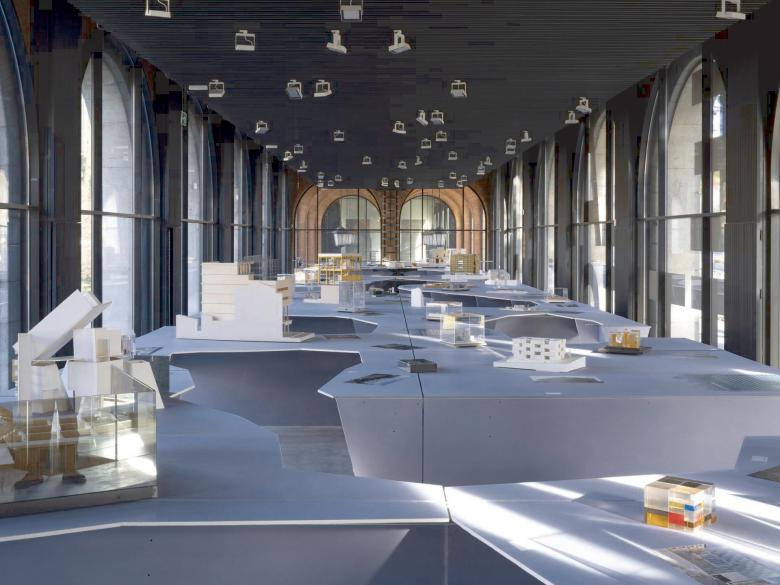
Its implementation has been conceived as a progressive process, supported by institutional instruments that translate its principles into action. One of them is La Casa de la Arquitectura (ES_ARQ; House of Architecture), an institution that operates as a platform for dissemination, mediation, and cultural engagement. From an architectural perspective, it is not understood as a static repository, but as a living instrument, capable of connecting projects, narratives, and audiences, and of making architecture accessible as a shared cultural experience.
Complementing this, we also have the Council on High-Quality of Architecture, a multidisciplinary body that works at the intersection of policy and practice. Its role is to support public administrations in incorporating quality criteria into their processes, particularly in procurement, by providing guidance, model frameworks, and training. In architectural terms, it acts as a space of translation—bridging the gap between design culture and administrative procedures.
The combined effect of these instruments is already visible. There is a gradual but clear evolution in how public projects are commissioned and evaluated, with greater emphasis on architectural high-quality, interdisciplinary collaboration, and long-term value. At the same time, the law is helping to reposition architecture within public debate—not merely as a technical discipline, but as a cultural and political tool capable of addressing contemporary challenges.
Ultimately, the law does not prescribe a single way of building; rather, it establishes the conditions for building better. It constructs a framework where regulation, culture, and practice converge, reinforcing the idea of architecture as a collective good and as a fundamental component in shaping more sustainable, inclusive, and meaningful environments.
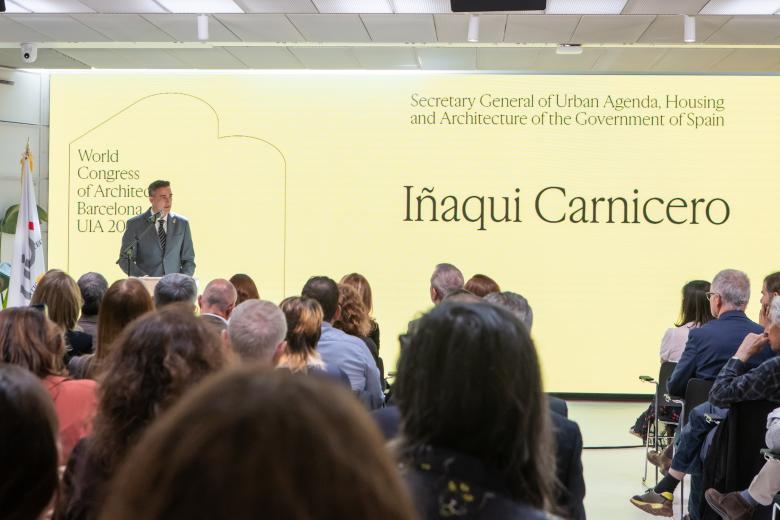
Moving into politics is not a departure from architecture, but another way of practicing it. Architecture is already a public discipline—it engages with housing, public space, infrastructure, and the environments that shape everyday life. Understanding that continuity is essential.
Architectural training provides a strong foundation for public service. It teaches us to think across scales, to work with constraints, and to translate complex, and often conflicting, requirements into coherent proposals. In many ways, that is precisely what policymaking demands: the ability to integrate social, environmental, economic, and cultural dimensions into decisions that have tangible spatial consequences.
That said, the transition requires a shift in mindset. As architects, we are used to the project as a space of relative control, where ideas can be developed with a certain degree of authorship and precision. In the political and administrative sphere, the process is necessarily more open, slower, and collective. Decisions emerge through dialogue, negotiation, and institutional procedures, and their impact is often less immediate but more far-reaching. It is less about designing objects and more about structuring the conditions that make those objects possible.
For that reason, patience and persistence become as important as creativity. Change in the public sphere is rarely the result of a single gesture; it is built incrementally, through frameworks, regulations, and long-term strategies. Being able to navigate that complexity without losing clarity of purpose is key.
“Ultimately, I believe that more architects in politics is not just desirable, but necessary. The challenges we face—access to housing, climate transition, urban inequality, territorial balance—are spatial at their core.”
At the same time, I would encourage architects to hold on to the core values of the discipline: rigor, a critical approach, and a strong sense of responsibility toward the collective good. Architecture brings a specific sensitivity to space, to the quality of the built environment, and to the long-term consequences of decisions—qualities that are often underrepresented in political contexts and that can meaningfully improve them.
It is also important to embrace a certain humility. Entering public service means learning new languages—legal, economic, administrative—and understanding how institutions operate. It requires the ability to translate architectural thinking into policies that are not only ambitious, but also viable and implementable. And it means accepting that authorship becomes shared: the role shifts from designing individual works to enabling many others to take place under better conditions.
Ultimately, I believe that more architects in politics is not just desirable, but necessary. The challenges we face—access to housing, climate transition, urban inequality, territorial balance—are spatial at their core. Bringing an architectural way of thinking into these debates helps connect vision with implementation, and allows us to move from isolated interventions to a more coherent and inclusive transformation of our built environment.
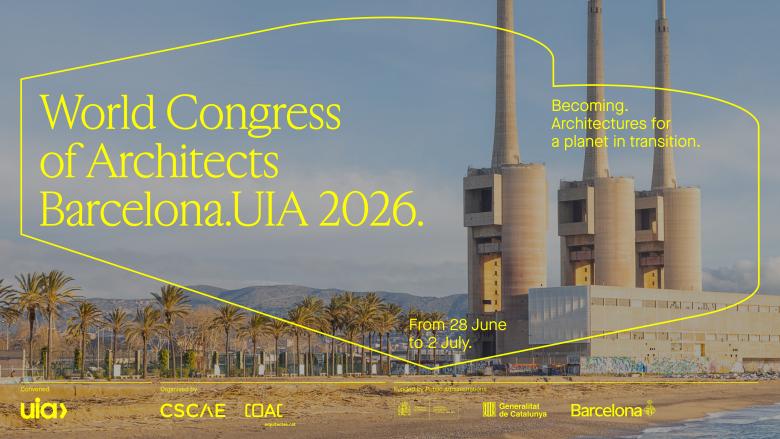
My role in the 2026 Congress is both institutional and, in a way, rooted in my professional background as an architect. The Ministry of Housing and Urban Agenda is one of the three public administrations supporting the Congress, alongside the Generalitat de Catalunya and Barcelona City Council. This shared governance has been essential from the beginning, not only in terms of coordination, but also because it reflects a genuinely collective way of understanding the project—one that is aligned with the nature of architecture itself.
From its earliest stages, the Congress has been conceived as a collaborative endeavor between institutions and the professional field. The candidacy process was launched in 2021, when the then Ministry of Transport, Mobility and Urban Agenda (now Ministry of Housing and Urban Agenda) worked jointly with Council of the Associations of Architects of Spain (CSCAE), under the presidency of Lluís Comerón, to position Barcelona and Spain at the center of the international debate on architecture, the city, and the territory.
This initiative was later formalized through a cooperation protocol involving the Ministry, Generalitat de Catalunya, City Council of Barcelona, CSCAE, and the Association of Architects of Catalonia (COAC). That framework was crucial in transforming the candidacy into a shared national project, grounded in institutional alignment and professional engagement.
“From an architectural perspective, what is particularly significant about this Congress is that it is not conceived merely as an event, but as a spatial and cultural project.”
Today, my participation in the Congress Coordination Council allows me to continue contributing to its development from within, ensuring continuity between its institutional dimension and its architectural and cultural ambition.
From an architectural perspective, what is particularly significant about this Congress is that it is not conceived merely as an event, but as a spatial and cultural project. It operates at multiple scales at once: the global scale of contemporary architectural discourse, the urban scale of Barcelona as a host city, and the local scale of the specific spaces and institutions that will activate its program. In that sense, it is very close to how architecture itself operates—through the articulation of different layers of reality into a coherent whole.
Being an architect inevitably shapes how I understand both the Congress and the way Barcelona is presented internationally. It encourages a reading of the city not as a backdrop, but as a living urban structure—an accumulation of projects, policies, and collective decisions over time. Barcelona is not simply being “shown”; it is being activated as a space for reflection, where architecture, urbanism, and public policy intersect.
The theme of the Congress, Becoming: Architectures for a Planet in Transition, resonates strongly with this perspective. It shifts the focus from architecture as a finished object to architecture as an ongoing process—one that is constantly adapting to social, environmental, and territorial transformations. This aligns closely with a broader understanding of architecture as a discipline of transition, capable of mediating between present urgencies and long-term conditions.
Finally, the designation of Barcelona as World Capital of Architecture for 2026 extends this logic beyond the Congress itself. It transforms the city into an open framework for dialogue, where architecture is not only exhibited but experienced, debated, and collectively reinterpreted. In that sense, the way Barcelona is presented is inseparable from the architectural question it embodies: how cities can become instruments for thinking and shaping more sustainable, inclusive, and resilient futures.
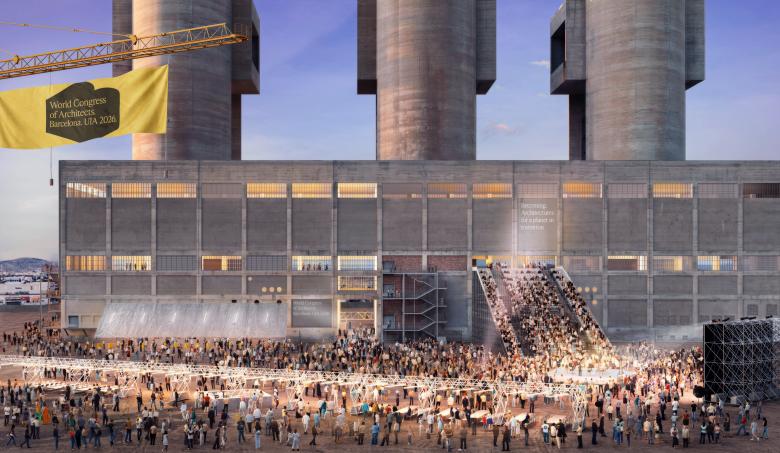
It is important to understand the Congress not only as a set of physical venues, but as an architectural and urban experience that unfolds across multiple scales—spatial, temporal, and social.
On a material level, the Congress is structured through a network of sites distributed across Barcelona. Each venue is not treated as an isolated container, but as part of a broader urban system. Their selection and activation are guided by their relationship to the city, their spatial qualities, and their capacity to generate movement, encounters, and meaningful transitions between interior and exterior space. In this sense, the city itself becomes the primary infrastructure of the Congress.
Equally important is the experiential dimension, which is fundamentally architectural in nature. The intention is to design not only spaces for content, but atmospheres for exchange: environments that encourage attention, dialogue, and collective reflection. Rather than a linear program, the Congress is conceived as a sequence of spatial situations—each with its own intensity, rhythm, and mode of participation.
For that reason, it is deliberately not concentrated in a single, enclosed venue. Instead, it is extended into the urban fabric, activating Barcelona as a continuous field of architectural and civic experience. The designation of Barcelona as World Capital of Architecture throughout 2026 reinforces this approach, allowing the Congress to operate as part of a larger territorial and cultural framework that unfolds over time and across the city.
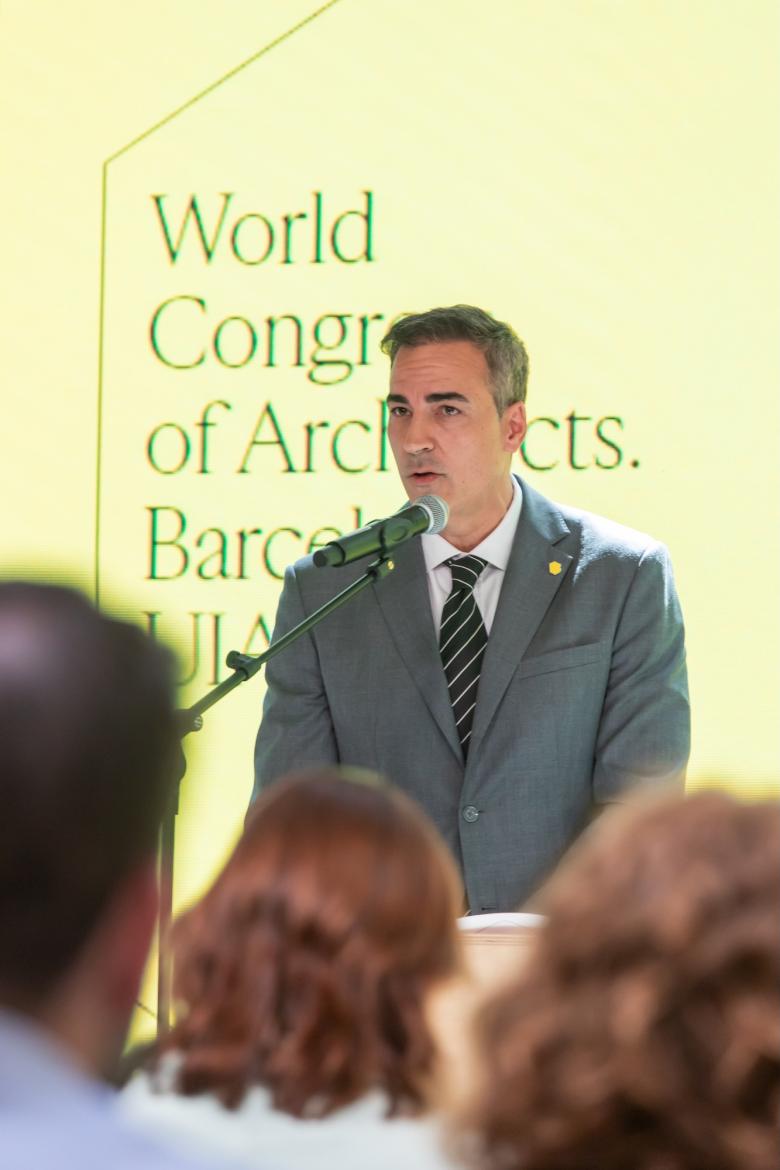
This distributed logic is supported by a diverse program of formats—exhibitions, workshops, lectures, debates, guided visits, and public interventions—which are understood not as separate activities, but as different spatial instruments of the same architectural project. Each format activates a different mode of engagement, enabling multiple ways of inhabiting and interpreting the Congress.
At the same time, the decentralized structure—reaching into different districts and involving cultural, academic, and professional institutions—contributes to a more permeable understanding of architecture. It moves beyond the idea of architecture as a specialized discourse and situates it within everyday urban experience, where knowledge is produced through interaction rather than consumption.
Underlying all of this is the conceptual framework of the Congress, centered on architecture as process and transformation. This allows for flexible and adaptive formats that reflect the very conditions they seek to address: uncertainty, transition, and complexity. The Congress is therefore not designed as a fixed object, but as an evolving system.
Ultimately, the ambition is to create an experience where physical space and intellectual exchange are inseparable—where the city itself becomes both the setting and the subject of reflection, and where architecture is understood as a collective tool for engaging with the present and imagining future forms of inhabitation.