F1 Lounge
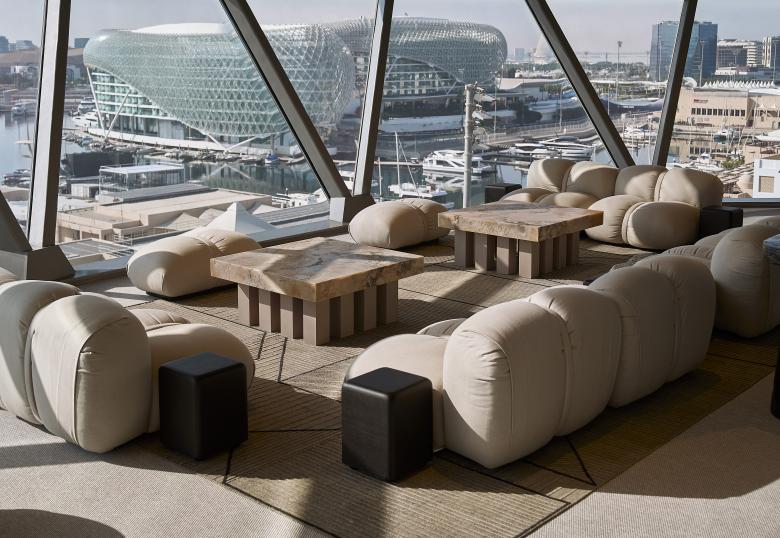
Raw concrete meets smooth metal, scorched by heat. Engines roar past as rough tarmac grabs at rubber tires, leaving black marks. The air bears unmistakable traces of the competition. The F1 race is a multi-sensorial feast that fuelled the creative process, driven by the textures of tire threads, the checkered race flags and the blurred movement of overtaking.
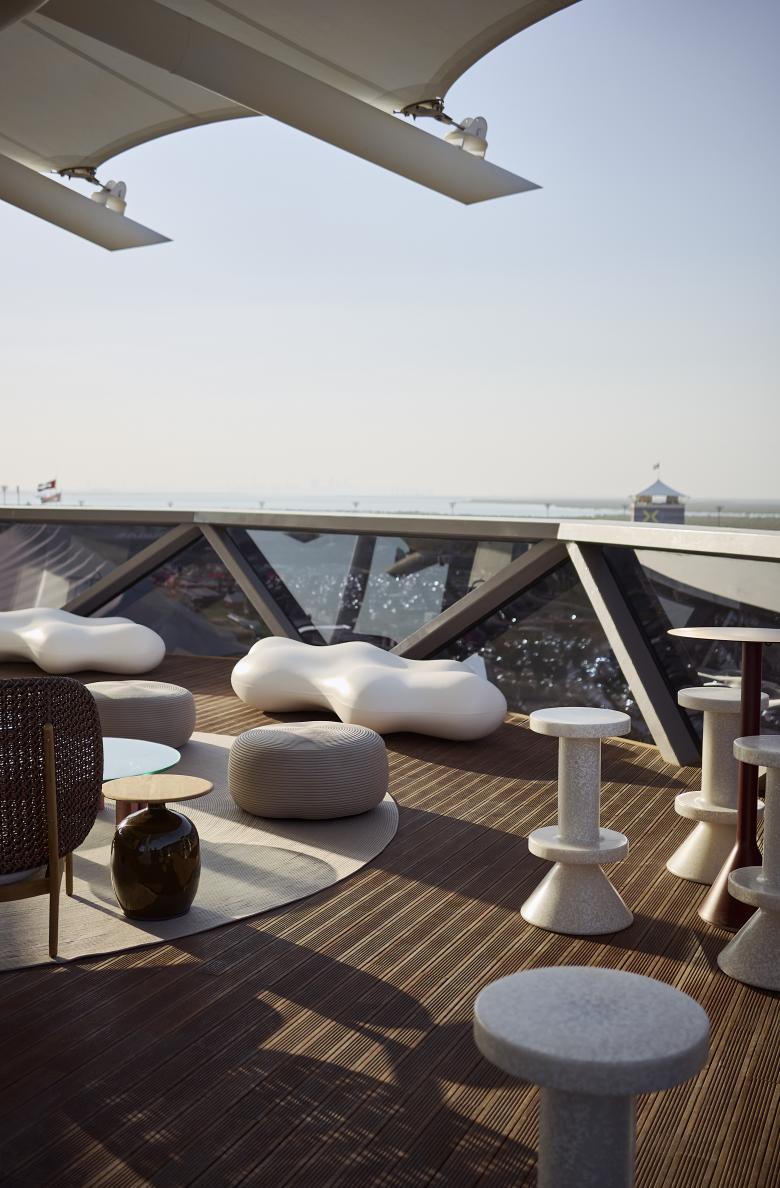
The narrowing cylinder of the Shams Tower, positioned at the axis of the finishing line, is reserved for the most important guests of the event. The viewing lounge splits between two indoor floors, crowned with a panoramic terrace shaded by a tented structure. Though all levels boast 360-degree views along the tower’s oval footprint, the prime position faces the finishing line of the Yas Marina circuit.
The brief presented a dual challenge: to create a space that resonates with the drama of Formula 1 while showcasing in a contemporary way the Emirati hospitality, design and art.
The journey starts at the ground floor reception where the sweeping curves of the blackened steel reception desk welcome the visitors. The contrast between the sleek metal with the tactile and gravity-defying work of prominent Emirati artist Afra Al Dhaheri is almost visceral. In another reference to the race, a tire-like Carrara marble donut, bent and tied with a blue steel ribbon, stands as the work of local sculptor Shaikha al Mazrou.
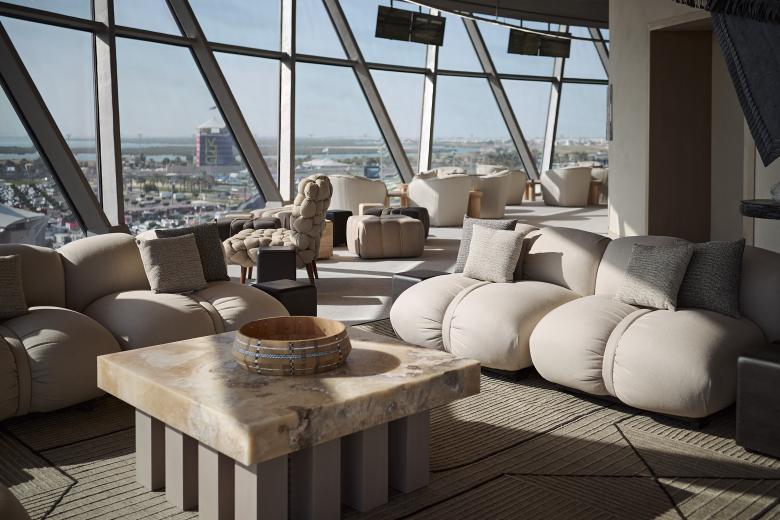
Guests ascend to the lounge level, where they are greeted by a glistening black console made of papyrus-based biomaterial by Aya Moug and a suspended installation of recycled car tires. Beyond, the space opens to a generous majlis with locally-made tumbled stone tables, its formal arrangement intended for pre-race meetings.
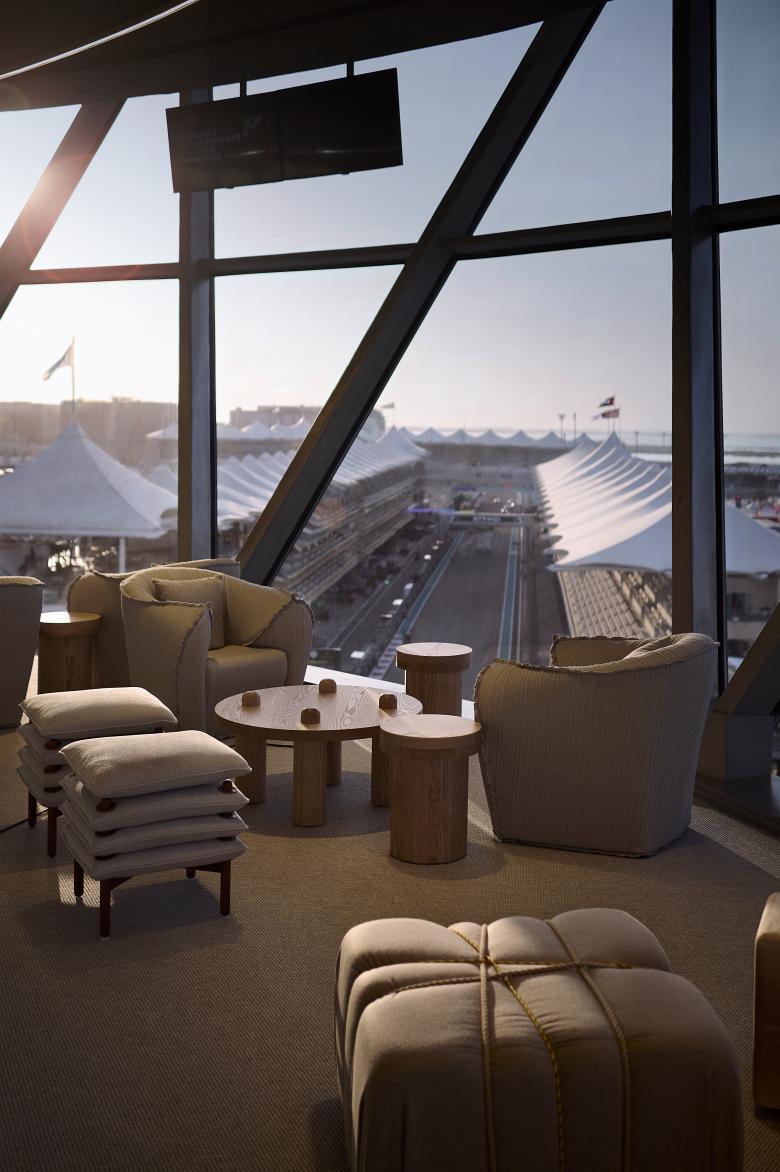
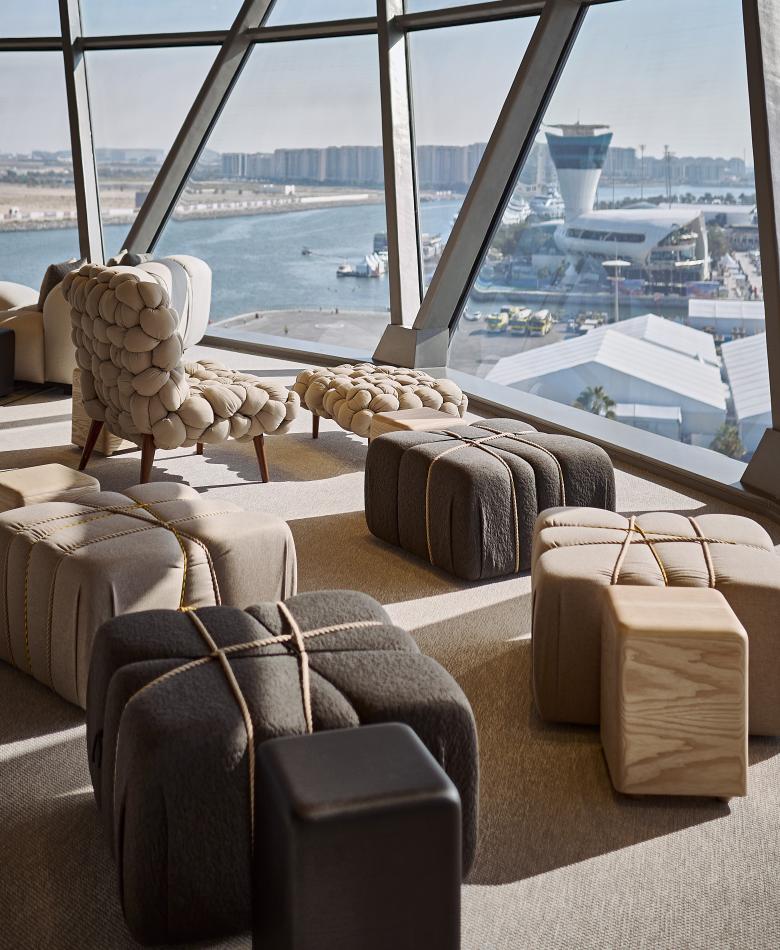
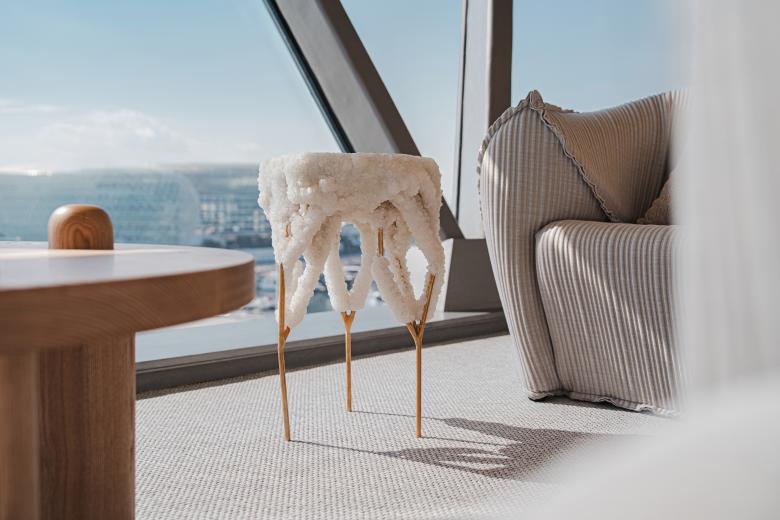
Sand Pearls by T Sakhi sisters take a prominent spot, separating the majlis area from the dining area where guests enjoy Emirati cuisine and coffee. The west-facing part of the lounge maximizes track views, yet the design resists fixed scenography. The pieces were selected for their interchangeability, allowing spontaneous rearrangement as guests break into smaller or larger groups, following as racing unfolds on different parts of the track.
Creative reuse, regional materials and makers, and innovative solutions were paramount to the design process. While the design team chose iconic pieces from Moroso, Mattiazzi and Mogg, local and regional makers and artists dominate the space. Collaboration with Omar al Gurg produced modular pieces that serve as both seats and side tables. Interspersed are accent pieces by Aljoud Lootah, Latifa Saeed and Hala Al Ani, mixing with design icons by Tokujin Yoshioka and Che Pakko. Smaller works by Alia Hussain Lootah and Nada Debs for Irthi add another regional touch.
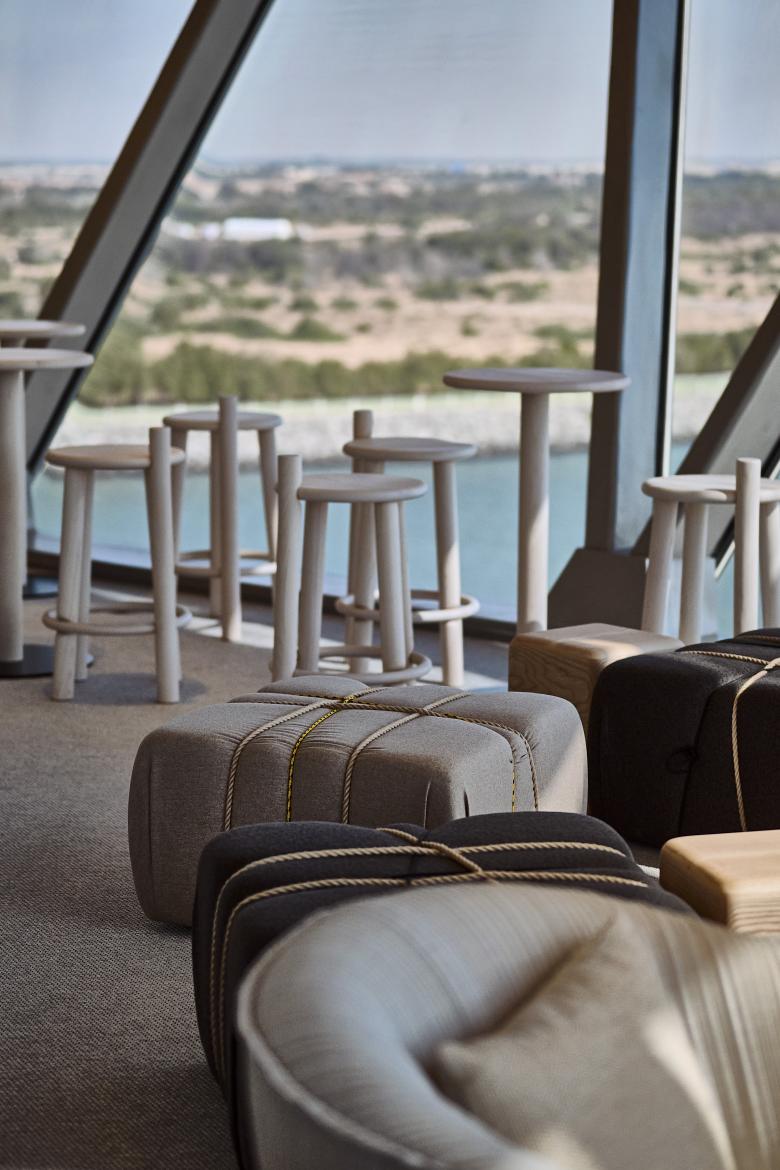
For the bathrooms, the team engaged local metal fabricator Metal Fabrik to create custom bathroom vanities in sleek stainless steel, their intersecting sharp angles contrasted by twisting shiny pipes. The east part of the tower faces the creek, where minimalist Mattiazzi pieces with svelte vertical lines maximize views toward the Ghaf tree grove across the water.
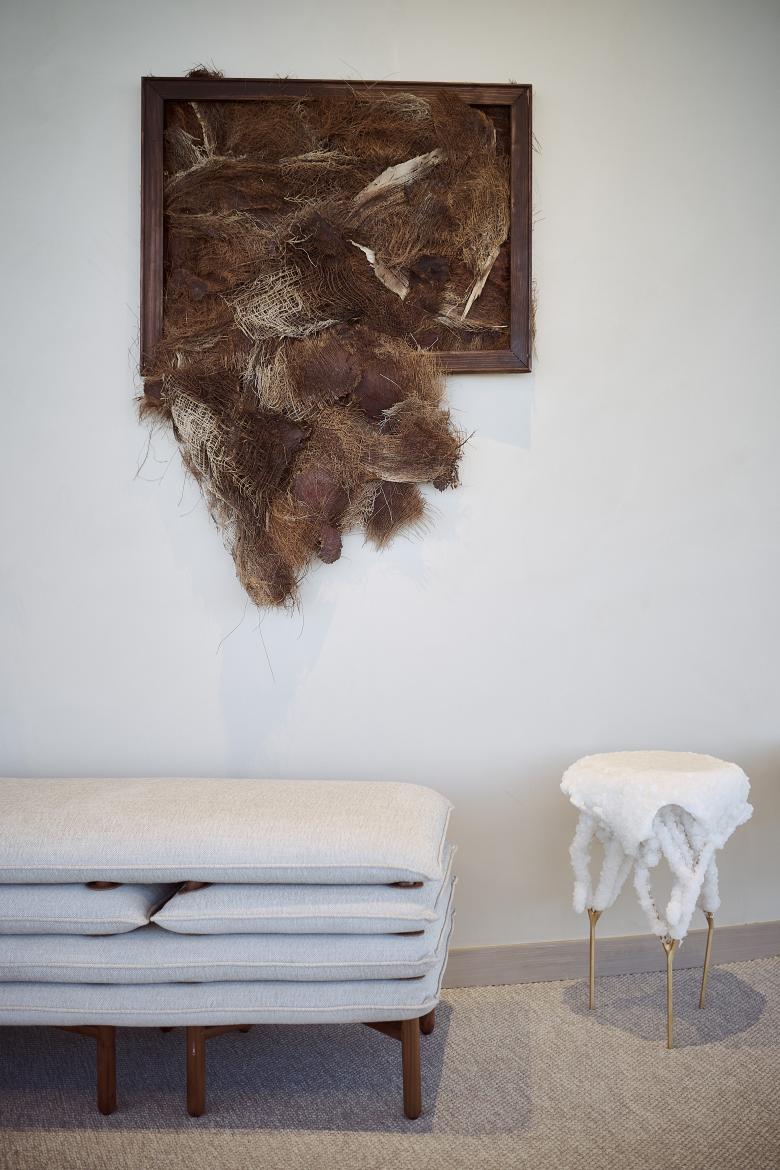
The journey around the core becomes gallery-like, showcasing Mohammed Ahmed Ibrahim’s artwork, a shaky black and white checker revealing layers of color underneath, echoing the iconic F1 race flag. His Doorknockers series brings visitors closer to Emirati vernacular, while Ruqaya Al Hashmi’s diptych incorporates pieces made of palm tree skin.
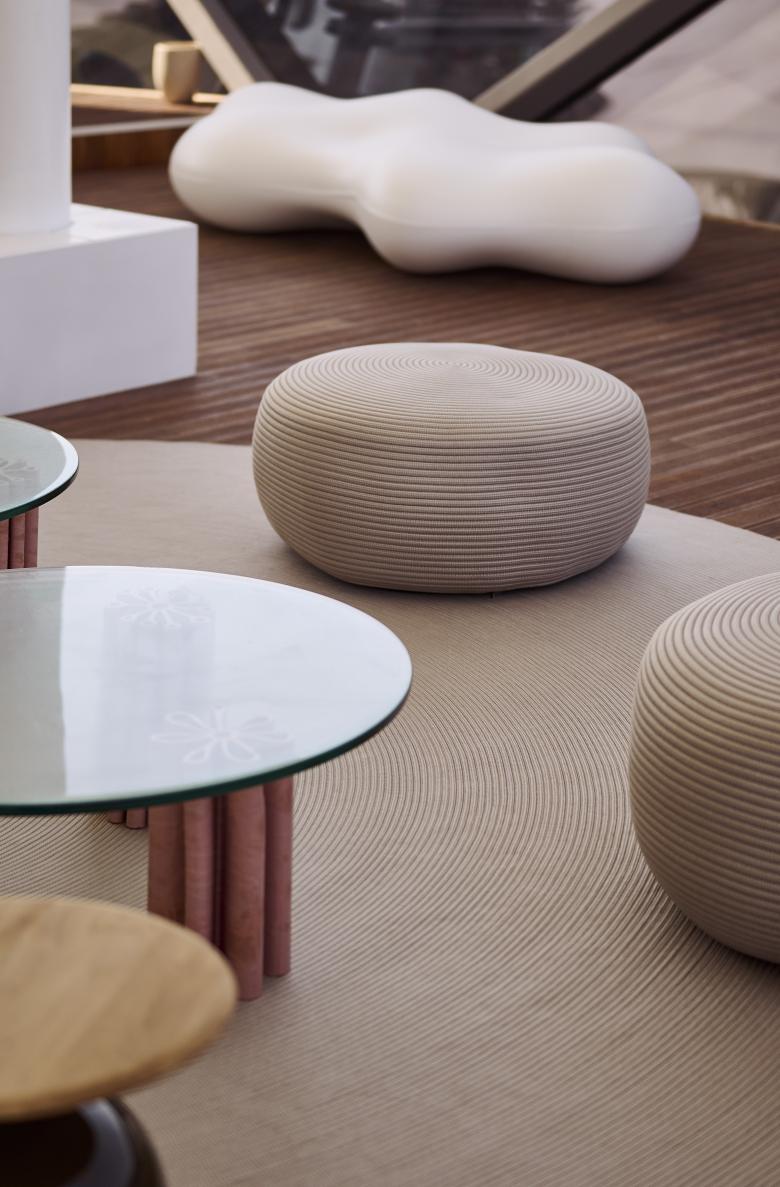
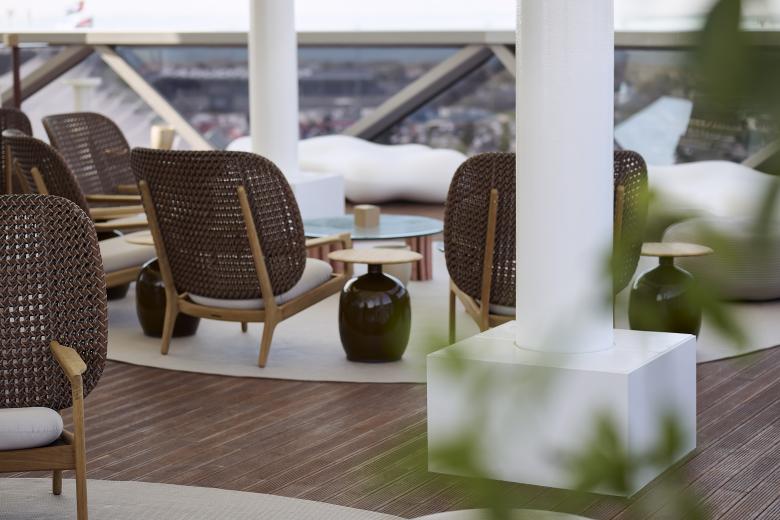
The terrace offers the race at its peak intensity. Between runs, guests relax in woven armchairs paired with artisanal tables, supported by hand-decorated majolica by Nicolò Morales for Paola Lenti, surrounded by lemon and orange trees. Vondom’s Lava benches bring a lighter touch, particularly engaging younger visitors.
- Jahr
- 2025
- Projektstatus
- Gebaut