Aquarabia
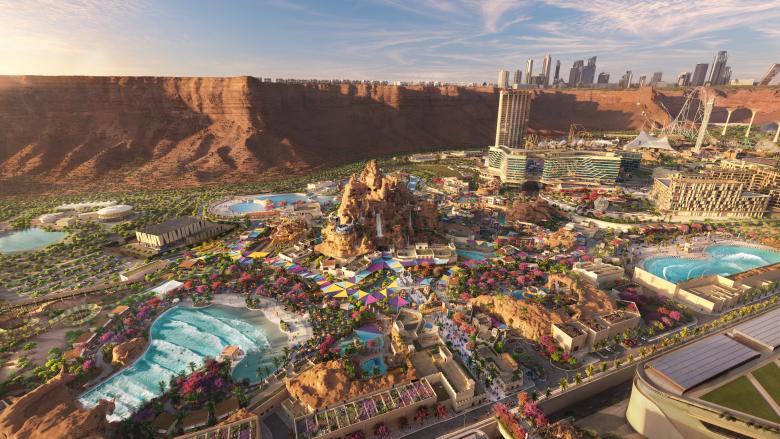
Aquarabia is conceived as an architectural response to Saudi Arabia’s desert landscapes and natural heritage, translating geological memory and ecological narratives into a large-scale water-based environment. Commissioned as a new destination within Qiddiya City, the project explores how architecture, landscape, and engineered water systems can coexist within an arid context while creating a highly immersive public experience.
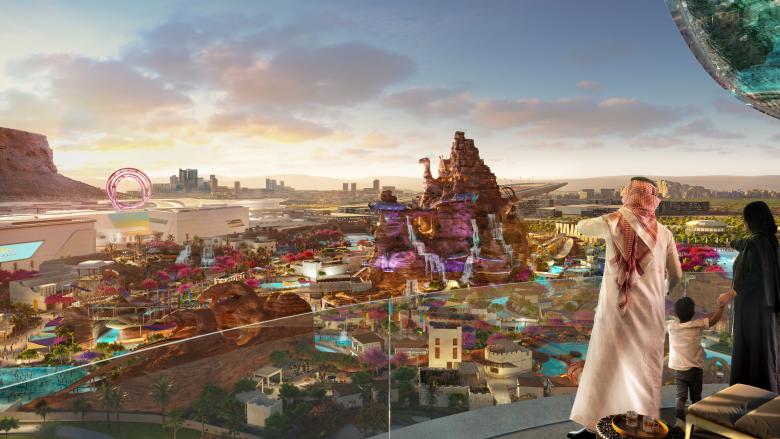
Rather than presenting water as an isolated spectacle, Aquarabia frames it as an extension of the land itself. The project is organized into eight themed districts, each informed by indigenous ecosystems and wildlife of the Arabian Peninsula. These environments guide visitors through a sequence of spatial atmospheres that move between intensity and repose, discovery and openness. The architecture mediates between fantasy and authenticity, drawing from real landforms while allowing room for imaginative interpretation.
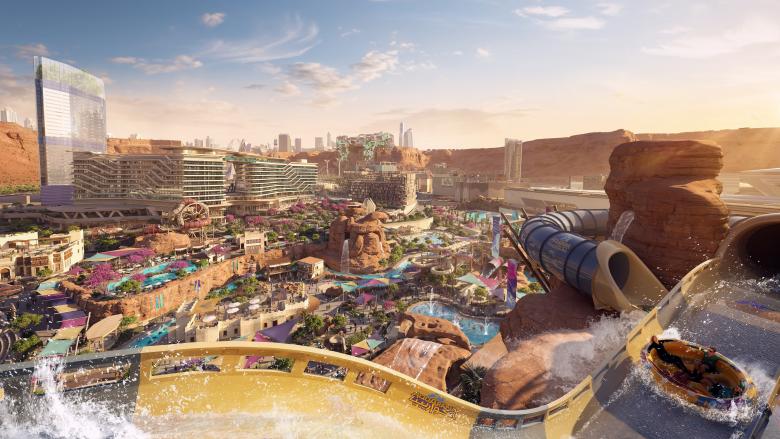
The formal language of the project emerges from desert geology. Curved planes, layered masses, and fluid geometries reference the Tuwaiq Escarpment, shifting dunes, and ancient riverbeds. Built forms appear carved rather than imposed, blurring the boundary between constructed elements and terrain. Monumental water attractions are embedded within this landscape logic, allowing architecture and infrastructure to read as part of a continuous ground condition.
Spatial experience is choreographed through contrast. High-energy zones unfold into quieter areas where shade, sound, and scale soften the environment. Cooling arcades, shaded plazas, and tensile canopies modulate light and temperature, while framed vistas reconnect visitors to the surrounding desert. The project balances openness with protection, allowing movement through expansive outdoor spaces while responding carefully to climatic conditions.
Delivering a water-based environment in a landlocked desert setting required architectural and engineering strategies that prioritize resilience and resource efficiency. The project integrates advanced water management systems designed to significantly reduce consumption and evaporation compared to conventional water parks. Filtration, recycling networks, and climate-adapted construction methods are embedded into the architectural framework rather than treated as hidden technical layers.
Material choices reinforce this integration of performance and expression. Surfaces, structures, and finishes were selected for durability under extreme heat while supporting the project’s geological narrative. Thermal mass, shaded circulation, and controlled exposure contribute to comfort without relying solely on mechanical intervention. Architecture becomes both shelter and landscape, shaping microclimates that support prolonged outdoor use.
Aquarabia positions architecture as an experiential medium that operates at multiple scales. From the intimacy of shaded paths to the vastness of sculpted terrains, the project unfolds as a sequence of environments that engage the body, slow perception, and heighten awareness of place. It proposes a model for large-scale entertainment architecture that is rooted in context, responsive to climate, and attentive to how people move, pause, and gather within space.
At its core, Aquarabia reflects an ambition to reimagine how water, land, and architecture interact in the desert. The project does not seek to erase its environment, but to work with it—transforming constraint into narrative, and engineering necessity into spatial expression.
- Estat del projecte
- En construcció