In conversation with architect Lina Ghotmeh
The Fight to Preserve Lebanon’s Architectural Identity
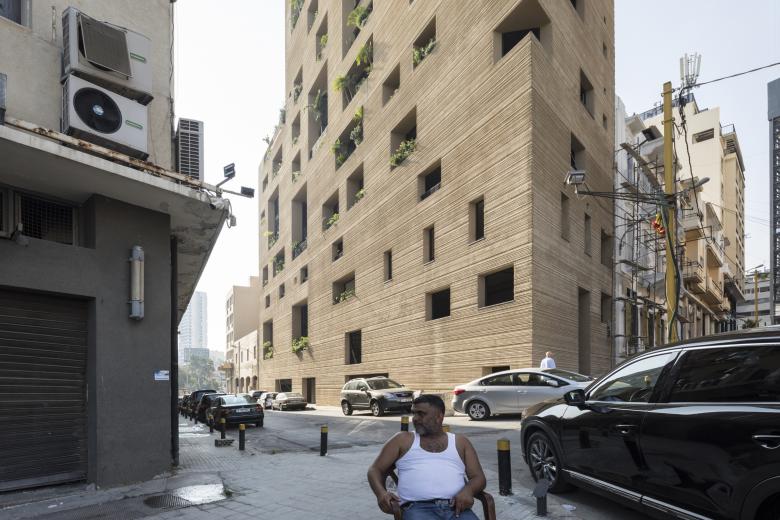
World-Architects speaks to renowned Lebanese architect Lina Ghotmeh about the risks to her country’s architecture, preserving memory of place, and protecting structural identity amid war and conflict.
As the US–Israel war on Iran spills into Lebanon, towns and villages across the south are being reduced to rubble by Israeli attacks, taking with them layers of the country’s architectural identity. With each strike, urgent questions arise about what will remain, giving architects like Lina Ghotmeh plenty to be worried about.
Speaking to World-Architects from her office in Paris, Ghotmeh shares her hopes and fears about the situation in her home country and what this latest conflict means for the thousands of historic and modern buildings across the country. Since 2 March, more than 1,400 buildings have been reportedly destroyed, with strikes reaching as far as central Beirut and the northern Bekaa Valley.
“As an architect, I grew up looking at destruction in Beirut and across Lebanon,” Ghotmeh says, a highly awarded and celebrated Lebanese architect and founder of Paris-based architecture practice Lina Ghotmeh — Architecture. “That’s part of what led me to study architecture in the first place. It felt like a way to bring people together, to mend what’s broken, to heal the landscape—it’s a way of building peace.”
Born in Beirut in the 1980s, in a city marked by civil war, Ghotmeh initially wanted to become an archaeologist, before pursuing architectural studies at the American University of Beirut. Now one of Lebanon’s most prominent architects, her practice remains deeply rooted in notions of memory, space and landscape. Though she left the city at 23, she returns frequently—every few months, she says—and maintains a close connection to her hometown.
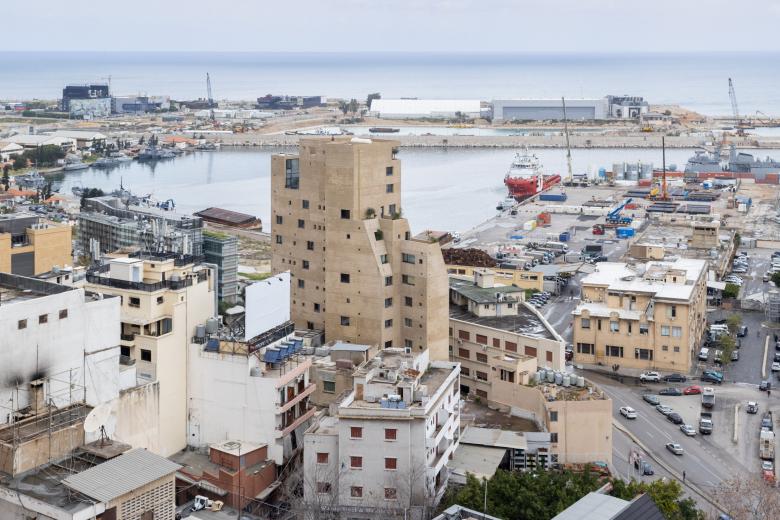
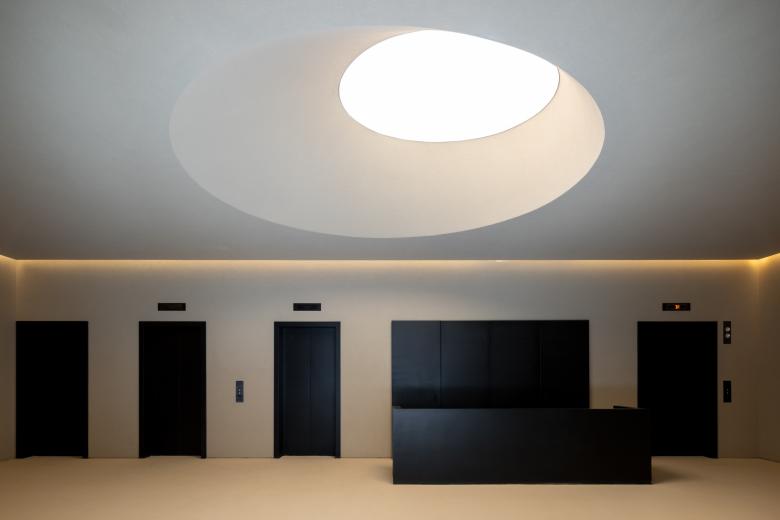
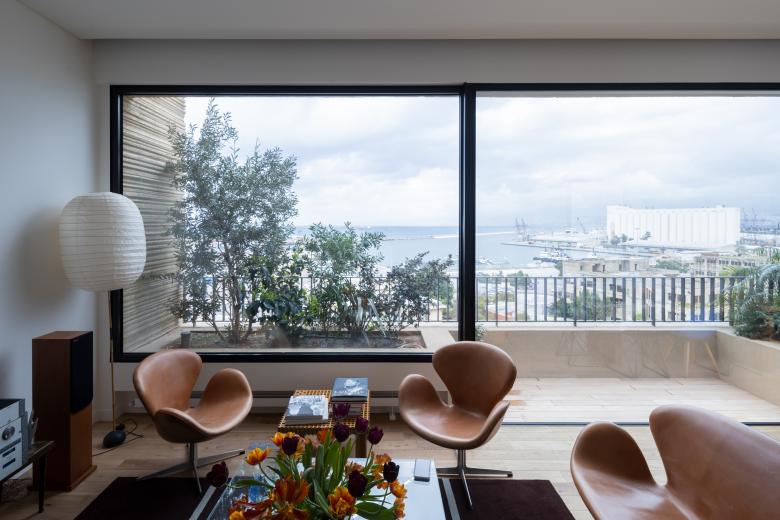
“Growing up in Beirut, seeing the city repeatedly torn apart, it inevitably informs your work,” she shares. “When I designed Stone Garden, for example, it was very much about that story—the city, its conflicts, but also hope.” A modern residential tower in the heart of Beirut, Stone Garden survived the major port explosion in August 2020.
“Architecture can’t stop destruction, but it can respond to it. It can help us heal, bring people together, speak to memory and identity, and contribute to rebuilding,” the architect says, adding that it can also hold space for grief, silence, and for confronting the current situation.
While the south is a key area of concern, the architect fears for all of Lebanon. “This is a place that has held so many civilizations over time. From Baalbek to Tyre, Byblos, the south—there’s so much history, so much archaeology.”
Even in the event of a full ceasefire and an end to hostilities, the cost and risk of rebuilding is high. “In terms of time, we’re talking at least a decade, and that’s if it’s done thoughtfully,” Ghotmeh explains, adding that rebuilding isn’t just about concrete or physical structures. “It’s about the social fabric and the relationship people have with their land, their homes, and their gardens.”
With entire towns across the south now being destroyed, including historic villages like Taybeh, Naqoura, and Deir Seryan under heavy demolitions, some aspects of these villages may never be restored. “What worries me is that destruction often turns places into real estate opportunities,” Ghotmeh says. “But these are not just physical sites—they are lived and social spaces. You must treat them like a wounded body, with care.”
A village is like a fabric, she explains, one that is woven over time, through relationships with the land and with its people. When it’s destroyed, the threads are scattered. Rebuilding after a conflict means reweaving that fabric. But it’s not just physical.
“It’s memory and identity,” she says, adding that in Lebanon, architecture is especially defined by traditional stone construction, which is deeply tied to place. “It took time to develop. When that’s replaced with fast, generic construction, you lose that identity. That’s part of the tragedy.”
There’s also the urgency of housing displaced people. She asks: how do you respond quickly without creating poor-quality construction that introduces another kind of violence into the built environment?
“It’s about maintaining dignity, even with limited means. It takes time to move beyond trauma, to rebuild that connection, and to allow something new to emerge,” Ghotmeh says. “At the same time, you must think about sustainability, and how to rebuild in a way that creates a better future.”
Architecture isn’t her only concern. The landscapes and ecosystems around the conflict zones are being suffocated and reduced to rubble. The biosphere is being destroyed and thousand-year-old trees erased.
“Seeing this level of destruction again is really counter to my existence, both as a professional and as a human being,” she explains. “What I do is about constructing, about making the world a better place, about building a better relationship with nature. And we’re also living in a time of climate urgency. So, to still see this kind of destruction is deeply painful. It feels absurd.”
Despite the uncertainty, Ghotmeh continues to look forward. With major projects underway across the region, including the Contemporary Art Museum of AlUla and the expansion of Mathaf: Arab Museum of Modern Art in Qatar, the architect alluded to expanding her practice with a stronger presence in the region—and in Beirut particularly.
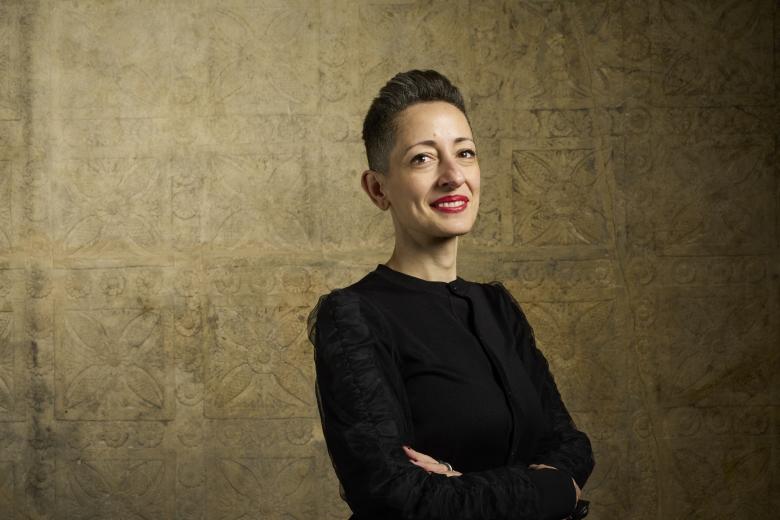
“While brain drain has always been an issue, there’s something magnetic about Lebanon,” she reflects. “Even when people leave, they’re always trying to find a way to come back, or to contribute.” For Ghotmeh, the long-term ambition is clear: to eventually establish a stronger presence at home, and to be part of rebuilding what has been lost.
The firm had several projects planned in Lebanon, but many have been put on hold, including a hotel project in the Bekaa Valley and a tower project in Beirut. “A lot of these were competition-winning projects, but they’ve all been paused because of the explosion in 2020, the economic crisis, and now the current situation,” she says.
Ultimately, architecture is about optimism, she explains, adding, “We don’t own the earth. It’s our responsibility to share and preserve it. It’s very worrying to see this level of destruction, and to think about how long it takes to restore an ecosystem, to make it live again. It’s difficult, but it’s necessary.”
Articles relacionats
-
-
-
-
Spotlight Arabia Sets the Stage for New Arabian-Architects Platform
Catherine Belbin | 28.10.2025