MEERESMUSEUM
Within Old Walls, a Breath of Fresh Air
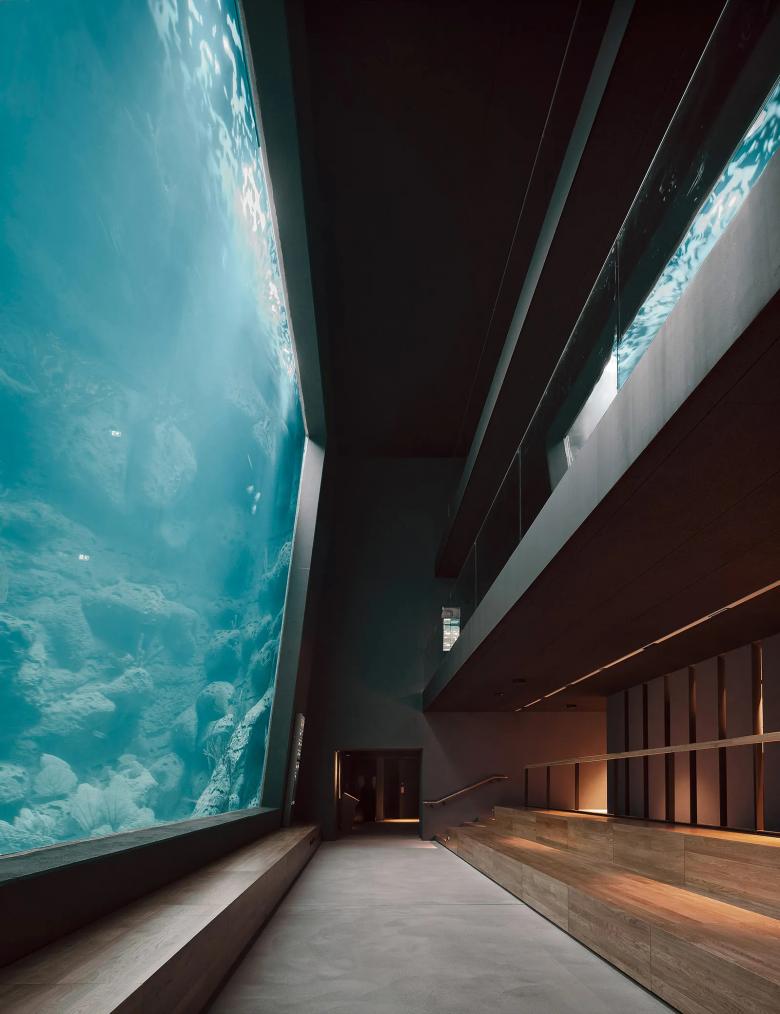
The MEERESMUSEUM is housed in Stralsund’s 700-year-old St. Catherine’s Monastery. Reichel Schlaier Architects carefully renovated the complex and added a modern museum building featuring a large aquarium. We asked Elke Reichel and Peter Schlaier a few questions about the project.
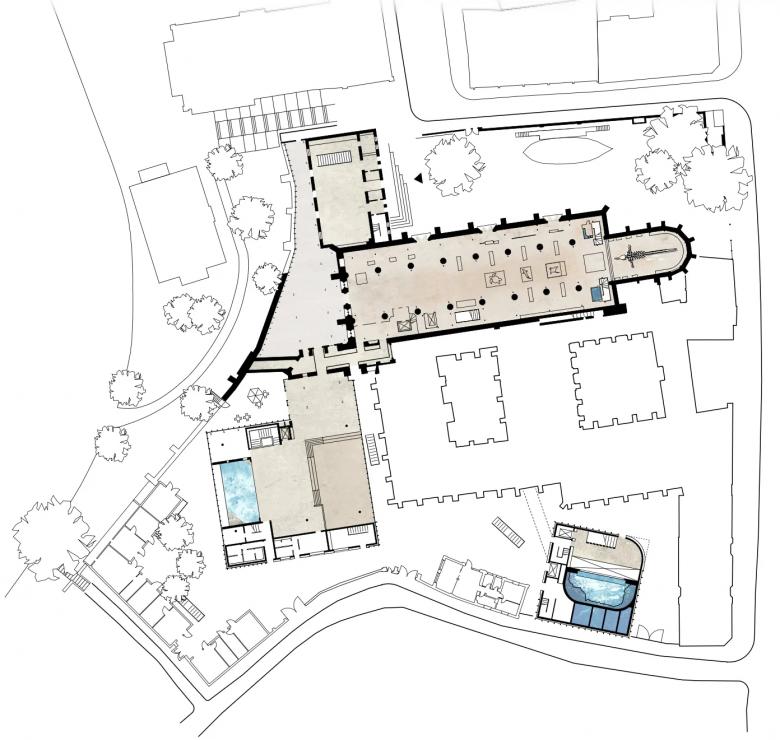
What makes this construction project so special?Elke Reichel: A historic monastery complex listed as a historic landmark—the Katharinenkloster in Stralsund—was to be renovated and simultaneously transformed into a modern museum building featuring large aquariums. This required integrating building sections dating from different centuries and eras. The challenge was to integrate parts of the building and historical layers from different centuries and generations. Sensitive handling of the building fabric was essential, as the ensemble is one of the most important urban structures in the Hanseatic city of Stralsund and part of a UNESCO World Heritage Site.
Peter Schlaier: The MEERESMUSEUM in Stralsund, which has been housed in the Katharinenkloster since the 1950s, is an institution. Having grown over decades, it has become firmly anchored in the city's collective memory. It is one of the most visited museums in Germany and also enjoys an excellent international reputation as a marine science museum and large aquarium.
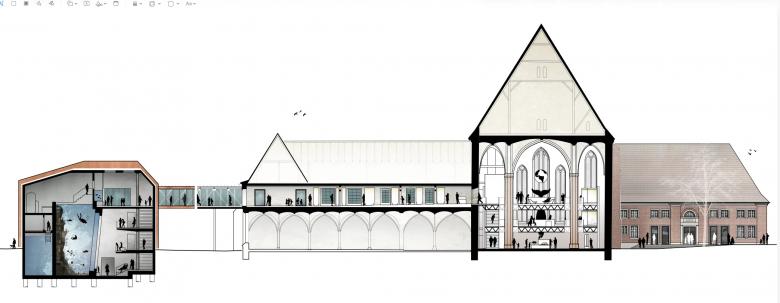
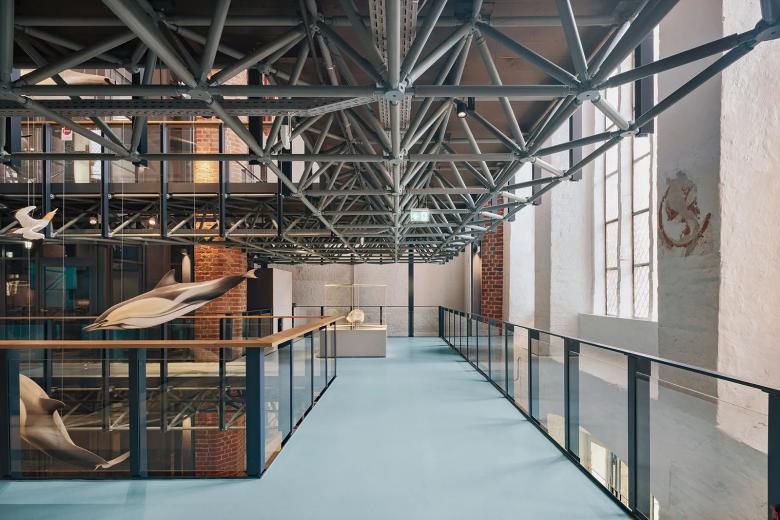
It was therefore important to preserve and highlight the distinctive exhibition spaces that visitors have come to know over the years, such as the nave of the Katharinenhalle with its truss structure from the GDR era—which is now itself a listed building—and the pool with water turtles, which was built in the 1990s. The clear legibility of old and new in the sense of the Venice Charter therefore presented itself as the only viable approach. Each era remains recognizable and at the same time fits into a continuum of architectural history that shapes the identity of the entire complex.
The inspiration came from a deep respect for this historic site, with its more than 700 years of history and its long-standing cultural significance.
Elke Reichel: One of the greatest architectural challenges in the project—from the initial design phase through to the choice of materials and detailing—was to create a harmonious connection between the historic monastery complex, the later additions, and the newly inserted elements: an architecture that respectfully honors the old while coherently complementing it with the new.
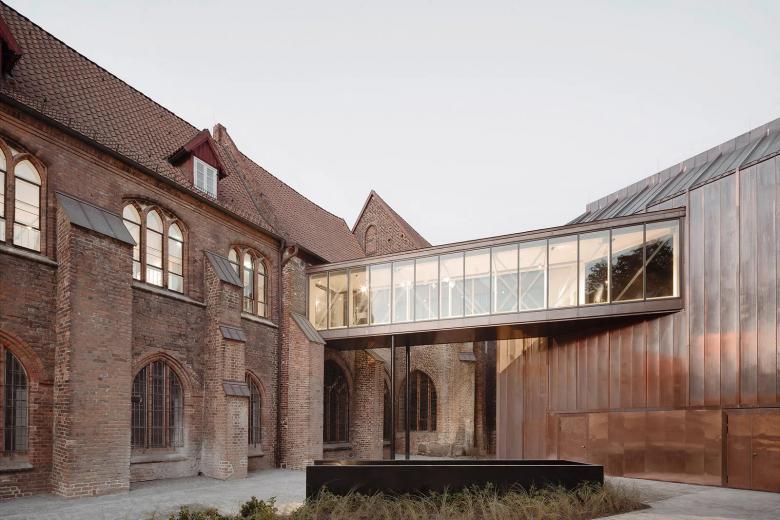
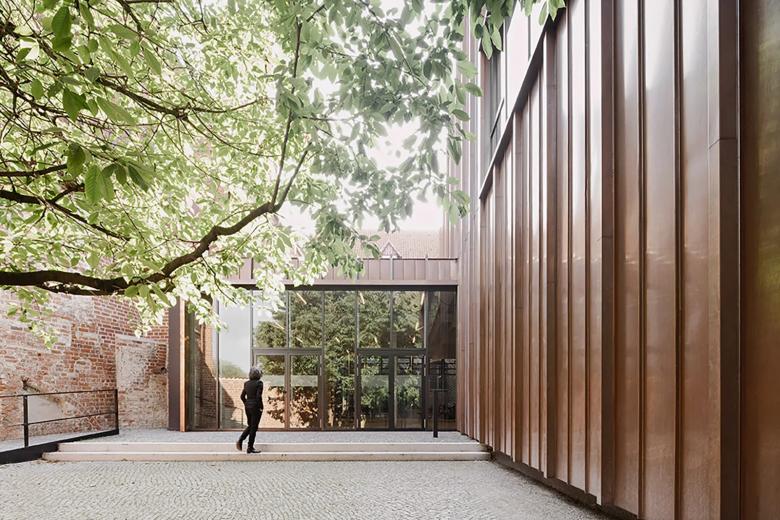
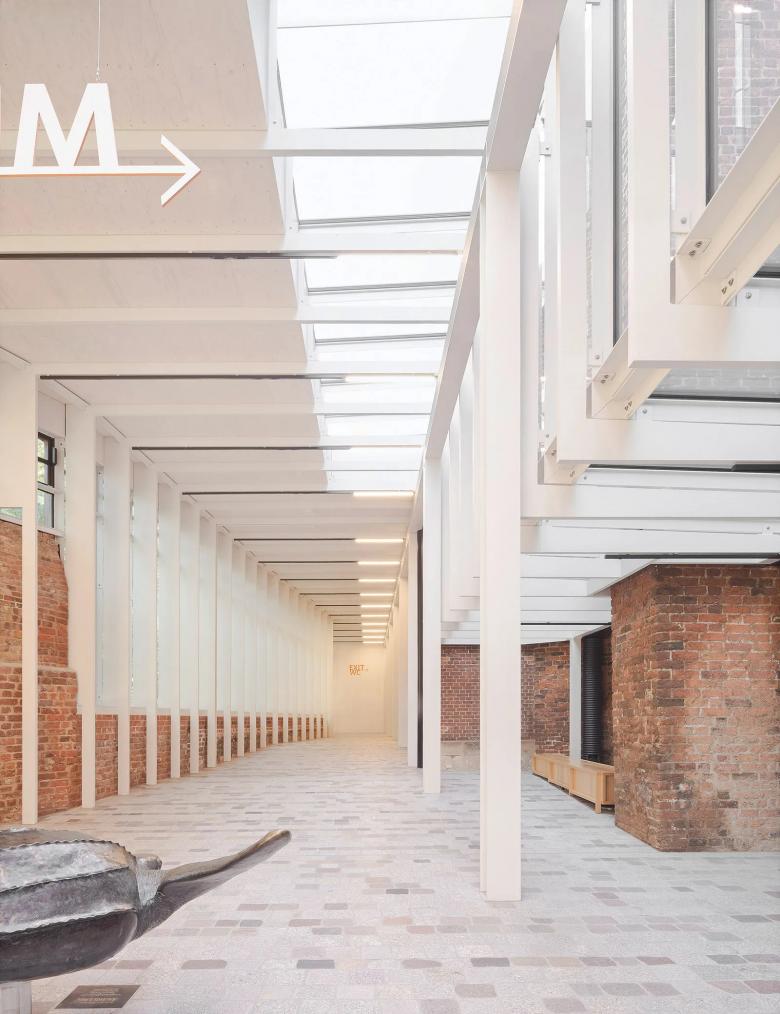
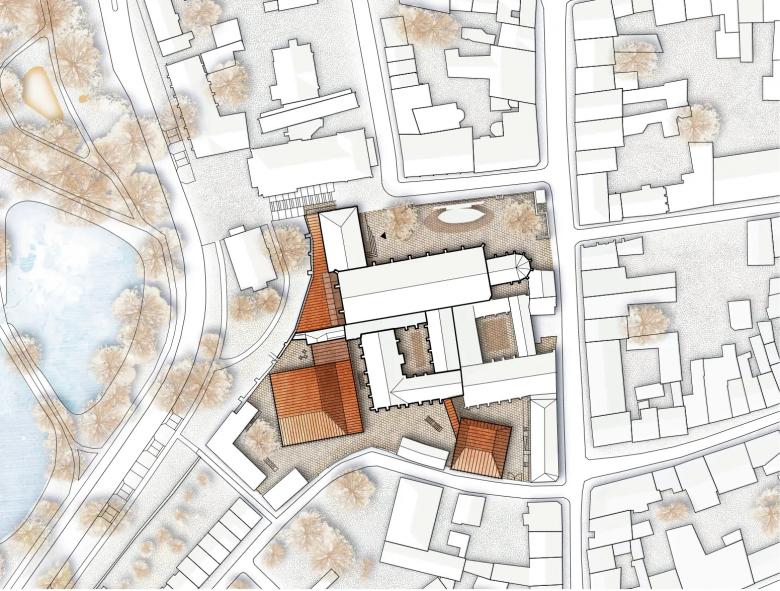
All additions and newer extensions to the existing building were given a uniform external appearance. Through their materials, structure, and clear abstract volumes, they blend harmoniously into the ensemble along the city wall. A copper sheet cladding—a familiar material in Stralsund, reminiscent of the roofs of historic brick churches—gives the new structure a striking yet understated appearance.. The handcrafted batten cladding defines the facade’s structure. Glazed elements connect the new structures with the existing buildings, continue the rhythm of the copper facades, and strategically open up views of the historic building fabric, such as the gable end of the nave through the glass opening on the Westhof.
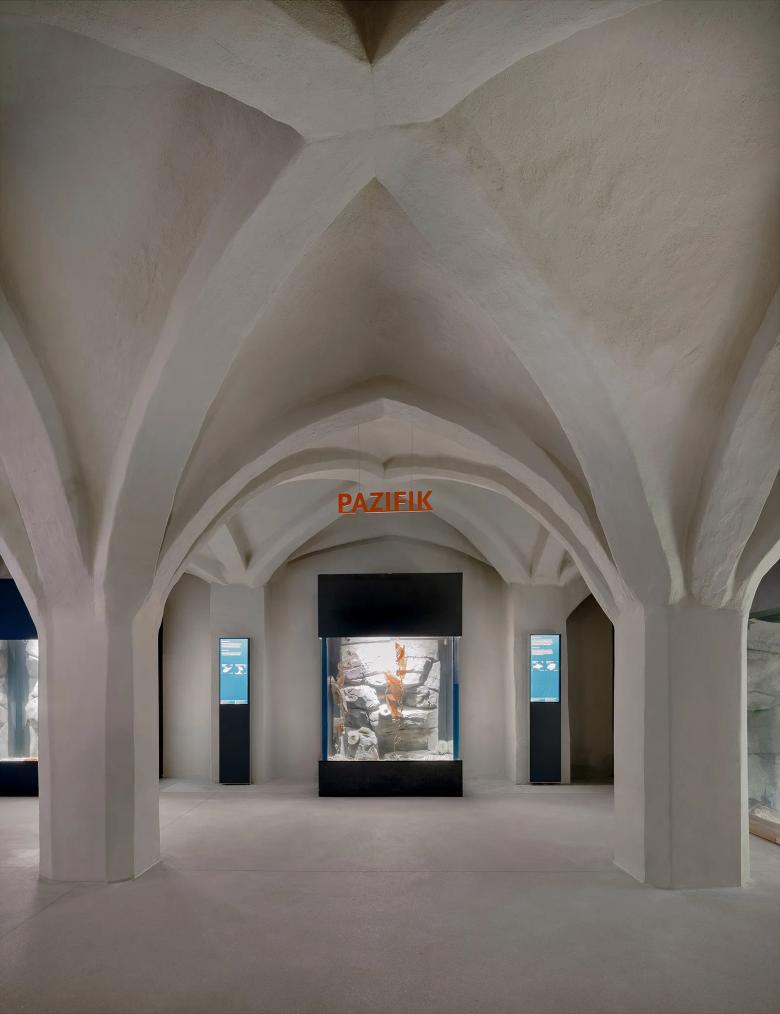
Peter Schlaier: In 2017, an anonymous international architecture competition was held featuring a distinguished group of participants, and we were awarded first prize. The jury praised particularly the concept of preserving, highlighting and revitalizing the main attractions of the museum, which has grown over decades.. The museum has now been expanded to include new attractions, and contemporary requirements for a museum building have been met and seamlessly integrated.
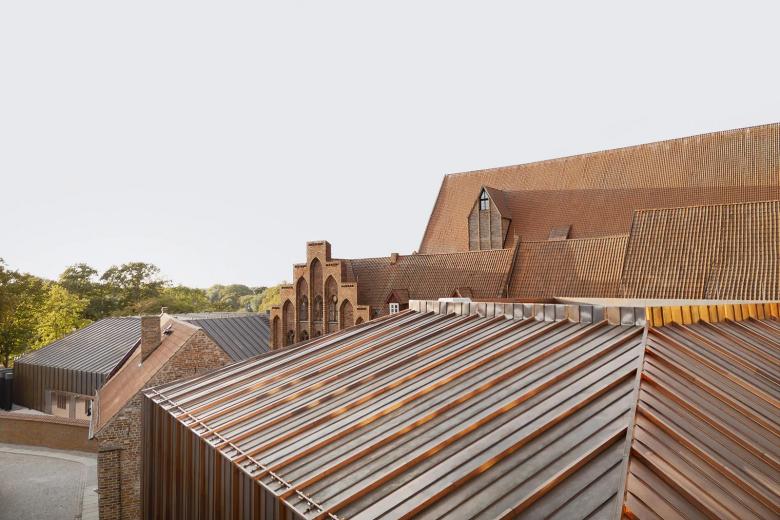
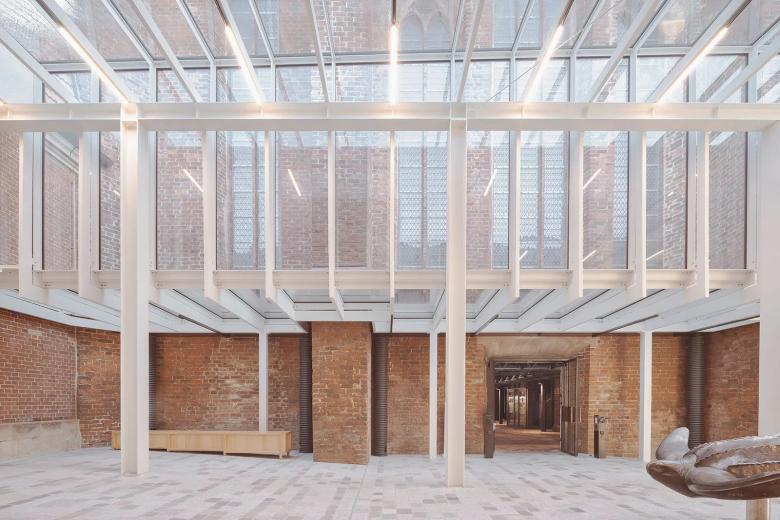
Elke Reichel: Particular challenges arose in the areas of historic preservation and the integration of large modern aquariums equipped with sophisticated technology. Ensuring accessibility within a complex, historic complex featuring a wide variety of floor levels was also a real challenge. Where possible, existing building structures were preserved and materials were reused: The flooring in the Westhof was created using historic granite pavers and the masonry was made from salvaged bricks. Old glazing, coat check lockers, windows, and wooden components were refurbished and reused. We only replaced railings where necessary. The tile flooring in the Katharinenhalle was preserved in its entirety.
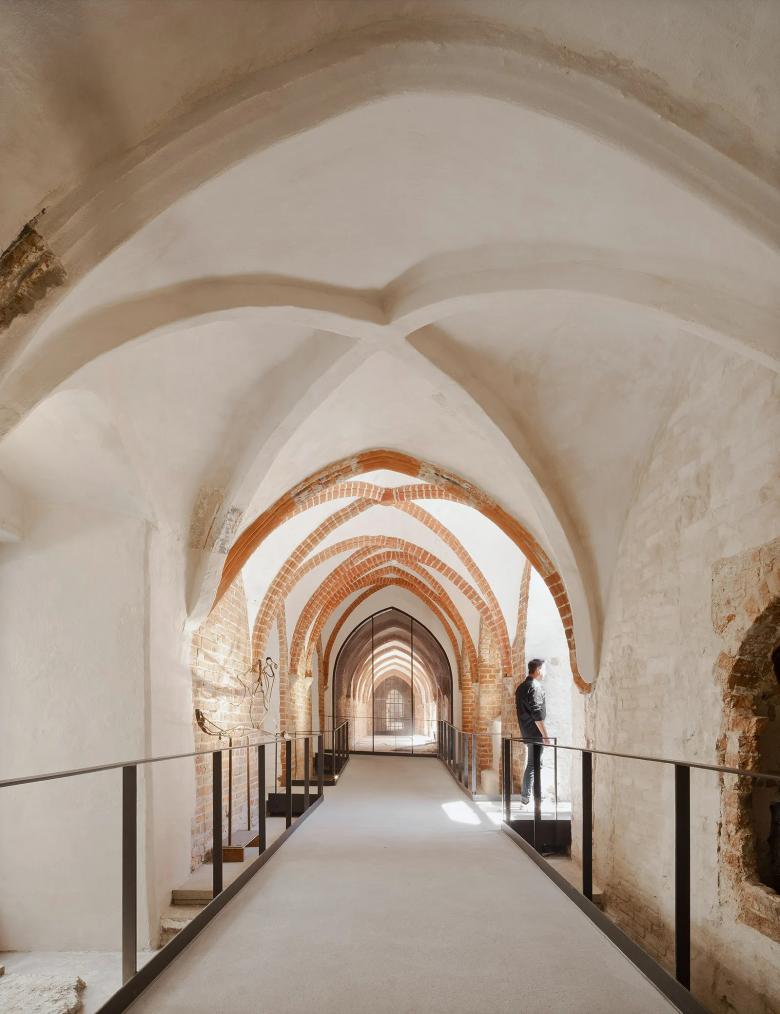
Peter Schlaier: The overall concept of the design was retained even after the competition and carried through to the end. In terms of the details, however, all key points were discussed in depth with the client: Does the wayfinding work? Are the changes appropriate for the expected number of visitors? How can accessibility be achieved in a straightforward and practical way? What will be preserved, and which elements will be renovated? Are the new attractions positioned in a way that creates a good flow throughout the building? Everything was put to the test, especially to address the high cost pressures. As a result, the glass elevator in the aquarium—which was still included in the competition proposal—and a 360° 3D cinema were ultimately omitted for cost reasons and not implemented.
2025
Katharinenberg 14–20
18439 Stralsund, Mecklenburg-Vorpommern, Germany
Award
International Competition, 2017, 1st Prize
Client
German Oceanographic Museum Foundation, Stralsund
Gross floor area
10,500 m²
Architecture
Reichel Schlaier Architekten GmbH Freie Architekten BDA, Stuttgart
Professor Elke Reichel and Professor Peter Schlaier
Competition: José Candel Talavera, Susanne Weng, and Maximilian Helbig
Project Management: Bastian Matthias, Sandra Kellert, and Susanne Weng with Sebastian Wockenfuss
Collaborators: Maximilian Bihrer, José Candel Talavera, Katharina Felix, Vanessa Pohler, Roman Rosert, and Julia Zürn
Consulting on Existing Structures and Historic Preservation
Kaup + Wiegand Architekten GmbH, Berlin
Specialist Planners
Project Management: Hitzler Ingenieure, Berlin
Exhibition Design: Die Werft Raißle & Sieber PartG mbB, Munich
Excavation, shoring, outdoor facilities, and occupational safety and health coordinator: Ingenieurbüro Küchler, Stralsund
Structural engineering: Leonhardt, Andrä und Partner, Hamburg
Consulting for existing structural elements: Ingenieurbüro Höhne, Bergen auf Rügen
Building services engineering (HLSKE): AIU Architekten- und Ingenieurunion Stralsund GmbH, Stralsund
Lighting design: Dinnebier Licht GmbH, Wuppertal
Measurement, control, and regulation technology: Kofler Energies Ingenieurgesellschaft mbH, Berlin
Aquarium technology: Futurefish Aquaculture GmbH, Hamburg
Aquarium consulting: Stefan Kadatz, Rheinsberg
Building research: Frank Hoffmann, Stralsund
Construction site logistics: Schoenberg.Baulogistik, Berlin
Building physics: GSE Ingenieur-Gesellschaft mbH, Berlin
Soil investigation: Baugrund Stralsund Ingenieurgesellschaft mbH, Stralsund
Fire protection: CDI Ingenieure Matias Ceschi, Berlin
Surveying: Ingenieurteam Nord GbR, Stralsund
Archaeology: AIM-V Archäologie in Mecklenburg-Vorpommern GmbH, Neubukow
Excavation supervision: Dr. Jörg Ansorge
Bidding and construction management (LPH 6–8)
mo Architekten Ingenieure, Hamburg
Contractors
Aquarium panes: Adec, Istanbul, Turkey (installation) and Nippura, Miki, Japan (manufacturer)
Small aquarium tanks: Newwave Concepts, Florian Schuran, Wassenberg
Small aquarium tank glass: Prinzip & Innovation, Lastrup
Aquarium sealing: DSB Säure GmbH, Königswinter
Demolition: HCH Umwelt GmbH, Schwerin
Scaffolding: B+P Gerüstbau Hamburg GmbH
Shell construction: Köthenbürger HTI Hoch-, Tief- und Ingenieurbau GmbH, Waren (Müritz)
Steel construction (BA2): Schindler Anlagenbau GmbH, Abtshagen
Mullion-transom facade: FLZ Stahl- und Metallbau Lauterbach GmbH, Putbus
Copper cladding: Fuchs + Girke Bau und Denkmalpflege GmbH, Ottendorf-Okrilla
Restoration in accordance with preservation guidelines: Hochbau und Denkmalpflege GmbH, Stralsund
Locksmith work and metal construction: MB Böttcher GmbH, Neubrandenburg
Screed: Baugeschäft Beez GmbH, Stralsund
Drywall: NATB GmbH, Lüssow
Interior finishing and carpentry (furniture and aquarium cladding): Tischlerei J. Tesche GmbH, Schwaan
Carpentry (doors and restoration): Johst Carpentry GmbH, Niepars
Interior paving: Steinmetz Rumpelkönig, Stralsund
Flooring: Sundische Ausbau Gesellschaft mbH, Stralsund
Tiling: ViRus Bau GmbH, Leipzig
Painting: Malermeister Reining, Bergen auf Rügen
Fire-retardant coatings: Pauleck Korrosionsschutz GmbH, Reichenbach (Vogtland)
Manufacturers
Mullion-transom facade: Raico Therm+ system
Louvered windows: Hahn Lamellen S9-iVt-05
Skylights: Raico Therm+
Aluminum door elements: Schüco AWS/ADS
Copper facade and roof: Handcrafted copper cladding with batten coverage
Aquarium panes: Nippura
Aquarium cladding: Pfleiderer HPL
Steel-glass elements (doors and partitions): Rp-Hermetic
Existing F90 fire-rated windows: Forster Thermfix vario
Fire-rated glazing: Promat Systemglas F1-90
Wooden doors: Schörghuber
Floor coverings: Rubber Noraplan “unita” Colors 7110 / 7118
Linoleum: Gerflor Lino Art Star in Dusty Gray
Stone stairs: Euval 82.70 Ceppo 130
Sanitary tiles (wall and ceiling): Agrob Buchtal Nova 60×60 anthracite
Tiles in the utility kitchen: Agrob Buchtal Basis 3 20×20 anthracite R13V10
Ceiling coverings: Knauf Heradesign Fine 35 RAL 9005, Knauf Cleaneo with acoustic plaster
Elevator: FMK Aufzüge GmbH
Door technology and automatic door systems: Geze Powerturn
Hardware: FSB Series 1023 in matte black
Switches: Jung, LS 990